


These soft frosted sugar cookies feature tender, buttery centers topped with creamy vanilla frosting and colorful sprinkles. They are a lovely homemade treat for birthdays, holidays, bake sales, or an afternoon baking project. With simple ingredients and an easy scoop-and-flatten method, you can make these bakery-inspired cookies without rolling out the dough or using cookie cutters.
The secret to a tender cookie is balancing the flour with butter, a little sour cream, and cornstarch. Follow the steps below, and learn how to recognize when the cookies are ready, prepare smooth frosting, and store them properly.
Why You’ll Love These Soft Frosted Sugar Cookies
- Tender texture: Butter, sour cream, and cornstarch help create a soft cookie.
- Easy preparation: No rolling pin or cookie cutters are required.
- Classic vanilla flavor: Vanilla in both the cookies and frosting creates a familiar bakery-style taste.
- Customizable decoration: Choose your favorite frosting colors and sprinkles.
- Great for celebrations: Make them for birthdays, holidays, parties, and homemade gifts.
Soft Frosted Sugar Cookies Ingredients
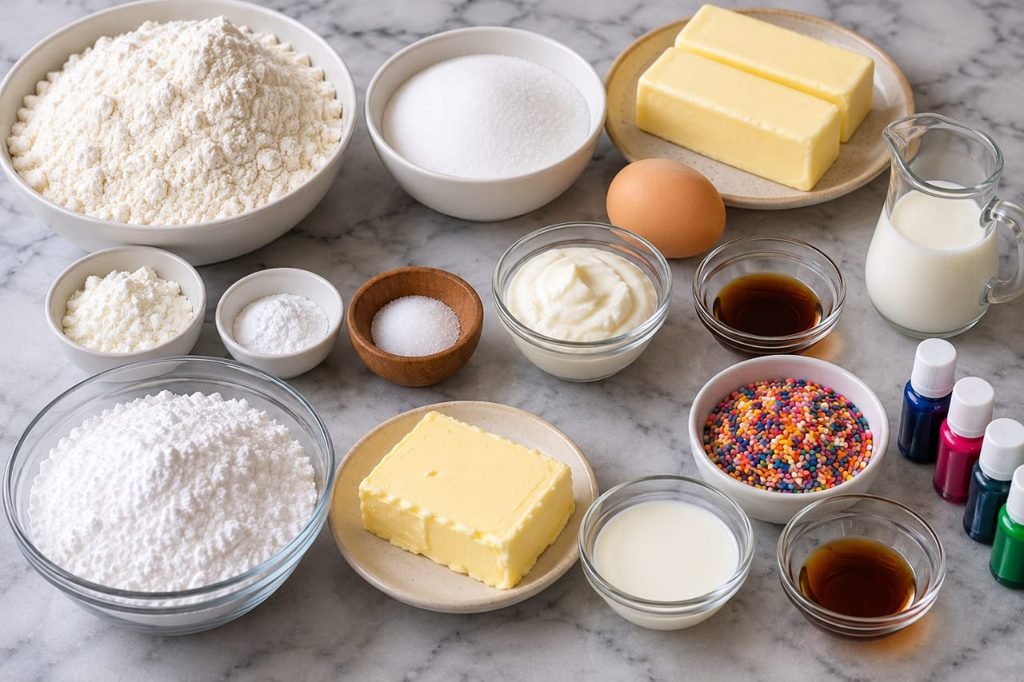
For the Cookies
- 2 3/4 cups (345 g) all-purpose flour, spooned and leveled
- 1 tablespoon (8 g) cornstarch
- 1 teaspoon baking powder
- 1/2 teaspoon fine salt
- 3/4 cup (170 g) unsalted butter, softened but not melted
- 3/4 cup (150 g) granulated sugar
- 1 large egg, at room temperature
- 2 tablespoons (30 g) sour cream, at room temperature
- 2 teaspoons vanilla extract
For the Vanilla Buttercream Frosting
- 1/2 cup (113 g) unsalted butter, softened
- 2 cups (240 g) powdered sugar, sifted
- 1 1/2 teaspoons vanilla extract
- 2 to 3 tablespoons milk or heavy cream
- A small pinch of salt, to taste
- Food coloring, optional
- Sprinkles, optional
Equipment You’ll Need
- Two baking sheets
- Parchment paper
- Mixing bowls
- An electric mixer or sturdy hand whisk
- A cookie scoop or tablespoon
- A wire cooling rack
- A small offset spatula or butter knife for frosting
How to Make Soft Frosted Sugar Cookies
Step 1: Preheat the Oven
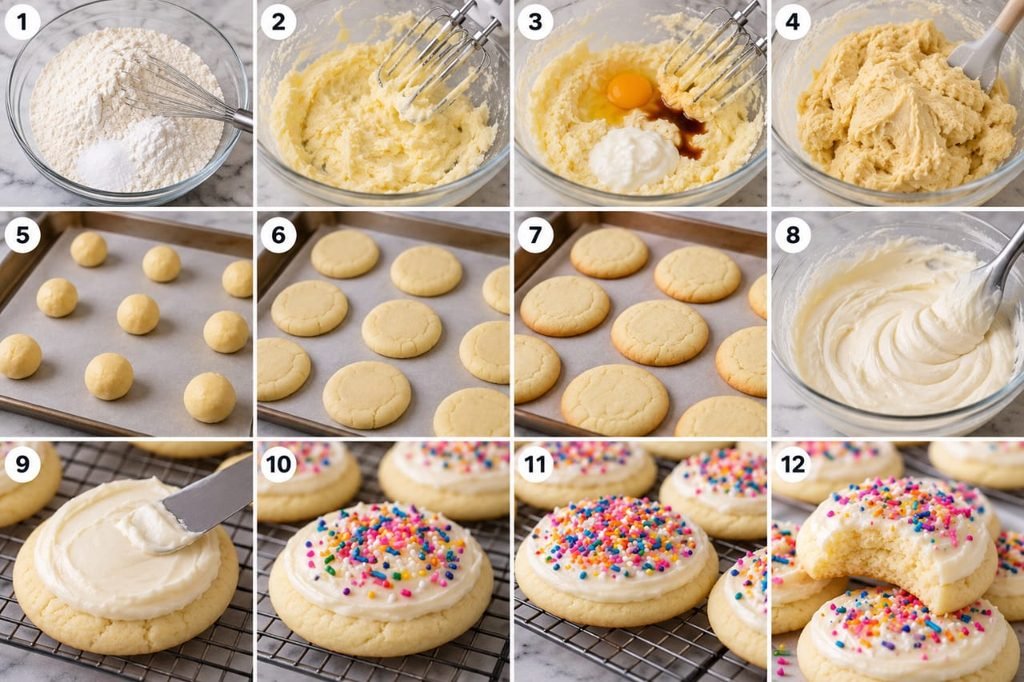
Preheat your oven to 350°F (175°C). Line two baking sheets with parchment paper. Preparing the trays before mixing the dough makes the baking process easier.
Step 2: Combine the Dry Ingredients
In a medium bowl, whisk together the flour, cornstarch, baking powder, and salt. Set the bowl aside. Measuring the flour correctly is important because too much flour can make the cookies dry or dense.
Step 3: Cream the Butter and Sugar
In a large bowl, beat the softened butter and granulated sugar for about 2 to 3 minutes, until the mixture looks creamy and slightly fluffy. Scrape down the sides of the bowl as needed.
Step 4: Add the Egg, Sour Cream, and Vanilla
Beat in the egg, sour cream, and vanilla extract until the mixture is smooth. The sour cream adds moisture and a subtle tang that complements the sweetness of the cookies.
Step 5: Finish the Dough
Add the dry ingredients to the butter mixture in two additions. Mix on low speed just until no large streaks of flour remain. The dough should be soft enough to scoop but not runny. Avoid overmixing.
Step 6: Shape the Cookies
Scoop approximately 1 1/2 tablespoons of dough per cookie and roll each portion gently into a ball. Arrange the dough balls on the prepared baking sheets, leaving about 2 inches between them. Flatten each ball slightly with your fingertips or the bottom of a glass.
Step 7: Bake Until the Centers Are Just Set
Bake for approximately 9 to 12 minutes, checking early because oven temperatures and cookie sizes vary. The edges should look set, while the tops remain pale and the centers look soft rather than wet. Do not wait for the cookies to become deeply golden.
Step 8: Cool Completely
Leave the cookies on the baking sheet for about 5 minutes, then carefully transfer them to a wire rack. Allow them to cool completely before frosting. Warm cookies can cause the buttercream to soften and slide off.
Step 9: Make the Vanilla Buttercream
Beat the softened butter until smooth and creamy. Add the sifted powdered sugar gradually, mixing on low speed to reduce the mess. Add the vanilla extract and a pinch of salt.
Mix in the milk or heavy cream one tablespoon at a time until the frosting is smooth and spreadable. Use less liquid for a thicker frosting or a little more powdered sugar if the frosting becomes too soft. Add food coloring if desired.
Step 10: Frost and Decorate
Spread a layer of frosting over each completely cooled cookie. Add sprinkles while the frosting is still soft so they stick. Let the frosting firm up before stacking or packing the cookies.
Tips for Soft, Bakery-Inspired Cookies
- Measure flour accurately: Spoon flour into the measuring cup and level the top instead of packing it down.
- Use softened butter: Butter should yield slightly when pressed but should not look melted or oily.
- Avoid overmixing: Once the flour is incorporated, stop mixing to help keep the cookies tender.
- Keep the cookies similar in size: Even portions help them bake at the same rate.
- Watch the centers: The cookies continue to set as they cool, so baking them until deeply browned can make them dry.
- Cool before decorating: Frosting warm cookies can cause the topping to melt.
- Adjust frosting gradually: Add liquid a little at a time rather than making the frosting too thin.
Common Mistakes and How to Fix Them
Why Did My Cookies Spread Too Much?
Butter that is too warm, excess liquid, or a very warm baking sheet can cause excessive spreading. Make sure the butter is softened rather than melted, measure the ingredients carefully, and use a cool baking sheet for each batch. If the dough feels unusually soft, refrigerate it for 15 to 20 minutes before shaping.
Why Are My Cookies Dry or Hard?
Too much flour and overbaking are common causes. Measure the flour carefully and begin checking the cookies at the early end of the baking range. The centers should still look soft when you remove the tray from the oven.
Why Is My Frosting Too Runny?
Add more sifted powdered sugar, a little at a time, until the frosting reaches a spreadable consistency. If the kitchen is warm and the buttercream is becoming loose, chill it briefly and beat it again before decorating.
Why Is My Frosting Too Thick?
Mix in milk or cream a teaspoon at a time until the frosting spreads easily. Small additions are easier to control than adding too much liquid at once.
Easy Variations
Birthday Sugar Cookies
Use pastel or bright frosting colors and add rainbow sprinkles for birthdays and celebrations.
Chocolate Frosted Sugar Cookies
Add 2 tablespoons of unsweetened cocoa powder to the powdered sugar before mixing the buttercream. Add a little extra milk if needed to maintain a smooth consistency.
Almond Vanilla Sugar Cookies
Replace 1/2 teaspoon of the vanilla extract with almond extract for a subtle almond flavor. Almond extract is concentrated, so avoid adding too much.
Holiday Frosted Cookies
Use seasonal food coloring and themed sprinkles for Christmas, Valentine’s Day, Easter, or other special occasions.
How to Store Soft Frosted Sugar Cookies
At Room Temperature
For cookies topped with standard buttercream made from butter and powdered sugar, store them in an airtight container in a cool room for up to 2 days. Keep them away from direct sunlight and heat. If your frosting contains cream cheese or another perishable ingredient, refrigerate the cookies instead.
In the Refrigerator
Store frosted cookies in an airtight container in the refrigerator for up to 5 days. Let them sit at room temperature briefly before serving so the cookie and frosting soften slightly. Avoid leaving perishable frosting at room temperature for extended periods.
In the Freezer
For the best texture, freeze unfrosted cookies in a freezer-safe container for up to 2 months. Separate layers with parchment paper, thaw the cookies completely, and frost them before serving. Frosted cookies can also be frozen if the frosting is firm enough, although the texture and appearance may change slightly after thawing.
Frequently Asked Questions
Do I Need to Chill the Cookie Dough?
Chilling is not normally necessary if the dough has the consistency described in this recipe. If your kitchen is warm or the dough feels too soft to shape, refrigerate it for 15 to 20 minutes before baking.
Can I Make the Dough Ahead of Time?
Yes. Cover the dough and refrigerate it for up to 24 hours. Let it soften slightly if it becomes too firm to scoop, and check the baking time because chilled dough may bake differently.
Can I Use Store-Bought Frosting?
Yes. Store-bought vanilla frosting is a convenient alternative. Follow the package instructions for storage, particularly if the frosting requires refrigeration after opening.
Can I Make These Cookies Without an Electric Mixer?
Yes. A sturdy whisk and a wooden spoon can work, although creaming the butter and sugar will require more effort. Make sure the butter is softened enough to mix smoothly.
How Do I Know When the Cookies Are Done?
The edges should be set and the centers should no longer look wet. The tops will generally remain pale. Let the cookies rest on the baking sheet briefly before transferring them to a rack.
Can I Make the Frosting Different Colors?
Yes. Divide the prepared frosting between small bowls and add food coloring a little at a time. This is an easy way to create several colors for parties and holidays.
Final Thoughts
Soft frosted sugar cookies are a classic homemade treat with a tender texture, buttery vanilla flavor, and a creamy frosting finish. With careful measuring, gentle mixing, and attention to baking time, you can make a batch that looks beautiful on a dessert table and is easy to customize for any occasion.
Try different frosting colors and sprinkles, and save this recipe for your next celebration or family baking day.










34 Comments