

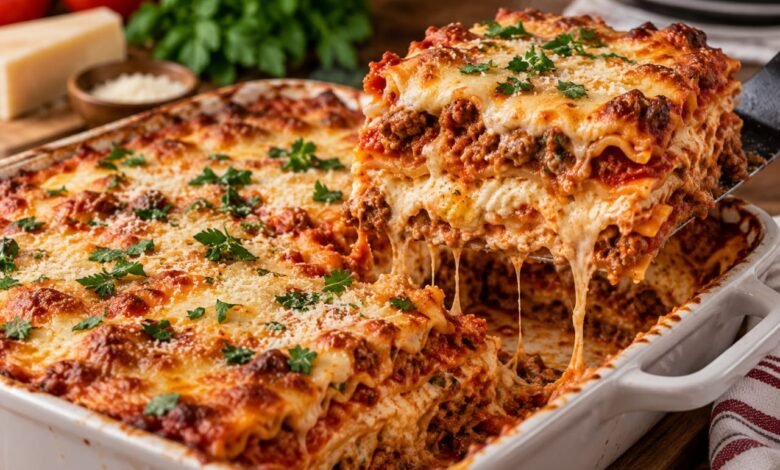
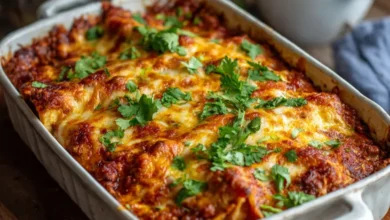
This classic Italian lasagna combines a rich beef and Italian sausage meat sauce with creamy ricotta, melted mozzarella, Parmesan, and tender no-boil noodles. The key to a great lasagna is not simply adding more cheese or sauce it is building balanced layers and giving the dish enough time to rest before slicing.
The meat sauce is slowly simmered to develop deep flavor, while the ricotta mixture adds a creamy layer between the noodles. A final covered-and-uncovered bake gives the lasagna tender layers underneath and a golden, bubbling cheese topping.
Why This Lasagna Works
- Beef and Italian sausage create a richer and more flavorful meat sauce than beef alone.
- Slow-simmered tomato sauce develops deeper flavor and reduces excess liquid.
- Ricotta mixed with Parmesan and egg creates a creamy layer that holds together when sliced.
- Low-moisture mozzarella melts beautifully without adding too much water.
- No-boil noodles absorb moisture from the sauce while baking.
- A 25–30 minute rest helps the layers set so the slices do not collapse onto the plate.
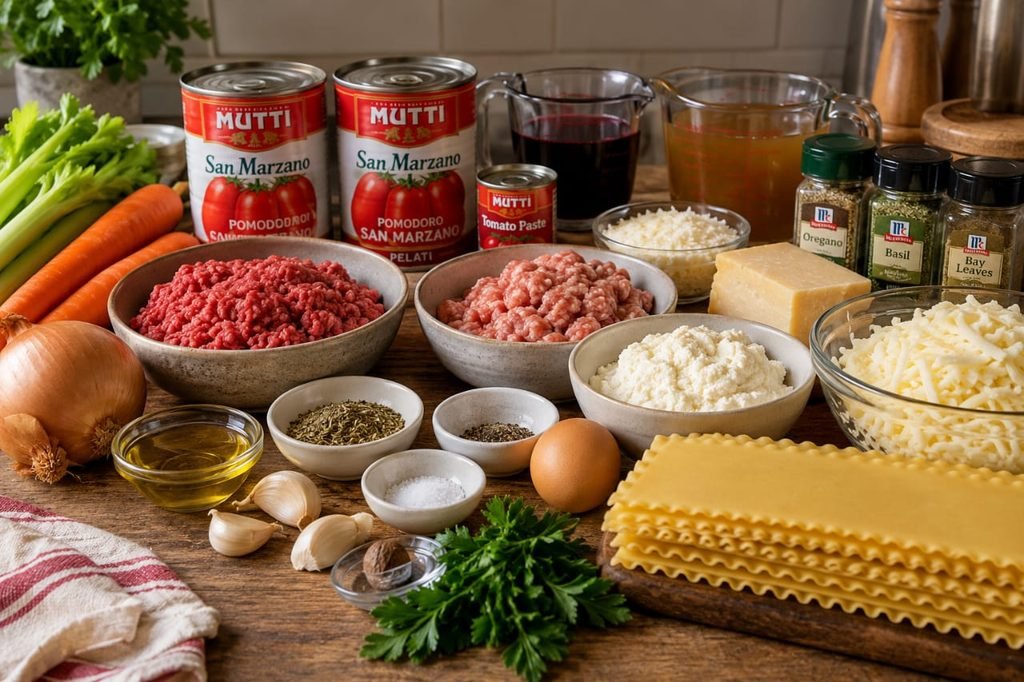
Ingredients
For the Meat Sauce
- 2 tablespoons olive oil
- 1 large onion, finely chopped
- 2 carrots, finely chopped
- 2 celery stalks, finely chopped
- 4 cloves garlic, minced
- 1 pound (450g) ground beef
- 1 pound (450g) ground Italian sausage, mild or hot
- ½ cup (120ml) dry red wine, such as Chianti or Merlot
- 2 cans (28 ounces / 800g each) whole San Marzano tomatoes, crushed by hand
- 3 tablespoons tomato paste
- 1 cup (240ml) beef or chicken broth
- 2 teaspoons dried oregano
- 1 teaspoon dried basil
- 2 bay leaves
- Salt and freshly ground black pepper, to taste
- Pinch of sugar, optional, if the tomatoes taste too acidic
For the Ricotta Layer
- 15 ounces (425g) whole-milk ricotta cheese
- 1 large egg
- ½ cup (50g) grated Parmesan cheese
- ¼ cup fresh parsley, finely chopped
- ¼ teaspoon freshly grated nutmeg
- ½ teaspoon salt
- ¼ teaspoon black pepper
For Assembly
- 12 no-boil lasagna noodles, or fresh lasagna sheets
- 1 pound (450g) low-moisture mozzarella, shredded
- 1 cup (100g) grated Parmesan cheese
- Fresh basil or parsley, for garnish
How to Make Classic Italian Lasagna
1. Start the Meat Sauce
Heat the olive oil in a large heavy-bottomed pot or Dutch oven over medium heat.
Add the chopped onion, carrots, and celery. Cook for 8–10 minutes, stirring occasionally, until the vegetables are soft and fragrant.
This vegetable base gives the meat sauce more depth than simply cooking meat and tomatoes together.
2. Brown the Beef and Sausage
Add the minced garlic and cook for about 1 minute.
Increase the heat to medium-high and add the ground beef and Italian sausage. Break the meat apart with a wooden spoon and cook for approximately 8–10 minutes, until the meat is browned and no longer pink.
Do not rush this step. Proper browning gives the sauce a deeper savory flavor.
3. Deglaze with Red Wine
Pour the red wine into the pot and scrape the bottom with a wooden spoon to loosen the browned bits.
Let the wine simmer for about 3–4 minutes, or until most of the liquid has evaporated.
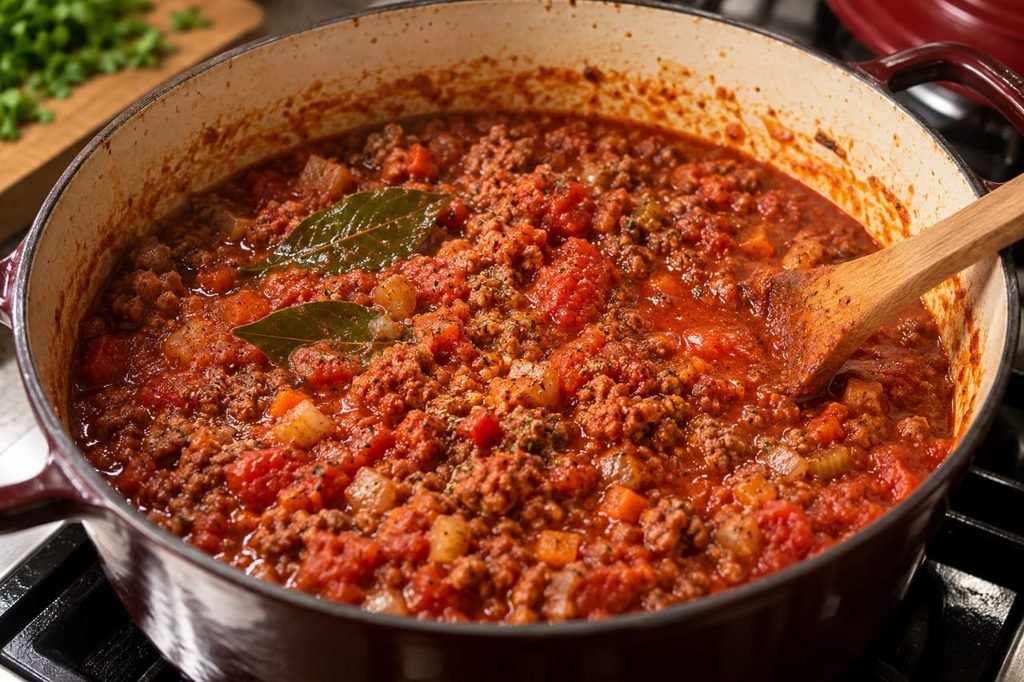
4. Simmer the Meat Sauce
Add the crushed San Marzano tomatoes, tomato paste, broth, oregano, dried basil, bay leaves, salt, and black pepper.
Bring the sauce to a gentle boil, then immediately reduce the heat to low.
Partially cover the pot and let the sauce simmer gently for at least 2 hours. Stir occasionally.
For an even deeper flavor, the sauce can simmer for up to 4 hours, adding a little water or broth if it becomes too thick.
Taste the sauce near the end of cooking. If the tomatoes are particularly acidic, add a small pinch of sugar.
Remove the bay leaves before assembling the lasagna.
How to Make the Ricotta Filling
While the sauce simmers, combine the ricotta, egg, ½ cup Parmesan, chopped parsley, nutmeg, salt, and black pepper in a medium bowl.
Mix until evenly combined, then cover and refrigerate until you are ready to assemble the lasagna.
Keep the mozzarella and remaining Parmesan separate so they are easy to distribute between the layers.
How to Layer Lasagna
Preheat the oven to 375°F (190°C). Lightly grease a 9×13-inch baking dish.
Layer 1: Meat Sauce
Spread approximately 1½ cups of meat sauce over the bottom of the baking dish.
This first layer of sauce helps prevent the noodles from sticking.
Layer 2: Noodles
Place 4 no-boil lasagna noodles over the sauce. They can overlap slightly if necessary.
Layer 3: Ricotta
Spread one-third of the ricotta mixture evenly over the noodles.
Layer 4: Mozzarella and Meat Sauce
Sprinkle about 1 cup of shredded mozzarella over the ricotta.
Spoon approximately 1½ cups of meat sauce over the cheese.
Repeat the Layers
Repeat the sequence two more times:
Noodles → Ricotta → Mozzarella → Meat Sauce
Finish the Top
Place the final 4 noodles on top.
Cover them completely with the remaining meat sauce. Make sure there are no large areas of exposed noodle because no-boil noodles need moisture from the sauce to cook properly.
Finish with the remaining mozzarella and the reserved 1 cup of Parmesan.
How to Bake Lasagna
Cover the baking dish tightly with aluminum foil. Try not to let the foil sit directly against the cheese.
Bake at 375°F (190°C) for 25 minutes.
Remove the foil and continue baking for another 20–25 minutes, until the cheese is golden, bubbling, and the sauce is visibly bubbling around the edges.
The Most Important Step: Let the Lasagna Rest
Do not cut the lasagna immediately after taking it out of the oven.
Let it rest uncovered for at least 25–30 minutes.
This allows the sauce to settle, the cheese to firm slightly, and the layers to hold together when you cut the first slice.
If you cut it immediately, the hot sauce and melted cheese can spread across the plate and the individual layers will be much harder to see.
How to Keep No-Boil Lasagna Noodles Tender
No-boil noodles are convenient, but they need enough moisture to soften properly.
- Make sure every noodle is covered by sauce.
- Do not make the meat sauce excessively thick before assembling.
- Keep the lasagna covered during the first part of baking.
- Avoid leaving exposed noodle edges on the top layer.
If the sauce is too dry, the noodles may remain firm around the edges even though the center is cooked.
How to Prevent Watery Lasagna
Watery lasagna usually comes from excess liquid rather than too much cheese alone.
The easiest solution is to simmer the meat sauce long enough for excess moisture to evaporate before assembling the dish.
Also use low-moisture mozzarella instead of very wet fresh mozzarella for this particular recipe.
Finally, allow the baked lasagna to rest before slicing. The resting period gives the sauce and cheese time to settle.
How to Get a Golden, Bubbly Cheese Top
Keep the lasagna covered for the first 25 minutes so the noodles cook without allowing the cheese to burn.
Removing the foil for the final 20–25 minutes allows the mozzarella and Parmesan to brown and develop a golden crust.
If your oven browns the cheese very quickly, check it during the final part of baking.
Make-Ahead Lasagna
Lasagna is an excellent make-ahead dinner.
Assemble the entire dish, cover it tightly, and refrigerate for up to 24 hours before baking.
If baking directly from the refrigerator, expect the lasagna to need approximately 10–15 additional minutes of baking time. Check that the center is hot and the cheese is fully melted before serving.
Can You Freeze Lasagna?
Yes. This lasagna can be frozen either before or after baking.
For the best texture, wrap the assembled unbaked lasagna very well and freeze it before baking. Thaw it safely in the refrigerator before baking.
Individual baked portions can also be frozen for convenient future meals.
Easy Variations
Beef-Only Lasagna
Replace the Italian sausage with an additional pound of ground beef if you prefer a milder meat sauce.
Spinach Ricotta Lasagna
Add cooked, well-drained spinach to the ricotta mixture. Make sure the spinach is squeezed very dry so it does not introduce excess water.
Mushroom Lasagna
Sauté sliced mushrooms until their moisture has cooked away, then add them between the layers with the meat sauce.
Extra Cheesy Lasagna
Add a little more mozzarella between the layers, but avoid overloading each layer. Too much cheese can make the finished lasagna heavy and greasy.
What to Serve with Lasagna
Because this lasagna is rich and hearty, simple sides work best.
- Simple green salad
- Garlic bread
- Roasted vegetables
- Steamed green beans
- Crusty Italian bread
Common Lasagna Mistakes to Avoid
Using Too Much Sauce in Each Layer
The sauce should cover the noodles, but flooding the dish with sauce can make the final slices loose and watery.
Not Browning the Meat
Lightly browned beef and sausage provide much more flavor than meat that is simply simmered in tomato sauce.
Leaving No-Boil Noodles Exposed
Any exposed areas may remain hard after baking. Make sure the final sauce layer completely covers the noodles.
Cutting Immediately
This is one of the biggest mistakes. Give the lasagna at least 25–30 minutes to rest before slicing.
Using Wet Mozzarella
Fresh mozzarella contains more moisture. Low-moisture shredded mozzarella is easier to control in this layered casserole.
Frequently Asked Questions
Do I have to boil the lasagna noodles first?
No. This recipe is designed for no-boil lasagna noodles. They cook in the oven by absorbing moisture from the meat sauce.
Why is my lasagna watery?
The most common cause is excess moisture in the sauce or cheese. Simmer the meat sauce until it has thickened, use low-moisture mozzarella, and allow the finished lasagna to rest before cutting.
Why are my no-boil noodles still hard?
They may not have received enough moisture. Make sure the noodles are completely covered with sauce, especially around the edges and on the final layer.
Can I make this lasagna without wine?
Yes. You can replace the red wine with additional beef or chicken broth. The wine adds depth, but the recipe will still work without it.
Can I use cottage cheese instead of ricotta?
Yes. Cottage cheese can be used as an alternative, although the texture will be slightly different. For a smoother filling, blend the cottage cheese before mixing it with the other ingredients.
How long should lasagna rest before cutting?
Allow it to rest uncovered for at least 25–30 minutes. This gives the layers time to firm up and makes cleaner slices much easier.
Can I prepare lasagna the day before?
Yes. Assemble it, cover it tightly, and refrigerate it for up to 24 hours before baking.
Final Tips for the Best Lasagna
- Take time to brown the beef and Italian sausage.
- Let the tomato sauce simmer until rich and concentrated.
- Use low-moisture mozzarella for better texture.
- Keep every no-boil noodle covered with sauce.
- Do not overload the layers with cheese or sauce.
- Cover the lasagna during the first part of baking.
- Uncover it toward the end to brown the cheese.
- Most importantly, let the lasagna rest for 25–30 minutes before cutting.
This classic lasagna is all about balanced layers: rich meat sauce, creamy ricotta, tender noodles, and plenty of melted cheese. Give the sauce enough time to develop and the finished lasagna enough time to rest, and you will get a hearty dish with flavorful layers and much cleaner slices.
For more general food safety and nutrition guidance, see the Harvard T.H. Chan School of Public Health Nutrition Source.
You Might Also Like
- Vegan Kale Caesar Salad Toast with Cashew Dressing Recipe – Plant Based RD
- Delicious Vegan Jerky Recipe: Easy Seitan Jerky for Meatless Snacking
- Make Best Air Fryer Sweet Potato Fries Recipe: The Ultimate Fry Recipe







2 Comments