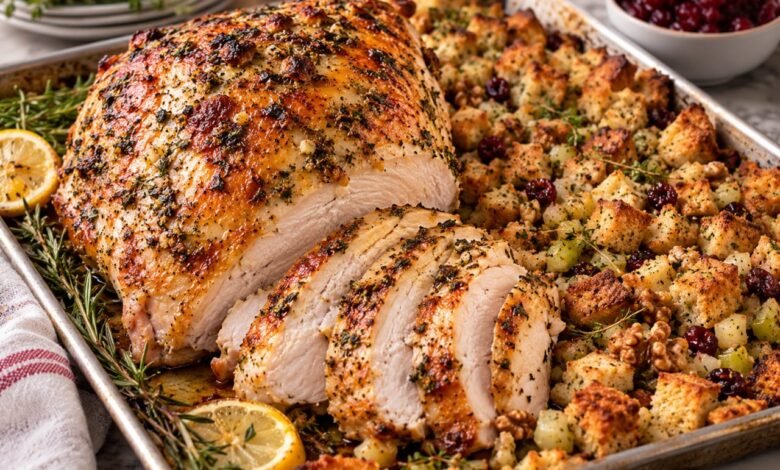
Want a Thanksgiving-style dinner without roasting a whole turkey? This sheet pan turkey breast and stuffing brings the main dish and one of the most-loved holiday sides together on a single pan.
The turkey is coated with garlic, rosemary, thyme, sage, butter and olive oil, while the stuffing is made with day-old bread, onion, celery, herbs and broth. The result is tender, herb-roasted turkey with golden skin and stuffing with crisp edges and a savory, buttery center.
It is especially useful for a smaller Thanksgiving gathering when you want the flavors of a traditional turkey dinner without preparing a whole bird.
Why This Sheet Pan Turkey Breast and Stuffing Works
- One-pan approach: The turkey and dressing cook together, reducing the number of dishes you need to manage.
- Flavorful turkey: Garlic, rosemary, thyme and sage are mixed with butter and olive oil to create a fragrant herb coating.
- Crispy stuffing: Day-old bread absorbs the broth without becoming as soft as fresh bread can.
- Better moisture control: The stuffing is spread in a relatively thin layer instead of being packed tightly into a bird.
- Reliable doneness: A meat thermometer takes the guesswork out of deciding when the turkey is ready.
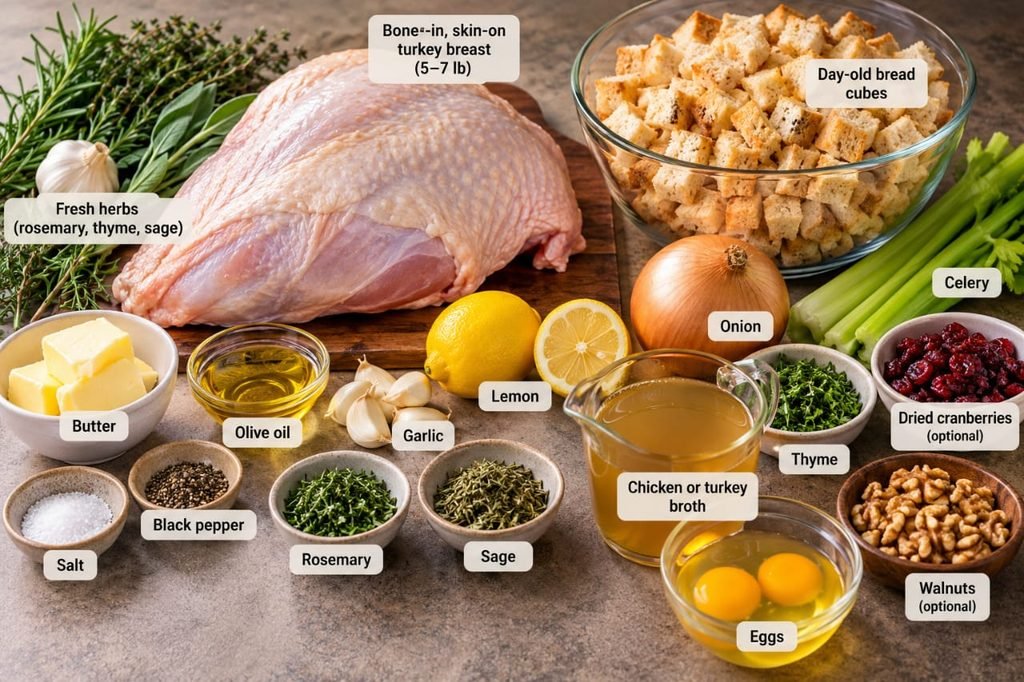
Ingredients for Sheet Pan Turkey Breast
- 1 bone-in, skin-on turkey breast, 5–7 pounds
- 3 tablespoons unsalted butter, softened
- 2 tablespoons olive oil
- 4 cloves garlic, minced
- 1 tablespoon fresh rosemary, finely chopped
- 1 tablespoon fresh thyme leaves
- 1 teaspoon fresh sage, finely chopped
- 1 1/2 teaspoons kosher salt
- 1 teaspoon freshly ground black pepper
- 1 lemon, halved
Ingredients for the Sheet Pan Stuffing
- 8 cups day-old bread, cut into 1/2-inch cubes
- 1 large yellow onion, diced
- 3 celery stalks, diced
- 3/4 cup unsalted butter
- 2 cloves garlic, minced
- 2 teaspoons fresh thyme leaves
- 1 teaspoon fresh rosemary, finely chopped
- 1 teaspoon dried sage or 2 teaspoons fresh sage
- 1 1/2 cups low-sodium chicken or turkey broth
- 2 large eggs, lightly beaten
- 1 teaspoon kosher salt
- 1/2 teaspoon black pepper
- 1/2 cup dried cranberries, optional
- 1 cup chopped toasted walnuts, optional
What Kind of Bread Is Best for Stuffing?
Use a sturdy, slightly stale bread such as sourdough, ciabatta or a rustic loaf. Day-old bread is useful because it can absorb the seasoned broth without breaking down as quickly as very fresh sandwich bread.
If your bread is fresh, cut it into cubes and let it sit uncovered until it loses some of its moisture before making the stuffing.
How to Make Sheet Pan Turkey Breast and Stuffing
1. Prepare the Turkey
Pat the turkey breast thoroughly dry with paper towels. Dry skin is important if you want the skin to brown instead of staying soft.
In a small bowl, combine the softened butter, olive oil, minced garlic, rosemary, thyme, sage, salt and black pepper.
Carefully loosen the skin from the turkey breast with your fingers, taking care not to tear it. Spread about two-thirds of the herb butter underneath the skin, directly over the meat.
Rub the remaining herb butter over the outside of the turkey skin.
Place the lemon halves in the cavity beneath the breast bone. Set the turkey aside while you prepare the stuffing and preheat the oven.
2. Prepare the Stuffing
Preheat the oven to 375°F (190°C).
Melt the 3/4 cup butter in a large skillet or Dutch oven over medium heat. Add the diced onion and celery and cook for about 8–10 minutes, stirring occasionally, until softened and translucent.
Add the garlic, thyme, rosemary and sage. Cook for about 1 minute, just until the herbs and garlic become fragrant.
Place the bread cubes in a large mixing bowl. Pour the hot butter and vegetable mixture over the bread and gently toss.
In a separate bowl or measuring jug, whisk together the broth and beaten eggs. Slowly pour the mixture over the bread while tossing so the liquid is distributed evenly.
Season with salt and black pepper. If using them, fold in the dried cranberries or toasted walnuts.
3. Arrange Everything on the Sheet Pan
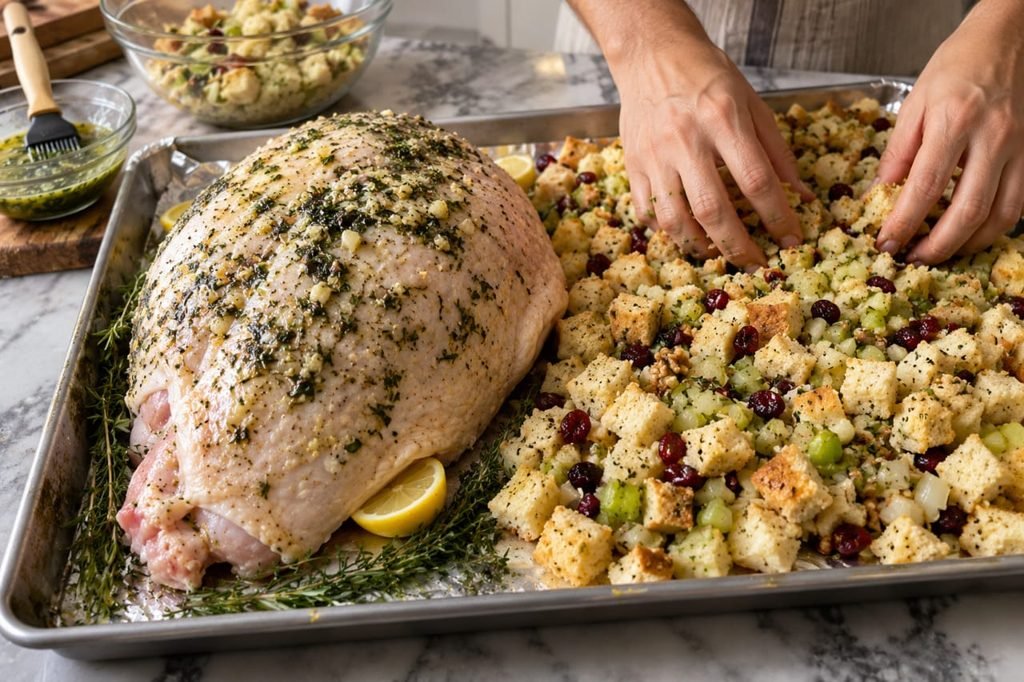
Use a large rimmed half-sheet pan, approximately 18 x 13 inches. Line it with parchment paper or foil if you want easier cleanup.
Spread the stuffing over one side of the pan in an even layer. Avoid packing it down tightly because a looser layer allows the surface to brown and crisp.
Place the turkey breast skin-side up on the other side of the pan. Leave a little space between the turkey and the stuffing so the heat can circulate.
4. Roast the Turkey and Stuffing
Place the sheet pan on the center rack of the oven and roast at 375°F (190°C) for 60 minutes.
After the first hour, increase the oven temperature to 425°F (220°C).
Continue roasting for approximately 20–35 minutes, but use the thermometer rather than the clock as your final guide.
Insert an instant-read thermometer into the thickest part of the turkey breast without touching the bone. The turkey should reach an internal temperature of 165°F (74°C).
If the stuffing begins to brown too quickly, loosely cover that portion of the pan with foil while the turkey finishes cooking.
5. Rest and Carve the Turkey
Transfer the cooked turkey breast to a cutting board and let it rest for 15–20 minutes before carving.
This gives the juices time to redistribute and makes the turkey easier to slice.
If you want the stuffing even crispier, return it to the oven while the turkey rests.
Carve the turkey into slices against the grain and serve with the warm stuffing.
How to Keep the Turkey Breast Juicy
- Do not rely on cooking time alone. Turkey breasts vary in size and shape, so use a thermometer.
- Keep the skin on. The skin helps protect the meat while roasting and gives you a better browned exterior.
- Put some herb butter underneath the skin. This places flavor directly against the meat.
- Do not skip the resting period. Allowing the turkey to rest before slicing helps keep the meat juicy.
- Avoid repeatedly opening the oven. Check the turkey with a thermometer when you are close to the expected cooking window.
How to Keep Sheet Pan Stuffing Crispy
The biggest factor is moisture. Use day-old bread and add the broth gradually rather than flooding the bread all at once.
Once the stuffing is mixed, spread it in an even layer on the sheet pan instead of compressing it into a thick mound. More exposed surface area means more opportunity for the top to become golden and crisp.
If the stuffing is cooked through but you want more color, leave the turkey resting and return the stuffing to the oven for a few additional minutes while watching it closely.
Can I Make the Stuffing Ahead?
Yes. You can prepare several components ahead of time to make Thanksgiving cooking easier.
- Cut the bread into cubes a day or two ahead and leave it uncovered so it can dry.
- Dice the onion and celery and refrigerate them in an airtight container.
- Prepare the herb butter ahead of time and refrigerate it.
- Bring the butter back to a spreadable consistency before applying it to the turkey.
For the best texture, assemble the wet and dry stuffing components close to cooking time rather than leaving a fully mixed, uncooked stuffing mixture sitting for an extended period.
Easy Variations
Cranberry Stuffing
Add the optional dried cranberries for small bursts of sweetness that work especially well with the savory herbs.
Walnut Stuffing
Add toasted chopped walnuts for extra crunch and a nutty flavor.
More Herb Flavor
Increase the fresh rosemary, thyme or sage slightly if you prefer a stronger traditional Thanksgiving herb profile.
Use Turkey Broth
Turkey broth can be used instead of chicken broth for an even more pronounced turkey flavor.
What to Serve with Turkey Breast and Stuffing
This sheet pan turkey dinner already gives you two important parts of a Thanksgiving meal. To complete the plate, serve it with simple sides such as:
- Roasted green beans
- Cranberry sauce
- Mashed potatoes
- Roasted Brussels sprouts
- Simple green salad
- Turkey gravy
How Many People Does This Recipe Serve?
A 5–7 pound bone-in turkey breast can work well for a small holiday gathering, but the exact number of servings depends on how much meat each person eats and how many side dishes you serve.
If you want generous portions and leftovers, plan for fewer servings. If you are serving several sides, the same turkey can stretch further.
How Do I Know When Turkey Breast Is Done?
The most reliable method is an instant-read food thermometer. Insert it into the thickest part of the breast without touching the bone.
The turkey should reach a minimum internal temperature of 165°F (74°C). USDA guidance recommends using a food thermometer rather than relying only on cooking time or the color of the meat.
How to Store Leftover Turkey and Stuffing
Transfer leftovers to shallow airtight containers and refrigerate them promptly. Cooked turkey and stuffing can generally be kept refrigerated for 3–4 days.
For longer storage, cooked turkey and stuffing can be frozen. For best quality, package them tightly and use them within the recommended freezer-storage period.
When reheating leftovers, heat the turkey and stuffing to 165°F (74°C). Adding a small amount of broth and covering the turkey while reheating can help prevent it from drying out.
Frequently Asked Questions
Can I use boneless turkey breast?
Yes. Boneless turkey breast can be used, but its size and shape may change the cooking time. Start checking the internal temperature earlier and cook until the thickest part reaches 165°F.
Can I use fresh bread for the stuffing?
You can, but day-old or dried bread is preferable because it absorbs the broth while maintaining more structure.
Why is my stuffing too wet?
The bread may have absorbed too much liquid, or the bread may have been too fresh. Use sturdy day-old bread and add the broth gradually until the bread is evenly moistened but not saturated.
Why is my stuffing not crispy?
Make sure it is spread in an even layer rather than packed deeply into the pan. If the turkey is already done, you can return the stuffing to the oven briefly while the turkey rests.
Can I make this without cranberries or walnuts?
Absolutely. Both are optional. The basic stuffing remains flavorful with bread, butter, onion, celery, garlic, herbs, broth and eggs.
Can I use chicken broth instead of turkey broth?
Yes. Chicken broth works well and is already part of the original recipe. Low-sodium broth gives you better control over the final salt level.
Should I cover the turkey while it cooks?
This recipe is designed to roast the turkey uncovered so the skin can brown. If the skin becomes too dark before the turkey reaches 165°F, loosely tent the turkey with foil and continue cooking.
Can I cook the stuffing inside the turkey?
For this recipe, no. The stuffing is intentionally cooked separately on the sheet pan. Cooking dressing outside the bird makes it easier to monitor both the turkey and stuffing and helps the stuffing develop crisp edges. USDA guidance also recommends cooking stuffing outside poultry for optimal safety and even cooking.
Final Tips for the Best Sheet Pan Turkey Breast and Stuffing
- Dry the turkey skin thoroughly before adding the herb butter.
- Use sturdy day-old bread for better stuffing texture.
- Do not compress the stuffing tightly on the pan.
- Keep the turkey skin-side up while roasting.
- Use a thermometer instead of relying only on the cooking time.
- Shield the stuffing or turkey with foil if either side browns too quickly.
- Let the turkey rest for 15–20 minutes before slicing.
- Refrigerate leftovers promptly and use them within 3–4 days.
Sheet Pan Turkey Breast and Stuffing
This easy sheet pan turkey breast and stuffing is a practical way to bring classic Thanksgiving flavors to a smaller holiday table. The herb-roasted turkey develops golden skin while the buttery bread stuffing cooks alongside it, giving you a comforting main dish with fewer pans to wash.
For the best results, focus on three things: use dry bread, avoid packing the stuffing too tightly, and check the turkey with a thermometer. Those small details make the difference between dry turkey or soggy stuffing and a much better holiday dinner.
For more general food safety and nutrition guidance, see the USDA Food Safety and Inspection Service.
You Might Also Like
- Antipasto Cream Cheese Log: The Ultimate Holiday Appetizer
- Smoked Salmon Roses: An Elegant Appetizer for Stunning First Impressions
- Blackened Shrimp Avocado Cucumber Bites: Your New Favorite 42-Piece Party Appetizer