Bring a little taste of Portugal into your kitchen with these Easy Portuguese Custard Tarts, also known as Pastéis de Nata. These famous Lisbon pastries feature delicate, flaky puff pastry shells filled with silky vanilla custard and finished with beautifully caramelized spots on top.
Traditionally enjoyed warm with a sprinkle of cinnamon and a cup of coffee, Pastel de Nata is one of Portugal’s most beloved desserts. This simplified homemade version uses store-bought puff pastry, making it easier to enjoy these delicious Portuguese custard tarts without spending hours preparing pastry from scratch.
What Makes Pastel de Nata Special?
The magic of Pastel de Nata comes from the contrast between its crisp, buttery pastry and its smooth, rich egg custard. A little lemon peel and cinnamon add a gentle fragrance, while baking at a high temperature creates the signature golden surface with dark caramelized spots.
Why You’ll Love This Recipe
- Easy homemade method: Ready-made puff pastry saves preparation time.
- Classic Portuguese flavor: Lemon, cinnamon, and creamy egg custard create an authentic-inspired taste.
- Beautiful presentation: The golden pastry and caramelized custard look impressive.
- Perfect individual portions: Each tart is easy to serve and enjoy.
- Great with coffee: A delicious breakfast treat or afternoon dessert.
Ingredients You’ll Need
For the Pastry Shells
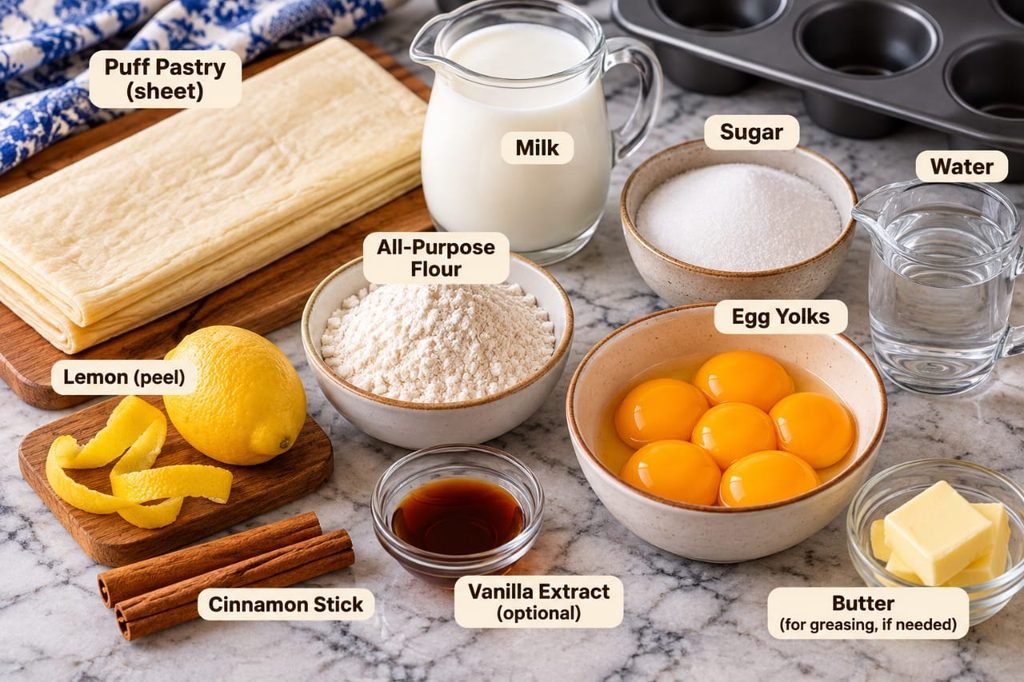
- 1 sheet (about 320 g / 11 oz) all-butter puff pastry, thawed if frozen
- A little butter for greasing the muffin pan, if needed
For the Custard Filling
- 1 1/4 cups (300 ml) whole milk, divided
- 3/4 cup (150 g) granulated sugar
- 1/2 cup (120 ml) water
- 1/4 cup (30 g) all-purpose flour
- 6 large egg yolks
- 1 cinnamon stick
- 2 wide strips of lemon peel, avoiding the bitter white pith
- 1 teaspoon vanilla extract (optional)
For Serving
- Ground cinnamon
- Powdered sugar, optional
How to Make Portuguese Custard Tarts
Step 1: Prepare the Oven and Muffin Pan
Preheat your oven to 500°F (260°C), or to its highest suitable temperature. Place a sturdy baking sheet on the upper-middle rack while the oven heats. This helps provide strong bottom heat for crisp pastry.
Lightly grease a standard 12-cup muffin pan if it is not nonstick.
Step 2: Shape the Puff Pastry
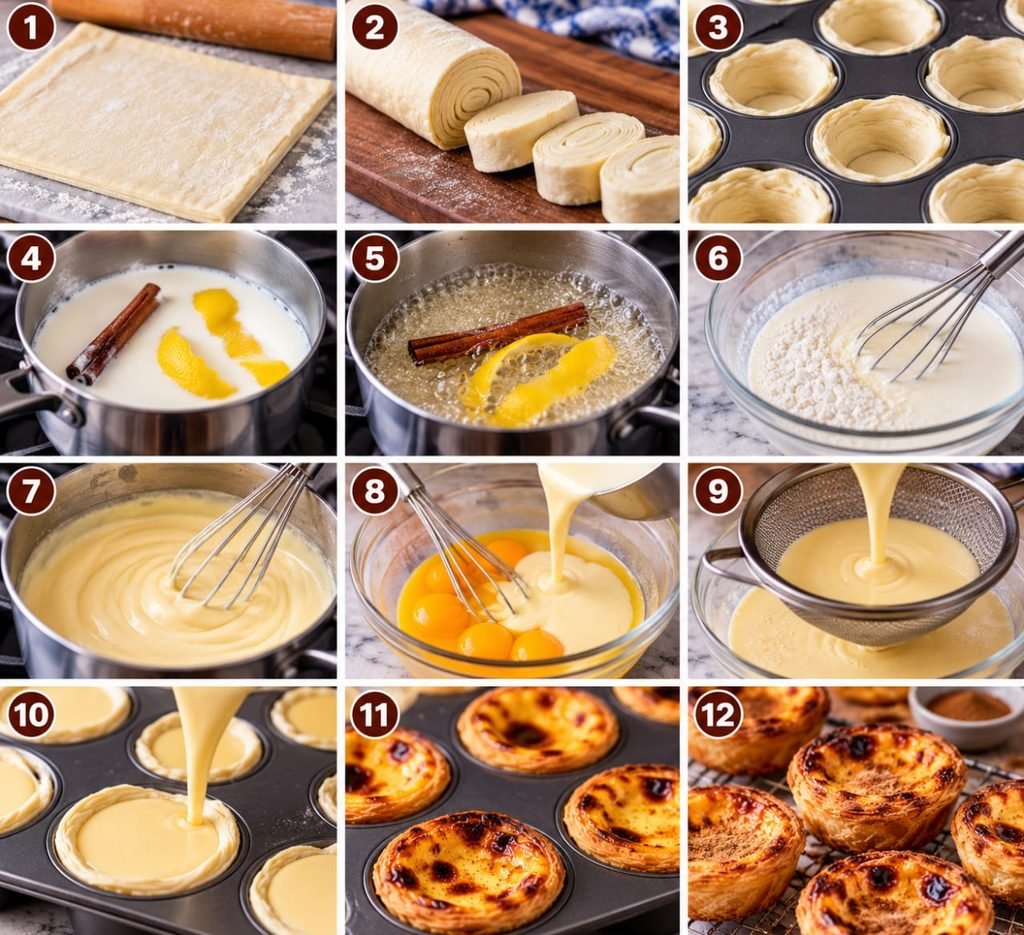
Place the thawed puff pastry on a lightly floured surface. Roll it gently into a rectangle if needed, keeping the layers intact.
Starting from one short edge, roll the pastry tightly into a log. Refrigerate for about 20 minutes to make it easier to slice.
Cut the log into 12 equal pieces. Place each piece cut-side up into a muffin cup. With slightly damp thumbs, press the center outward and upward until the pastry forms a thin shell that reaches the top of the cup.
Keep the pastry shells chilled while you prepare the custard.
Step 3: Make the Cinnamon and Lemon Sugar Syrup
Combine the sugar, water, cinnamon stick, and lemon peel in a small saucepan. Bring to a boil over medium heat and simmer for about 3 minutes. Remove from the heat and set aside.
Remove the cinnamon stick and lemon peel before combining the syrup with the custard.
Step 4: Prepare the Milk Mixture
In a small bowl, whisk the flour with about 1/2 cup of the cold milk until completely smooth.
Heat the remaining milk in a saucepan until steaming. Gradually whisk in the flour mixture and cook gently for about 1 to 2 minutes, stirring constantly, until slightly thickened.
Remove from the heat and gradually whisk in the prepared sugar syrup. Let the mixture cool until warm rather than hot.
Step 5: Add the Egg Yolks
In a separate bowl, lightly whisk the egg yolks. Slowly add a little of the warm milk mixture while whisking to temper the yolks.
Gradually whisk the tempered yolks into the remaining custard mixture. Add the vanilla extract if using. Strain through a fine-mesh sieve for a silky texture.
Do not pour very hot liquid directly onto the yolks, as this can scramble them.
Step 6: Fill the Pastry Shells
Remove the pastry-lined muffin pan from the refrigerator. Carefully pour the custard into each shell, filling each one about three-quarters full. Avoid overfilling because the custard will rise during baking.
Step 7: Bake Until Golden and Caramelized
Carefully place the muffin pan on the preheated baking sheet. Bake at 500°F (260°C) for approximately 12 to 16 minutes, depending on your oven and pan.
The pastry should become golden and crisp, while the custard develops dark golden-brown spots on top. These caramelized marks are a signature feature of Pastel de Nata.
Watch carefully near the end of baking. If your oven cannot safely reach 500°F, use its highest recommended baking temperature and expect a longer baking time and potentially less pronounced caramelization.
Step 8: Cool and Serve
Remove the tarts from the oven and let them rest in the muffin pan for about 10 minutes. Carefully transfer them to a wire rack to cool slightly.
Dust with ground cinnamon or a little powdered sugar if desired. Pastéis de Nata are especially delicious served slightly warm.
Tips for Perfect Pastéis de Nata
- Keep the pastry cold: Chilled pastry helps preserve its layers and makes shaping easier.
- Use all-butter puff pastry: It gives the shells a rich flavor and crisp texture.
- Strain the custard: This removes any small lumps and creates a smoother filling.
- Temper the egg yolks: Adding warm liquid gradually helps prevent scrambled eggs.
- Do not overfill: Leave room for the custard to expand during baking.
- Use high heat carefully: The characteristic dark spots develop at high temperatures, but ovens vary, so keep a close eye on the tarts.
- Serve fresh: The pastry is at its crispiest shortly after baking.
Common Mistakes to Avoid
- Using warm puff pastry: Soft pastry can lose its flaky layers. Chill it before shaping.
- Adding hot syrup to egg yolks: Cool the mixture slightly and temper the yolks gradually.
- Skipping the straining step: Straining helps create a smooth custard.
- Opening the oven repeatedly: Frequent temperature changes can affect baking and browning.
- Removing the tarts too quickly: Let them rest briefly so the custard can settle.
How to Store Portuguese Custard Tarts
Pastéis de Nata are best enjoyed on the day they are baked, when the pastry is crisp and the custard is creamy.
If you have leftovers, allow them to cool completely and store them in an airtight container in the refrigerator for up to 2 days.
To refresh the pastry, reheat the tarts in a preheated 350°F (175°C) oven for about 5 to 8 minutes. Let them cool briefly before eating. Avoid microwaving if you want to preserve the crisp pastry.
Frequently Asked Questions
What is Pastel de Nata?
Pastel de Nata is a traditional Portuguese custard tart made with flaky pastry and a creamy egg-yolk filling. It is especially associated with Lisbon and is often served warm with cinnamon.
Can I use store-bought puff pastry?
Yes. Store-bought all-butter puff pastry is a convenient option for home baking. Keep it chilled and handle it gently to preserve its layers.
Why are there dark spots on Portuguese custard tarts?
The dark spots are caramelized areas that develop when the custard is baked at a very high temperature. They provide the characteristic appearance and a subtle toasted flavor.
Can I make the custard ahead of time?
You can prepare the custard mixture ahead and refrigerate it in a covered container. Whisk it gently before filling the pastry shells. For the best texture, assemble and bake shortly before serving.
Can I make Pastel de Nata without special tart molds?
Yes. A standard muffin pan works well for this home-friendly version. Traditional Portuguese tart molds are smaller and shallower, but a muffin pan is a practical alternative.
Should Pastel de Nata be served warm or cold?
They are traditionally enjoyed slightly warm, when the pastry is crisp and the custard is soft and creamy. A light dusting of cinnamon is a lovely finishing touch.
Final Thoughts
These Easy Portuguese Custard Tarts bring the flavors of Lisbon to your home with flaky puff pastry, fragrant cinnamon and lemon, and a smooth golden custard filling.
Whether you serve them for breakfast, afternoon coffee, or dessert, Pastéis de Nata are a wonderful treat to share. Bake a batch, let them cool slightly, add a little cinnamon, and enjoy a taste of Portugal!