

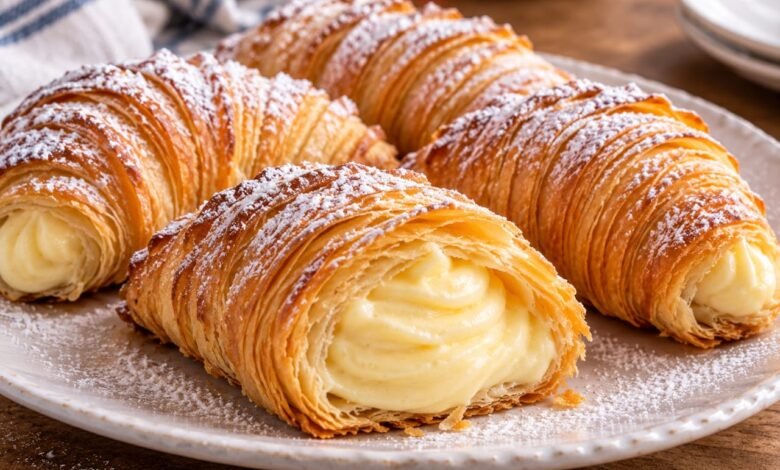
If you love Italian bakery desserts, these lobster tail pastries are worth making at home. They feature a crisp, delicate shell with thin layers of pastry and a smooth vanilla cream filling.
This homemade version is inspired by Italian-American bakery-style lobster tails. It is not the original or proprietary Ferrara Bakery recipe, but it explains the techniques needed to make crisp shells and creamy filling at home.
What Is a Lobster Tail Pastry?
A lobster tail pastry is a shell-shaped dessert with a crisp, layered exterior and a creamy center. Despite its name, it contains no seafood. It is often compared with sfogliatella, a traditional Italian pastry that commonly contains ricotta, semolina, and citrus.
Ingredients
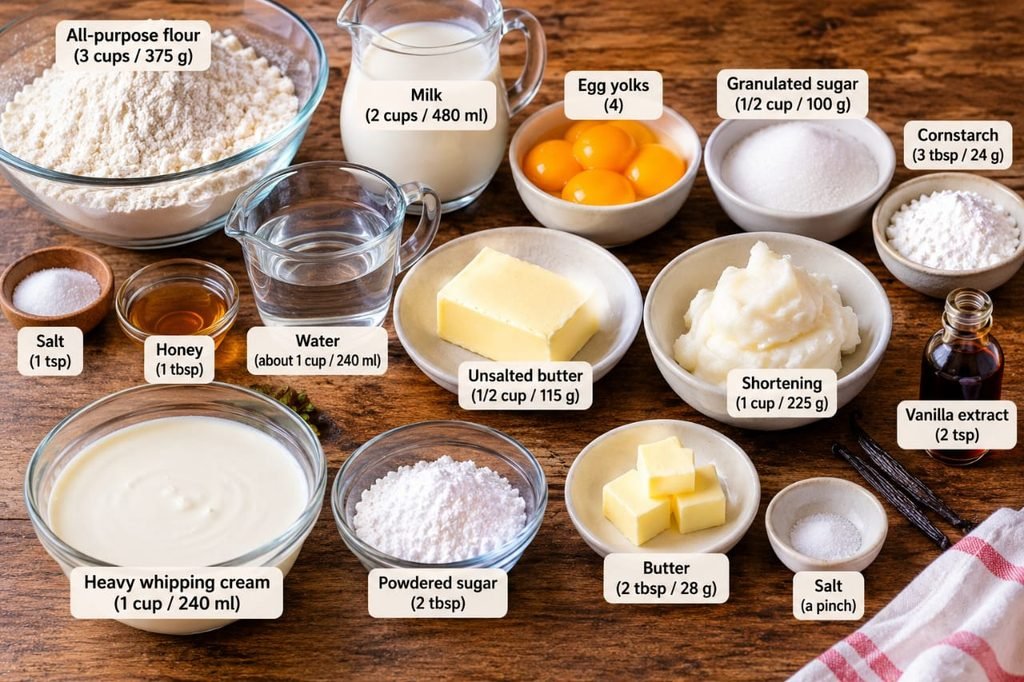
For the Pastry Dough
- 3 cups (375 g) all-purpose flour
- 1 teaspoon salt
- 1 tablespoon honey
- Approximately 1 cup (240 ml) water, added gradually
- 1/2 cup (115 g) softened unsalted butter
- Approximately 1 cup (225 g) vegetable shortening or softened unsalted butter, for layering
For the Vanilla Pastry Cream
- 2 cups (480 ml) whole milk
- 4 large egg yolks
- 1/2 cup (100 g) granulated sugar
- 3 tablespoons (24 g) cornstarch
- 2 tablespoons (28 g) unsalted butter
- 2 teaspoons vanilla extract
- A pinch of salt
For the Whipped Cream
- 1 cup (240 ml) cold heavy whipping cream
- 2 tablespoons powdered sugar
- 1/2 teaspoon vanilla extract
For Finishing
- Powdered sugar, for dusting
How to Make Lobster Tail Pastries
Step 1: Prepare the Dough
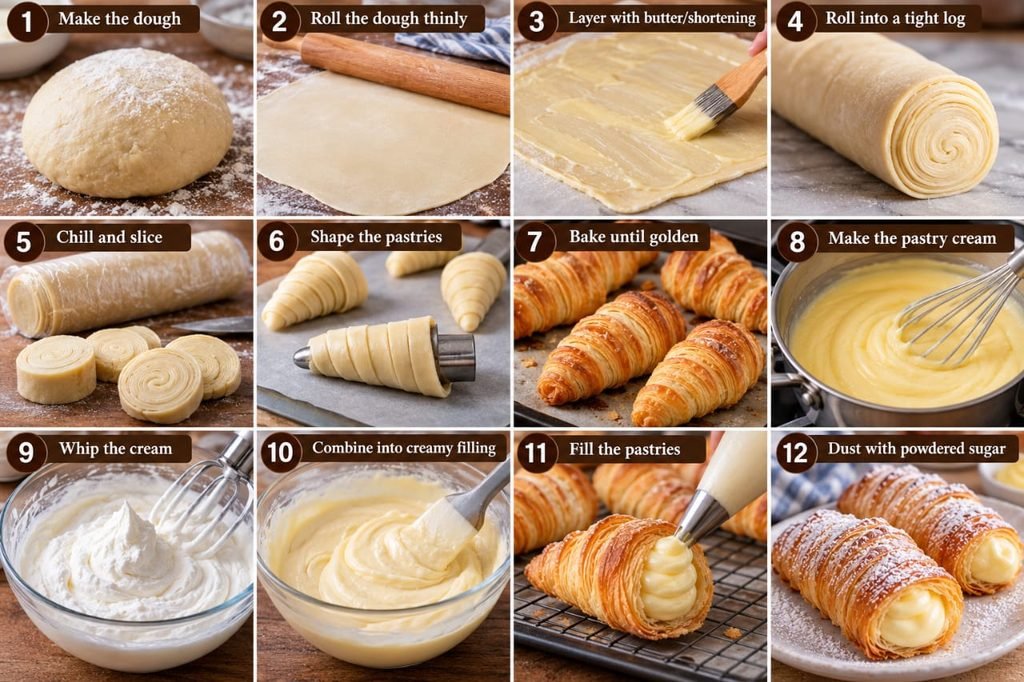
Mix the flour and salt in a large bowl. Add the honey and gradually mix in the water until a firm, workable dough forms. Knead until smoother, cover, and let rest for about 30 minutes.
Step 2: Roll the Dough Thinly
Divide the dough into manageable portions. Roll each portion into a very thin sheet with a rolling pin or pasta machine. Keep unused dough covered so it does not dry out.
Step 3: Create the Layered Coil
Spread a thin, even layer of softened shortening or butter over the dough. Roll it carefully into a tight cylinder, keeping the layers aligned. Wrap and refrigerate until firm enough to slice cleanly. Chilling for several hours or overnight can make shaping easier.
Step 4: Make the Pastry Cream
Heat the milk in a saucepan until steaming. In a separate bowl, whisk the egg yolks, sugar, cornstarch, and salt until smooth.
Gradually whisk some warm milk into the egg mixture. Pour it back into the saucepan while whisking continuously. Cook over medium heat, stirring, until thickened and gently bubbling. Remove from the heat and stir in the butter and vanilla.
Transfer the cream to a shallow container, cover its surface, and refrigerate until completely cold.
Step 5: Whip the Cream
Whip the cold heavy cream with powdered sugar and vanilla until medium-firm peaks form. Gently fold it into the chilled pastry cream. Keep the filling refrigerated until needed.
Step 6: Shape the Pastries
Cut the chilled dough cylinder into evenly sized slices. Gently press and shape each piece into a small shell or cone, opening the layers carefully without tearing the dough. If the dough becomes soft, chill it briefly before continuing.
Step 7: Bake Until Golden
Preheat the oven to 400°F (200°C). Place the shells on a parchment-lined baking sheet, leaving space between them. Bake for approximately 25–35 minutes, checking until they are golden and crisp. Baking times vary with pastry size and oven performance.
Transfer the shells to a wire rack and let them cool completely before filling.
Step 8: Fill and Serve
Transfer the chilled cream to a piping bag. Carefully pipe the filling into each cooled shell. Dust lightly with powdered sugar and serve soon after filling for the best contrast between crisp pastry and smooth cream.
Tips for Crisp, Layered Pastries
- Roll the dough into thin, even sheets.
- Keep the dough covered so the surface does not dry out.
- Distribute the layering fat evenly.
- Chill the dough coil before slicing.
- Allow baked shells to cool completely before filling.
- Fill the pastries close to serving time to help preserve their crispness.
Troubleshooting Common Problems
Why Didn’t the Layers Open?
The dough may have been too thick, the coil too compressed, or the layering fat unevenly distributed. Roll thinner sheets and chill the coil before cutting.
Why Is the Dough Tough?
The dough may need more resting time or may contain too much extra flour. Cover it and allow it to relax before rolling again.
Why Is the Filling Runny?
The pastry cream may not have thickened sufficiently, or the whipped cream may have been added while the pastry cream was still warm. Chill the pastry cream completely before folding in the whipped cream.
Why Did the Shell Become Soggy?
Moisture from the filling softens the pastry over time. Store the shells separately and fill them shortly before serving.
Can You Make Lobster Tail Pastries Ahead?
Yes. Prepare the dough coil and pastry cream in advance. Bake the shells when ready, cool them completely, and keep the filling refrigerated. Pipe the filling into the shells shortly before serving.
Storage Tips
Store unfilled shells in an airtight container in a cool, dry place. Keep the egg-and-dairy filling refrigerated in a covered container. Filled pastries should be refrigerated and are best enjoyed soon after assembly because refrigeration can soften the shell.
Lobster Tail Pastry vs. Sfogliatella
Lobster tail pastries are often associated with Italian-American bakeries and typically have a cream-filled shell. Sfogliatella riccia is a traditional Neapolitan pastry commonly filled with ricotta, semolina, sugar, and citrus. Recipes vary by bakery, so the names should not automatically be treated as interchangeable.
Frequently Asked Questions
Does a lobster tail pastry contain seafood?
No. It is a dessert pastry and does not contain lobster meat.
Can I use butter instead of shortening?
Yes, although the texture and layering may differ because butter and shortening behave differently during baking.
Can beginners make this pastry?
Yes, but it takes patience. Focus on thin, even dough sheets, careful shaping, and sufficient chilling time.
Is this the original Ferrara Bakery recipe?
No. This is a homemade interpretation inspired by bakery-style lobster tail pastries, not a verified copy of Ferrara Bakery’s proprietary recipe.
Final Thoughts
Homemade lobster tail pastries take time, but careful rolling, chilling, and shaping help create a crisp layered shell. Prepare the cream separately, allow the shells to cool completely, and fill them just before serving for the best texture.




3 Comments