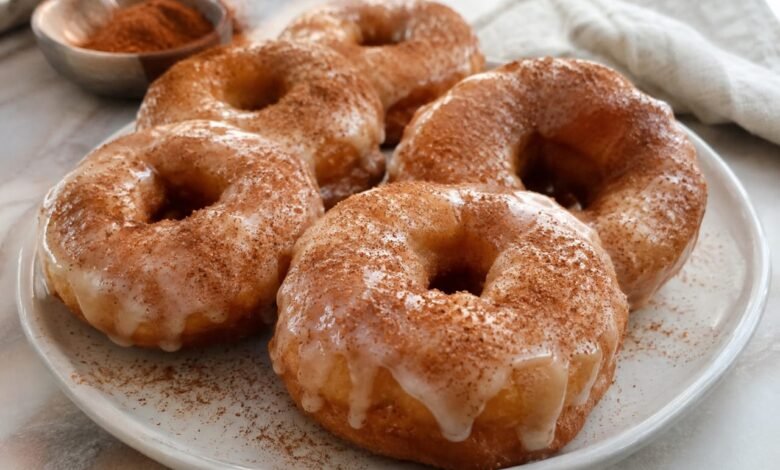
These homemade cinnamon glazed donuts are soft, fluffy, and covered in a sweet vanilla-cinnamon icing that sets into a delicate coating. Made with a simple yeast dough, they have a tender interior and a beautifully golden exterior that makes every bite irresistible.
Unlike quick cake-style donuts, these yeast-raised donuts develop their light texture through two rises. The dough is enriched with milk, eggs, and butter, giving the finished donuts a soft crumb and a rich flavor. Whether you’re making them for a weekend breakfast, an afternoon treat, or a homemade dessert, they’re worth the little extra time.
Why You’ll Love These Cinnamon Glazed Donuts
- Soft and fluffy: Yeast helps create a light, airy texture.
- Warm cinnamon flavor: The homemade glaze combines cinnamon, vanilla, and powdered sugar.
- Simple ingredients: Everything is easy to find in a regular grocery store.
- Perfect for sharing: These donuts make a lovely breakfast or sweet snack.
- Customizable: Adjust the cinnamon or glaze thickness to suit your taste.
Ingredients You’ll Need
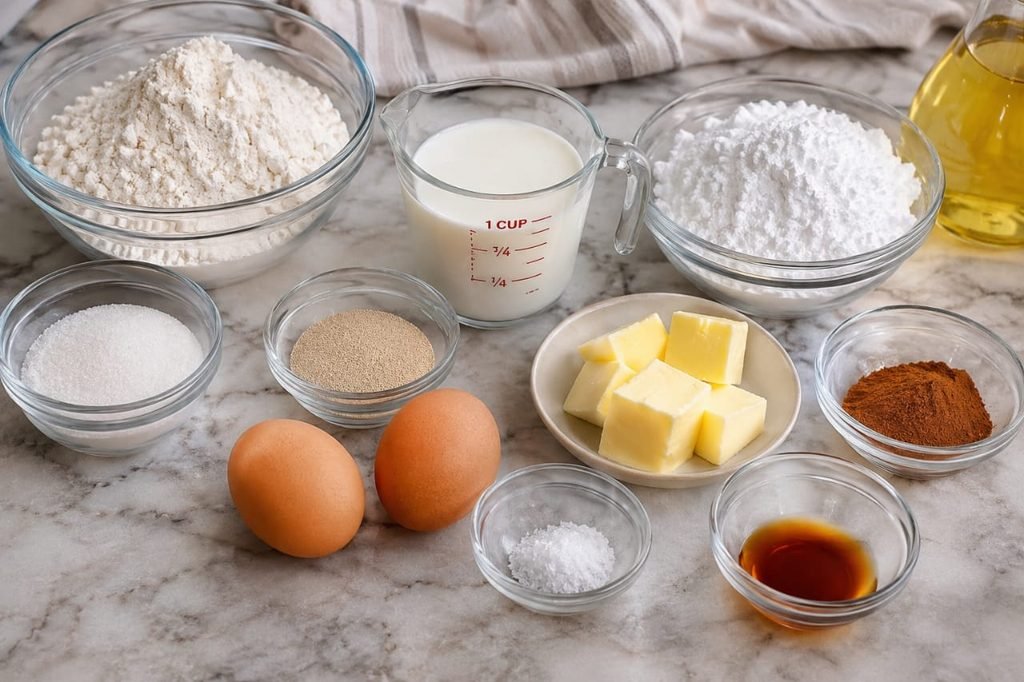
You’ll need two sets of ingredients: one for the enriched donut dough and another for the cinnamon glaze.
For the Donut Dough
- 375g (about 3 cups) all-purpose flour, spooned and leveled
- 50g (1/4 cup) granulated sugar
- 7g (2 1/4 teaspoons) active dry yeast
- 120ml (1/2 cup) warm whole milk
- 2 large eggs, at room temperature
- 56g (4 tablespoons) unsalted butter, softened
- 1 teaspoon fine sea salt
- 1 teaspoon pure vanilla extract
- Vegetable or canola oil, for frying
For the Cinnamon Glaze
- 250g (2 cups) powdered sugar, sifted
- 60–80ml (4–5 tablespoons) whole milk or cream
- 1 1/2 teaspoons ground cinnamon
- 1 teaspoon pure vanilla extract
- A small pinch of salt
How to Make Homemade Cinnamon Glazed Donuts
Step 1: Activate the Yeast
Pour the warm milk into a large mixing bowl. Add a pinch of the sugar and sprinkle the active dry yeast over the surface. Stir gently and let the mixture stand for 5–10 minutes, until foamy.
If the yeast does not become foamy, check its expiration date before continuing. The milk should be warm, not hot, because excessive heat can damage the yeast.
Step 2: Mix the Dough
Add the eggs, remaining sugar, softened butter, vanilla extract, and salt to the yeast mixture. Mix until combined. Gradually add about half of the flour, stirring until a thick, sticky mixture forms.
Step 3: Knead Until Smooth
Attach the dough hook to your stand mixer and gradually add the remaining flour. Knead on medium-low speed for 5–7 minutes, until the dough becomes smooth and elastic.
The dough should feel slightly tacky but should not be excessively sticky. If kneading by hand, work on a lightly floured surface for approximately 8–10 minutes.
Step 4: Let the Dough Rise
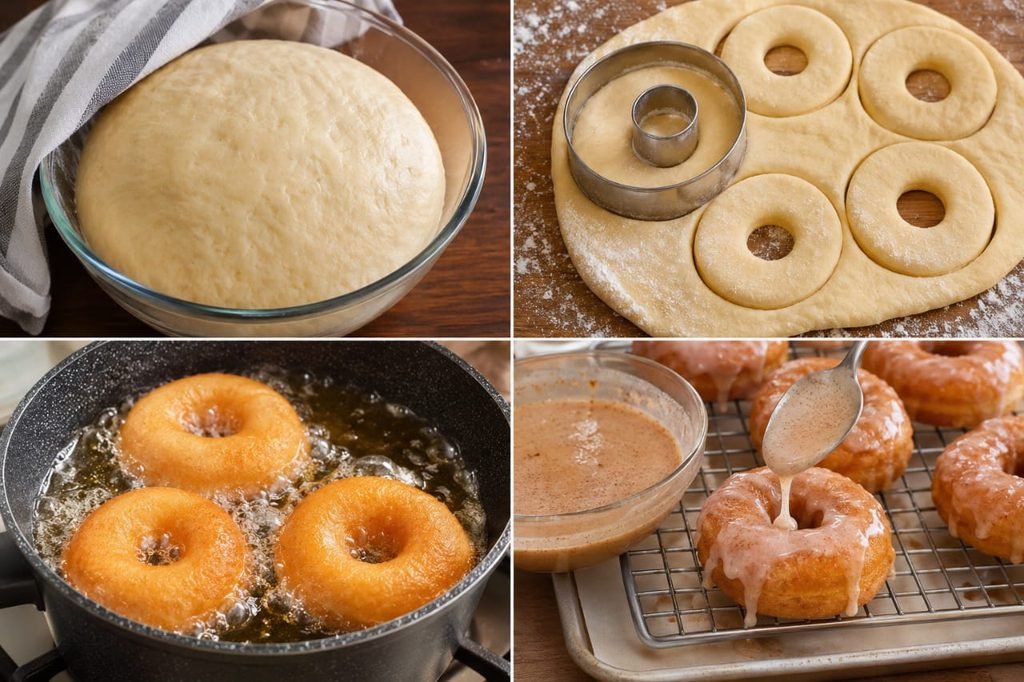
Transfer the dough to a lightly greased bowl and turn it once to coat the surface. Cover with plastic wrap or a clean kitchen towel.
Leave it in a warm, draft-free place for approximately 1–1 1/2 hours, or until it doubles in size. Rising time depends on the temperature of your kitchen.
Step 5: Cut the Donuts
Gently press down the risen dough to release excess air. Transfer it to a lightly floured work surface and roll it out to approximately 1/2-inch thickness.
Use a 3-inch round donut cutter to cut out the donuts. If you don’t have one, use a drinking glass for the outer circles and a small bottle cap for the centers. Gather the leftover dough, gently reroll it, and cut additional donuts.
Step 6: Allow a Second Rise
Arrange the cut donuts on parchment-lined baking sheets, leaving enough space between them. Cover loosely with a clean towel and let them rise for another 30–45 minutes, until visibly puffy.
This second rise is important because it helps produce the light, fluffy texture that makes homemade yeast donuts so enjoyable.
Step 7: Fry Until Golden
Pour 2–3 inches of vegetable or canola oil into a heavy-bottomed pot. Heat the oil to 350°F (175°C), using a kitchen thermometer to monitor the temperature.
Carefully lower 2–3 donuts into the hot oil at a time. Fry for approximately 1–2 minutes per side, turning once, until evenly golden brown and cooked through.
Transfer the donuts to a wire rack set over a baking sheet to drain. Allow them to cool slightly before adding the glaze.
Step 8: Prepare the Cinnamon Glaze
In a medium bowl, whisk together the sifted powdered sugar and ground cinnamon. Add the vanilla extract, salt, and 4 tablespoons of milk.
Whisk until smooth. If the glaze is too thick, add a little more milk, one teaspoon at a time. You want a thick but pourable consistency that will coat the donuts without running off completely.
Step 9: Glaze and Serve
Dip the top of each slightly warm donut into the cinnamon glaze. Lift it gently and allow the excess icing to drip back into the bowl.
Place the glazed donuts on a wire rack and let the coating set. Serve fresh while the centers are still soft and tender.
Tips for the Best Cinnamon Glazed Donuts
- Check your yeast: Always make sure the yeast is active before mixing the full dough.
- Measure flour carefully: Too much flour can make the donuts heavy and dry. A kitchen scale gives the most reliable results.
- Watch the oil temperature: Oil that is too hot can brown the outside before the inside cooks. Oil that is too cool can make donuts greasy.
- Avoid overcrowding: Fry only a few donuts at a time to keep the oil temperature stable.
- Don’t rush the rises: Allowing enough time for both rises helps create a lighter texture.
- Glaze while slightly warm: The icing adheres nicely without becoming excessively runny.
Common Donut-Making Mistakes and How to Fix Them
Why Are My Donuts Dense?
Dense donuts are often caused by inactive yeast, too much flour, or insufficient rising time. Check your yeast before starting and allow the dough to become visibly puffy during both rises.
Why Are My Donuts Greasy?
Greasy donuts usually mean the frying oil was too cool. Maintain a temperature close to 350°F (175°C) and avoid adding too many donuts at once.
Why Is My Cinnamon Glaze Too Runny?
Add more sifted powdered sugar, one tablespoon at a time, until the glaze thickens. If it becomes too thick, add a small amount of milk.
Why Are My Donuts Dark Outside but Raw Inside?
The oil is probably too hot. Lower the heat and allow the temperature to return to approximately 350°F before frying the next batch.
Easy Variations to Try
- Cinnamon Maple Glaze: Replace one tablespoon of milk with maple syrup for a warm maple flavor.
- Chocolate Cinnamon Donuts: Add a little cocoa powder to the glaze for a chocolate twist.
- Extra Spiced Donuts: Add a small pinch of nutmeg or cardamom to the dough.
- Powdered Sugar Finish: Skip the glaze and dust the cooled donuts with powdered sugar.
How to Store Homemade Cinnamon Glazed Donuts
These donuts taste best on the day they’re made, when the centers are soft and the glaze is fresh.
- Room temperature: Store in an airtight container for up to 1–2 days.
- Refrigeration: Not recommended, as refrigeration can make the dough turn stale more quickly.
- Freezing: Freeze unglazed donuts in an airtight freezer-safe container for up to 2 months. Thaw at room temperature and glaze before serving.
Frequently Asked Questions
Can I make cinnamon glazed donuts without a stand mixer?
Yes. You can mix the ingredients by hand and knead the dough on a lightly floured surface for approximately 8–10 minutes, until smooth and elastic.
Can I prepare the donut dough ahead of time?
Yes. After kneading, place the covered dough in the refrigerator overnight. The next day, let it sit briefly at room temperature, then shape, proof, and fry as directed. Allow extra time if the dough is still cold.
What oil is best for frying donuts?
Neutral oils with a high smoke point, such as canola or vegetable oil, work well. They allow the cinnamon and vanilla flavors to stand out.
How do I know when the donuts are fully cooked?
They should be evenly golden brown on both sides and feel light when lifted. If you’re unsure, test one donut first by cutting it open to check the center.
Can I make the cinnamon glaze thicker?
Absolutely. Simply add more powdered sugar until it reaches your preferred consistency. For a thinner coating, add milk gradually.
Final Thoughts
Homemade cinnamon glazed donuts are a delicious way to bring the flavor of a bakery into your own kitchen. With their fluffy centers, golden exteriors, and sweet cinnamon icing, they’re a wonderful treat for breakfast, dessert, or sharing with family and friends.
Take your time with the rising process, keep an eye on the frying temperature, and don’t be afraid to adjust the glaze to your liking. Once you make your first batch, these soft and sweet donuts may become a favorite in your kitchen.
Serve them fresh with a cup of coffee or tea, and enjoy every cinnamon-coated bite!