


This easy ham and bean soup is a warm, satisfying meal made with tender white beans, savory ham, fresh vegetables, and a flavorful herb broth. It is a wonderful way to turn leftover cooked ham into a comforting homemade dinner without spending hours in the kitchen.
Unlike recipes that require dried beans to soak overnight, this version uses canned white beans to make preparation quicker and easier. A little smoked paprika adds depth, while mashing some of the beans creates a naturally thicker broth without adding cream or flour.
Whether you are looking for a cozy weeknight dinner or a practical way to use leftover holiday ham, this simple stovetop soup deserves a place in your recipe collection.
Why You’ll Love This Easy Ham and Bean Soup
- Quick and convenient: Canned beans make this soup easier to prepare than versions using dried beans.
- Great for leftovers: Use cooked ham from a previous meal to create a completely different dish.
- Rich, savory flavor: Garlic, smoked paprika, thyme, and bay leaf add depth to the broth.
- Naturally thick texture: Mashing a portion of the beans helps thicken the soup without cream.
- Easy to customize: Adjust the vegetables, herbs, and broth to suit your taste.
- Freezer-friendly: Prepare a batch ahead of time and save portions for busy days.
Ingredients for Ham and Bean Soup

Main Ingredients
- 2 tablespoons olive oil
- 1 medium yellow onion, diced
- 2 medium carrots, peeled and diced
- 2 celery stalks, diced
- 3 garlic cloves, minced
- 2 cups (about 300 g) cooked ham, diced
- 3 cans (15 ounces each) white beans, drained and rinsed
- 6 cups low-sodium chicken broth
- 1 bay leaf
- 1 teaspoon dried thyme
- 1/2 teaspoon smoked paprika
- 1/4 teaspoon freshly ground black pepper
- Salt, to taste
- 1 teaspoon apple cider vinegar, plus more to taste
- 2 tablespoons chopped fresh parsley, for serving
Optional Ingredients
- 1/4 teaspoon red pepper flakes for gentle heat
- 1 cup chopped kale or spinach for extra greens
- Extra chicken broth or water if you prefer a thinner soup
How to Make Easy Ham and Bean Soup
Step 1: Prepare the Vegetables
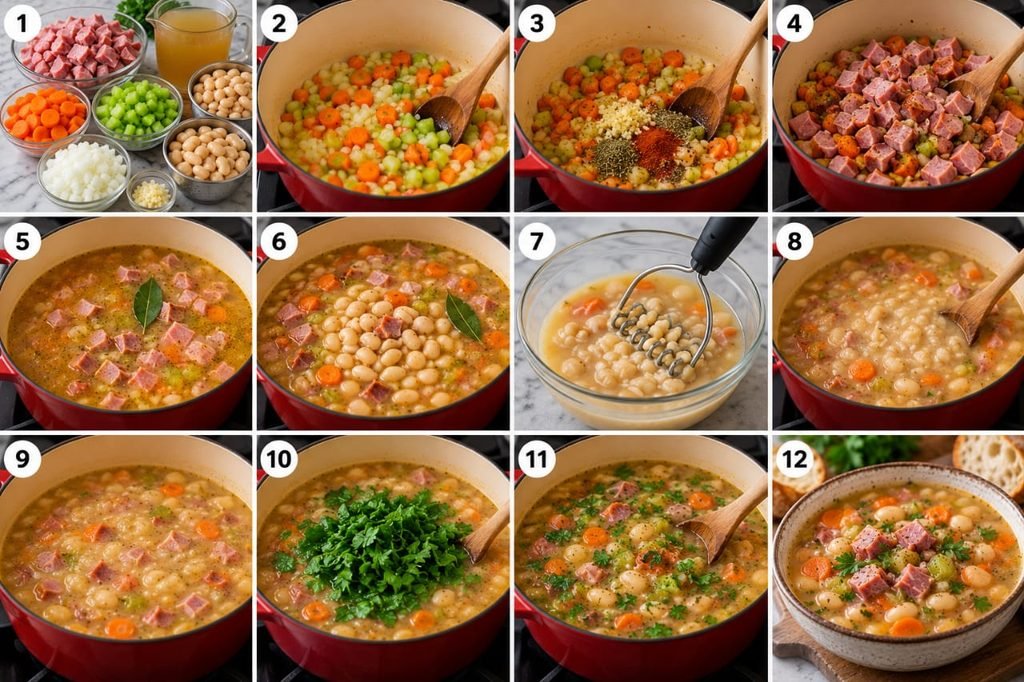
Dice the onion, carrots, and celery into small, evenly sized pieces. Mince the garlic and cut the cooked ham into bite-sized cubes. Drain and rinse the canned beans under cool running water.
Having everything ready before you begin makes the cooking process smoother and helps the vegetables cook evenly.
Step 2: Sauté the Onion, Carrots, and Celery
Heat the olive oil in a large Dutch oven or heavy-bottomed soup pot over medium heat. Add the onion, carrots, and celery.
Cook for about 6 to 8 minutes, stirring occasionally, until the onion becomes translucent and the vegetables begin to soften. Avoid browning them too heavily, as the goal is to develop a sweet, savory base for the soup.
Step 3: Add the Garlic and Seasonings
Stir in the minced garlic, smoked paprika, dried thyme, and black pepper. Cook for about 30 seconds, just until the garlic becomes fragrant.
Adding the spices before the liquid helps distribute their flavor throughout the soup. Be cautious with salt at this stage because cooked ham and chicken broth can already contain plenty of sodium.
Step 4: Add the Ham, Beans, and Broth
Add the diced cooked ham, drained white beans, chicken broth, and bay leaf. Stir gently to combine the ingredients.
Bring the mixture to a gentle boil, then reduce the heat to low. Let the soup simmer uncovered for 20 to 25 minutes, stirring occasionally, until the vegetables are tender and the flavors have blended.
Step 5: Thicken the Soup Naturally
For a thicker, creamier texture without adding dairy, transfer about 1 cup of the beans and broth to a small bowl. Mash them with a fork or potato masher until mostly smooth.
Return the mashed mixture to the pot and stir well. Simmer for another 3 to 5 minutes, allowing the broth to thicken. If the soup becomes thicker than you prefer, add a little more broth or water.
Step 6: Adjust the Flavor
Remove and discard the bay leaf. Stir in the apple cider vinegar and taste the soup before adding any salt.
The vinegar should not make the soup taste sour. Instead, a small amount brightens the savory ham and beans. Add a little more if needed, then adjust the pepper and salt to taste.
Step 7: Add Greens and Serve
If using spinach or kale, stir it into the simmering soup during the final few minutes of cooking. Spinach wilts quickly, while kale may need a little longer to soften.
Ladle the hot soup into bowls and garnish with chopped fresh parsley. Serve with crusty bread, warm dinner rolls, or a simple green salad.
Tips for the Best Ham and Bean Soup
- Choose the right beans: Great Northern beans, cannellini beans, and navy beans all work well. Cannellini beans are particularly good for a creamy texture.
- Use low-sodium broth: Ham can be salty, so reduced-sodium broth gives you more control over the final seasoning.
- Build flavor slowly: Allow the vegetables to soften before adding the broth. This develops a more flavorful soup base.
- Do not boil aggressively: A gentle simmer helps the beans remain intact and prevents the broth from reducing too quickly.
- Thicken gradually: Mash a small portion of the beans first. You can always mash more if you prefer a thicker soup.
- Add acidity at the end: A little apple cider vinegar brightens the soup, but add it gradually and taste as you go.
- Season last: Wait until the soup has simmered before deciding how much salt it needs.
What to Serve with Ham and Bean Soup
This hearty soup works well as a complete meal, especially when served with a simple side dish. Here are a few delicious options:
- Crusty bread: Use a slice of rustic bread to soak up the flavorful broth.
- Homemade cornbread: Its slightly sweet flavor pairs nicely with the smoky ham.
- Garlic bread: A crisp, buttery side adds extra texture to the meal.
- Green salad: Fresh greens with a light vinaigrette balance the richness of the soup.
- Roasted vegetables: Roasted broccoli or Brussels sprouts make a satisfying addition.
Easy Variations
Ham and White Bean Soup with Spinach
Stir in 2 cups of fresh spinach during the last 2 to 3 minutes of cooking. The spinach wilts into the broth and adds color without changing the basic flavor of the soup.
Smoky Ham and Bean Soup
Increase the smoked paprika slightly or add a small pinch of red pepper flakes. Taste as you go so the smoky flavor complements the ham rather than overpowering it.
Ham and Bean Soup with Potatoes
Add 1 to 2 cups of peeled, diced potatoes when you add the broth. Simmer until the potatoes are fork-tender. You may need a little extra broth to maintain the consistency.
Using a Ham Bone
If you have a cooked ham bone, simmer it in the broth to add extra flavor. Remove the bone before serving and discard it safely. If you add a ham bone, taste carefully before seasoning because it may contribute additional salt.
Using Dried Beans
This recipe is designed for canned beans. Dried beans require a different preparation method and a much longer cooking time. Cook dried beans separately until tender before using them in this quick version, or follow a recipe specifically developed for dried beans.
How to Store Ham and Bean Soup
Refrigerator Storage
Allow the soup to cool slightly, then transfer it to shallow, airtight containers. Refrigerate within 2 hours of cooking and use within 3 to 4 days. Reheat only the portion you need.
Freezer Storage
For longer storage, freeze the cooled soup in freezer-safe containers or individual portions, leaving a little space for expansion. For best quality, use within 2 to 3 months.
Thaw frozen soup in the refrigerator overnight when possible. The beans may soften slightly after freezing, but the soup should still be delicious.
How to Reheat
Warm the soup in a saucepan over medium-low heat, stirring occasionally, until it is steaming hot throughout. Add a splash of broth or water if it has thickened during storage.
You can also reheat an individual portion in the microwave in a microwave-safe container, stirring halfway through. Avoid repeatedly cooling and reheating the entire batch.
Frequently Asked Questions
Can I Make Ham and Bean Soup with Canned Beans?
Yes. Canned white beans make this recipe much quicker because they are already cooked. Drain and rinse them before adding them to the pot, then simmer until the vegetables are tender and the flavors have blended.
Why Is My Ham and Bean Soup Too Thin?
Mash some of the cooked beans and stir them back into the broth. Let the soup simmer for a few more minutes. This thickens the soup naturally without flour or cream.
How Can I Make the Soup Less Salty?
Use low-sodium chicken broth, rinse the canned beans, and avoid adding salt until the soup is nearly finished. If the soup is already too salty, add a little unsalted broth or water and increase the volume with extra beans or vegetables as needed.
Can I Make This Soup Ahead of Time?
Yes. Prepare the soup, cool it promptly, and refrigerate it in an airtight container. The flavors may become more blended by the next day. Reheat thoroughly and add a little broth if needed.
Can I Use Leftover Holiday Ham?
Absolutely. This is an excellent way to use cooked leftover ham. Make sure it has been stored safely in the refrigerator and is still suitable for consumption before adding it to the soup.
Can I Make Ham and Bean Soup Without a Ham Bone?
Yes. Diced cooked ham provides plenty of flavor for this version. The vegetables, herbs, smoked paprika, and chicken broth help create a satisfying base without a bone.
Is This Recipe Gluten-Free?
The listed ingredients are naturally gluten-free in their basic forms, but check the labels on the chicken broth, ham, and seasonings to ensure they contain no gluten-containing additives or cross-contact warnings relevant to your needs.
Final Thoughts
This easy ham and bean soup turns simple ingredients into a hearty, comforting meal. Tender white beans, savory ham, aromatic vegetables, and a gently smoky broth come together in a practical stovetop recipe that is ideal for busy evenings and leftover cooked ham.
Serve it with warm bread, add your favorite greens, or adjust the thickness to suit your taste. Once you try this simple method, you may find yourself making it whenever you have leftover ham in the refrigerator.











10 Comments