

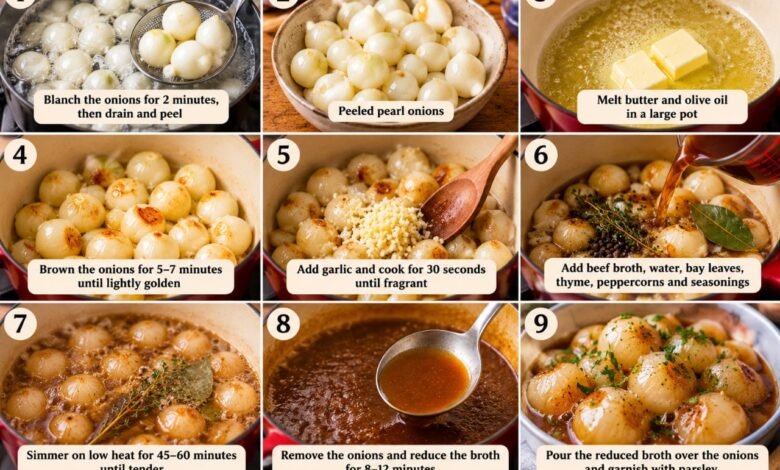
This Southern Onion Boil turns simple pearl onions into a tender, buttery side dish with deep savory flavor. The onions are lightly browned first, then gently simmered in beef broth with garlic, thyme, Worcestershire sauce, and bay leaves until they become soft and almost melt in your mouth.
The secret is simple: brown the onions before simmering them, keep the heat gentle, and reduce the flavorful broth at the end. That extra step gives the onions much more flavor than simply boiling them in water.
Why This Southern Onion Boil Works
- Lightly browned onions develop a deeper, sweeter flavor before they enter the broth.
- Beef broth gives the onions a rich savory base.
- Butter and garlic add richness without making the dish complicated.
- Worcestershire sauce adds a small amount of acidity and umami.
- Slow simmering makes the onions tender while helping them keep their shape.
- Reduced broth concentrates the flavor and creates a delicious sauce for serving.
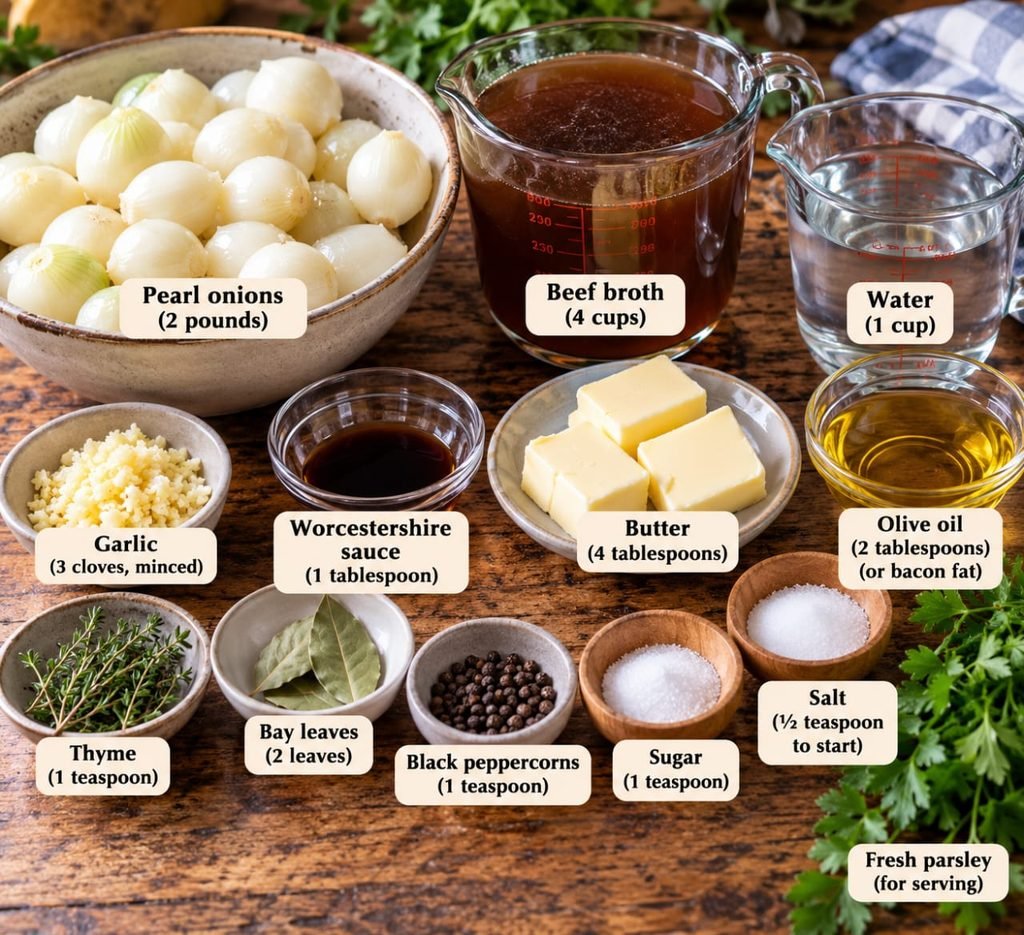
Ingredients
For the Onion Boil
- 2 pounds fresh pearl onions or small boiling onions
- 4 cups low-sodium beef broth
- 1 cup water
- 4 tablespoons unsalted butter
- 2 tablespoons olive oil or bacon fat
- 3 cloves garlic, minced
- 2 bay leaves
- 1 teaspoon fresh thyme leaves, or ½ teaspoon dried thyme
- 1 teaspoon whole black peppercorns
- 1 tablespoon Worcestershire sauce
- 1 teaspoon granulated sugar
- ½ teaspoon salt to start, plus more to taste
For Serving
- Fresh chopped parsley or chives
- Crusty bread or cornbread, optional
- A small pat of butter, optional
How to Make Southern Onion Boil
1. Prepare the Onions
If using fresh pearl onions, peeling them is the most time-consuming part of the recipe. Bring a pot of water to a boil and add the unpeeled onions.
Blanch them for about 2 minutes, then drain and transfer them immediately to a bowl of ice water.
Once the onions are cool enough to handle, trim the root end. The skins should slip off much more easily.
If you are using frozen peeled pearl onions, you can skip this step. They can be added directly to the recipe.
2. Brown the Onions
Heat a heavy-bottomed Dutch oven or large saucepan over medium heat. Add the butter and olive oil, or use bacon fat if you want a deeper Southern-style flavor.
Add the peeled onions and cook for 5–7 minutes, turning them occasionally, until the edges begin to develop a light golden color.
Do not rush this step. The onions do not need to be deeply browned; you only want enough color to build another layer of flavor.
3. Add the Garlic and Broth
Add the minced garlic and cook for about 30 seconds, just until fragrant.
Pour in the beef broth and water. Add the bay leaves, thyme, black peppercorns, Worcestershire sauce, sugar, and ½ teaspoon salt.
Stir gently to combine.
4. Simmer the Onions Slowly
Bring the liquid to a gentle boil, then immediately reduce the heat to low.
Cover the pot, leaving the lid slightly ajar, and simmer for approximately 45–60 minutes.
The onions are ready when they are completely tender and a knife can pass through the center with almost no resistance.
Do not use a vigorous boil. A gentle simmer helps the onions become tender without breaking apart.
5. Reduce the Broth
Use a slotted spoon to carefully transfer the cooked onions to a serving bowl.
Leave the broth in the pot and increase the heat to medium-high. Boil the broth uncovered for approximately 8–12 minutes, or until it has reduced by about one-third and becomes slightly concentrated.
Taste the broth and adjust the salt if necessary.
6. Finish and Serve
Pour the reduced broth over the onions.
Finish with chopped fresh parsley or chives and, if desired, a small pat of butter.
Serve warm with crusty bread or cornbread to soak up the savory broth.
How to Get Tender Onions Without Making Them Mushy
The most important factor is temperature. Once the broth reaches a boil, lower the heat and maintain a gentle simmer.
A very aggressive boil can cause the outer layers of the onions to break apart before the centers become perfectly tender.
Check the onions with a thin knife after about 45 minutes. They should be very soft but still recognizable as whole onions.
Why Brown the Onions First?
It may be tempting to put the onions directly into the broth, but the short browning step is worth the extra few minutes.
Cooking the onions in butter and oil before adding the liquid gives their outer layers a lightly caramelized flavor. The broth then carries that flavor throughout the rest of the dish.
This is one of the easiest ways to make a simple onion recipe taste much more developed.
Choosing the Best Onions
Fresh pearl onions are ideal because they are small enough to cook evenly while remaining whole.
Small boiling onions are another good option.
Frozen peeled pearl onions are also convenient and save considerable preparation time. Add them directly to the pot without thawing.
Avoid canned onions for this recipe because their softer texture can make it difficult to achieve tender onions that still hold their shape.
Low-Sodium Broth Is Better
Because the broth is eventually reduced, its saltiness becomes more concentrated.
Using a low-sodium beef broth gives you much more control over the final flavor. You can always add more salt near the end, but you cannot easily remove excess salt from a reduced broth.
Olive Oil or Bacon Fat?
Olive oil keeps the recipe straightforward and works very well with the butter.
For a richer Southern-inspired flavor, bacon fat is an excellent alternative. It adds a subtle smoky, savory note that pairs particularly well with the sweet onions.
Common Mistakes to Avoid
Boiling Too Hard
A rolling boil can cause the onions to fall apart. Keep the heat low after bringing the broth to a boil.
Skipping the Browning Step
Directly simmering the onions will cook them, but browning them first gives the finished dish considerably more depth.
Adding Too Much Salt Early
The broth becomes more concentrated when it is reduced. Start with a modest amount of salt and adjust after reducing the liquid.
Reducing the Broth Too Much
You want concentrated, flavorful broth—not a thick gravy. Stop when the liquid has reduced by roughly one-third and tastes rich.
Overcooking the Onions
Check them periodically toward the end of cooking. They should be extremely tender while still holding their shape.
Can You Use Frozen Pearl Onions?
Yes. Frozen peeled pearl onions are one of the easiest substitutions for fresh onions in this recipe.
There is no need to peel or blanch them. Add them directly to the pot and proceed with the recipe.
What to Serve with Onion Boil
These buttery Southern onions work especially well as a side dish alongside rich or grilled main courses.
- Roasted beef or pot roast
- Smoked meats
- Grilled steak
- Roasted chicken
- Pork chops
- Holiday ham
- Grits
- Cornbread
- Crusty bread
Can Onion Boil Be a Main Dish?
Yes, although it is traditionally better suited as a side dish.
For a heartier meal, add sliced smoked sausage or diced ham during the final part of the simmering process. The onions will absorb some of the savory flavor from the meat while the broth becomes even richer.
Storage and Reheating
Allow leftover onions and broth to cool, then transfer them to an airtight container and refrigerate.
They can be stored in the refrigerator for approximately 3–4 days.
To reheat, warm them gently in a saucepan over low heat until heated through. Avoid a vigorous boil because it can cause the tender onions to break apart.
Frequently Asked Questions
What is an onion boil?
An onion boil is a preparation in which whole onions are cooked with butter, seasonings, and a flavorful liquid until extremely tender. This Southern-style version uses beef broth, garlic, thyme, Worcestershire sauce, and a final broth reduction for extra flavor.
Are boiled onions sweet?
Yes. Slow cooking softens the sharp flavor of raw onions and brings out their natural sweetness. The broth, butter, and Worcestershire sauce balance that sweetness with savory flavor.
Can I use yellow onions instead of pearl onions?
Yes. Choose small yellow onions or other small boiling onions and keep them whole if possible. Larger onions may require additional cooking time.
Can I make onion boil ahead of time?
Yes. The onions can be cooked ahead and refrigerated with their broth. Reheat them gently on the stovetop before serving.
Can I make this vegetarian?
Yes. Replace the beef broth with a flavorful vegetable broth and use olive oil instead of bacon fat. Check that your Worcestershire sauce is vegetarian, as some brands contain anchovies.
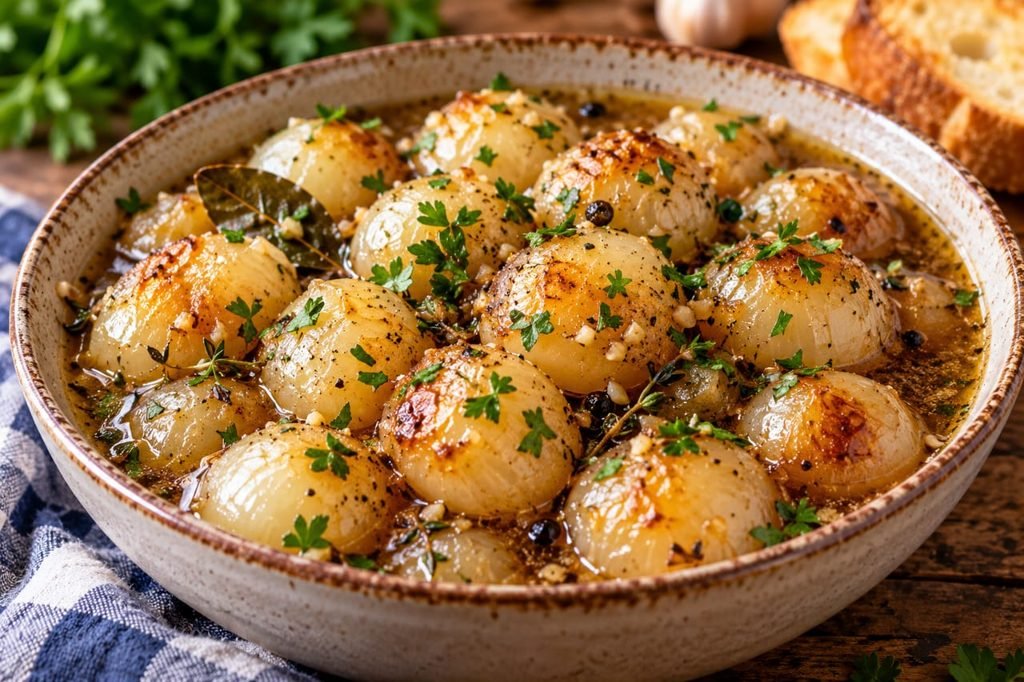
Final Tips for the Best Southern Onion Boil
- Use fresh pearl onions or frozen peeled pearl onions.
- Brown the onions lightly before adding the broth.
- Use low-sodium broth so you can control the salt.
- Keep the onions at a gentle simmer rather than a hard boil.
- Cook until a knife passes through the center with almost no resistance.
- Reduce the broth separately after removing the onions.
- Taste the reduced broth before adding more salt.
- Serve the onions warm with plenty of the concentrated buttery broth.
This Southern Onion Boil proves that a few humble ingredients can create an incredibly flavorful side dish. The lightly browned onions become tender and sweet while soaking up a rich garlic-butter broth that is perfect for spooning over the onions or mopping up with warm cornbread.
For more general food safety and nutrition guidance, see the Harvard T.H. Chan School of Public Health Nutrition Source.
You Might Also Like
- Delicious Ham & Cheese Brioche Sliders Recipe
- Balsamic Thyme Potato Torte: Crispy Layers and Rich Flavor
- The Viral TikTok Onion Boil: Your New Go-To Recipe for Insane Flavor





12 Comments