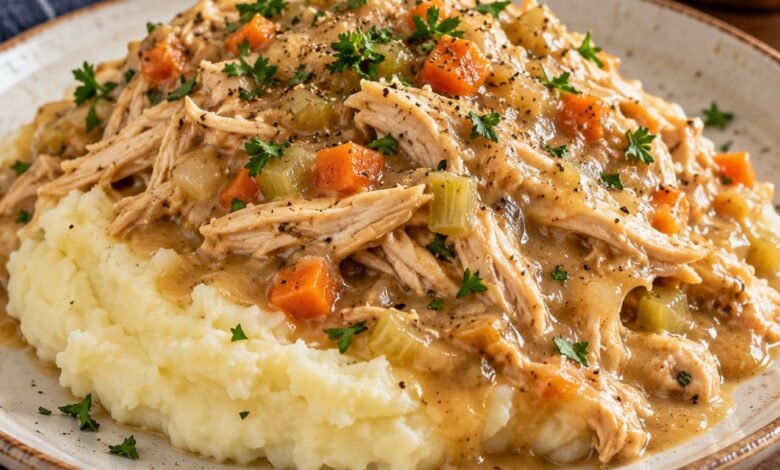
Shredded Chicken Gravy over Mashed Potatoes is the ultimate comfort food: tender pieces of chicken coated in rich, savory homemade gravy and served over a bed of fluffy, buttery mashed potatoes. Every bite combines creamy potatoes, flavorful chicken, and silky gravy for a satisfying homemade meal.
This hearty dinner is also a wonderful way to use leftover roast chicken or rotisserie chicken. The gravy comes together in one saucepan with simple ingredients, while the mashed potatoes provide a smooth and creamy base. Serve it for a cozy family dinner, a Sunday meal, or whenever you want classic comfort food without complicated preparation.
Why You’ll Love This Shredded Chicken and Gravy Recipe
- Classic comfort food: Creamy mashed potatoes and savory chicken gravy make a satisfying combination.
- Great for leftover chicken: Use cooked rotisserie chicken, leftover roast chicken, or poached chicken breasts or thighs.
- Homemade gravy: Butter, flour, chicken broth, and seasonings create a rich sauce without using a packaged gravy mix.
- Easy to customize: Add roasted garlic to the potatoes, extra herbs to the gravy, or vegetables for more texture.
- Family-friendly dinner: The mild, savory flavors make this dish easy to serve with a variety of sides.
- Make-ahead friendly: Prepare the chicken gravy and mashed potatoes separately, then reheat and assemble when ready to serve.
Ingredients for Shredded Chicken Gravy on Mashed Potatoes
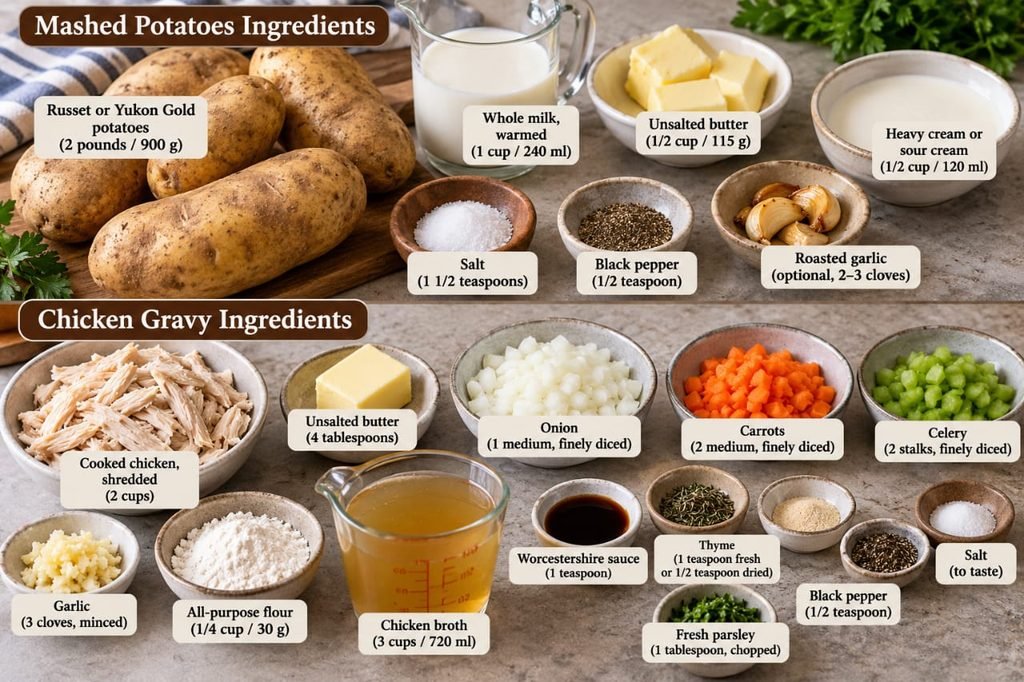
This recipe serves approximately 4 people. Prepare the mashed potatoes and chicken gravy separately for the best texture and flavor.
For the Creamy Mashed Potatoes
- 2 pounds (about 900 g) Russet or Yukon Gold potatoes
- 1 cup (240 ml) whole milk, warmed
- 1/2 cup (115 g) unsalted butter
- 1/2 cup (120 ml) heavy cream or full-fat sour cream
- 1 1/2 teaspoons salt, or to taste
- 1/2 teaspoon freshly ground black pepper
- 2–3 cloves roasted garlic, mashed (optional)
For the Shredded Chicken Gravy
- 2 cups cooked chicken, shredded
- 4 tablespoons unsalted butter
- 1 medium onion, finely diced
- 2 medium carrots, finely diced
- 2 celery stalks, finely diced
- 3 cloves garlic, minced
- 1/4 cup (30 g) all-purpose flour
- 3 cups (720 ml) chicken broth, preferably low-sodium
- 1 teaspoon Worcestershire sauce
- 1 teaspoon fresh thyme leaves or 1/2 teaspoon dried thyme
- 1/2 teaspoon onion powder
- 1/2 teaspoon freshly ground black pepper
- Salt, to taste
- 1 tablespoon chopped fresh parsley, for garnish
Ingredient Notes and Substitutions
Choosing the Potatoes
Russet potatoes are high in starch and produce a fluffy mash. Yukon Gold potatoes have a naturally buttery flavor and a creamier texture. Either variety works well in this recipe.
Cooked Chicken
Rotisserie chicken is a convenient option because it is already cooked and easy to shred. Leftover roast chicken or freshly poached chicken also works. Remove any bones and skin before shredding the meat.
Chicken Broth
Use low-sodium chicken broth so you can control the salt level. Homemade stock adds depth, but good-quality store-bought broth works perfectly well.
Butter and Cream
Butter, warm milk, and heavy cream give the mashed potatoes their rich texture. For a slightly lighter result, replace the heavy cream with additional warm milk, adjusting the quantity gradually.
Worcestershire Sauce
A small amount adds savory depth to the gravy. Check the label if you need a specific dietary option, since some Worcestershire sauces contain anchovies.
How to Make Creamy Mashed Potatoes
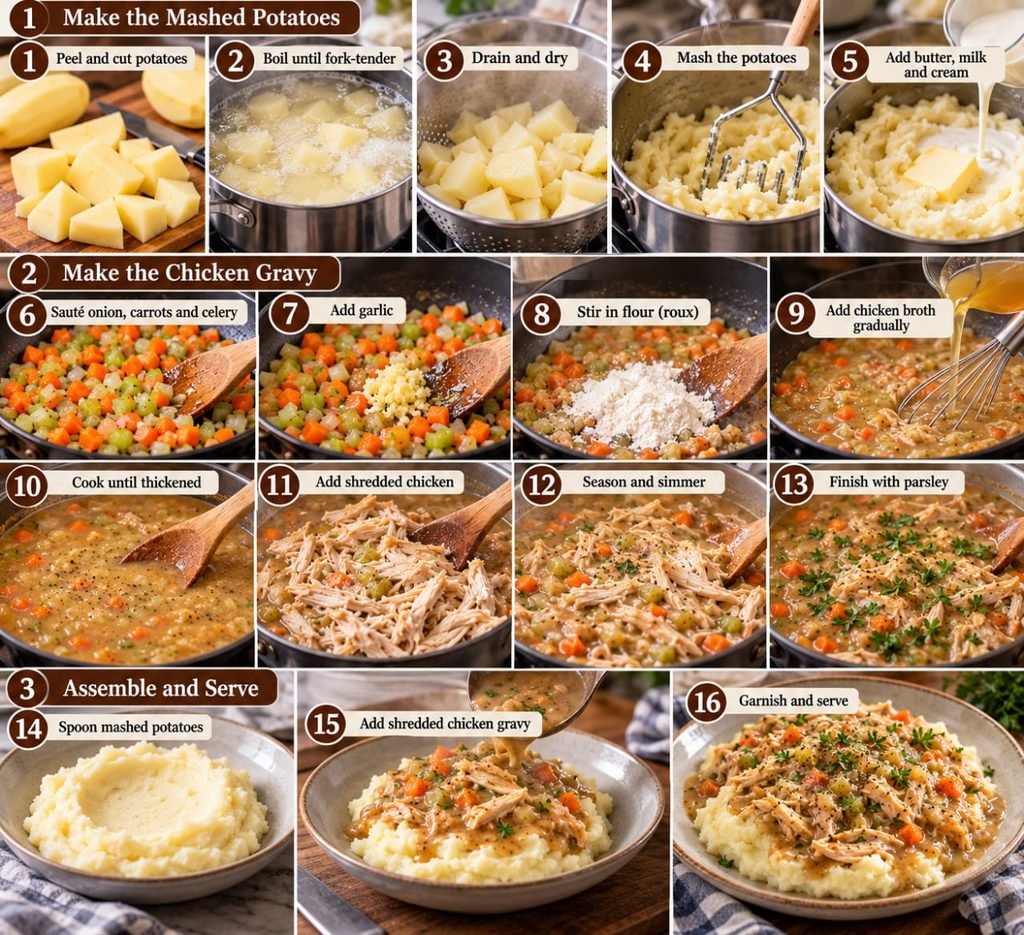
Step 1: Prepare the Potatoes
Peel the potatoes for a smoother texture, or leave some of the skin on for a more rustic mash. Cut them into evenly sized chunks, approximately 1 1/2 inches wide, so they cook at the same rate.
Step 2: Cook Until Fork-Tender
Place the potato chunks in a large saucepan and cover them with cold water. Add a generous pinch of salt. Bring the water to a boil, then reduce the heat and simmer for 15–20 minutes, or until the potatoes are easily pierced with a fork.
Avoid overcooking the potatoes until they fall apart in the water, as they can absorb excess moisture.
Step 3: Drain and Dry the Potatoes
Drain the potatoes thoroughly in a colander. Return them to the warm saucepan over low heat for about one minute, shaking the pan gently. This helps evaporate excess moisture and prevents watery mashed potatoes.
Step 4: Mash Until Smooth
Use a potato ricer for an especially smooth texture, or mash the potatoes with a traditional potato masher. Avoid using a food processor or blender because excessive processing can make the potatoes gluey.
Step 5: Add Butter, Milk, and Cream
Add the butter to the hot potatoes and stir until it melts. Gradually add the warmed milk and heavy cream, mixing gently until the potatoes become smooth and creamy.
Start with part of the liquid and add more as needed. Different potato varieties absorb different amounts of liquid, so you may not need every drop.
Step 6: Season and Keep Warm
Season with salt and black pepper. Stir in the mashed roasted garlic, if using. Cover the potatoes and keep them warm while you prepare the chicken gravy.
How to Make Shredded Chicken Gravy
Step 1: Prepare the Chicken and Vegetables
Shred the cooked chicken into bite-sized pieces. Finely dice the onion, carrots, and celery, and mince the garlic.
Using evenly sized vegetables helps them cook at the same rate and creates a balanced texture in the gravy.
Step 2: Sauté the Vegetables
Melt the butter in a large saucepan or deep skillet over medium heat. Add the onion, carrots, and celery. Cook for approximately 5–7 minutes, stirring occasionally, until the vegetables begin to soften.
Add the minced garlic and cook for another 30 seconds, just until fragrant. Avoid browning the garlic too much because it can develop a bitter taste.
Step 3: Make the Roux
Sprinkle the flour evenly over the vegetables. Stir continuously for about 1–2 minutes so the flour absorbs the butter and coats the vegetables.
This mixture, called a roux, helps thicken the gravy and gives it a smooth consistency. Cooking the flour briefly also removes its raw taste.
Step 4: Gradually Add the Chicken Broth
Pour in the chicken broth gradually, whisking or stirring constantly to prevent lumps. Begin with a small amount to form a smooth paste, then add the remaining broth a little at a time.
Scrape the bottom and sides of the pan as you stir. The mixture should become a smooth, pourable sauce.
Step 5: Season the Gravy
Add the Worcestershire sauce, thyme, onion powder, and black pepper. Bring the gravy to a gentle simmer, then reduce the heat.
Cook for approximately 8–12 minutes, stirring regularly, until the vegetables are tender and the gravy has thickened. If it becomes too thick, add a little more broth.
Step 6: Add the Shredded Chicken
Stir the shredded chicken into the simmering gravy. Cook for another 3–5 minutes, stirring gently, until the chicken is heated throughout.
Taste the gravy and add salt if needed. The broth may already contain enough salt, so adjust the seasoning only after the sauce has simmered.
Step 7: Finish with Fresh Parsley
Remove the saucepan from the heat and stir in the chopped parsley. The finished gravy should be rich and spoonable, with tender shredded chicken and softened vegetables throughout.
How to Assemble and Serve
- Spoon a generous portion of creamy mashed potatoes into the center of each serving plate or shallow bowl.
- Make a small well in the potatoes to hold the gravy.
- Spoon the shredded chicken and vegetables over the potatoes.
- Pour additional gravy over the top, allowing some to flow around the sides.
- Finish with freshly chopped parsley and a little black pepper, if desired.
- Serve immediately while the potatoes and gravy are hot.
Tips for the Best Chicken Gravy and Mashed Potatoes
- Start potatoes in cold water: This helps them cook evenly from the outside to the center.
- Dry the potatoes after draining: Removing excess water produces a richer, fluffier mash.
- Warm the dairy ingredients: Warm milk and cream blend more easily into hot potatoes.
- Do not overwork the potatoes: Mash gently to avoid a gluey texture.
- Cook the flour briefly: Stirring the flour into the butter before adding broth helps prevent a raw flour taste.
- Add broth gradually: This is the easiest way to make smooth gravy without lumps.
- Use low-sodium broth: It gives you better control over the final seasoning.
- Reheat cooked chicken gently: Simmer it in the gravy just long enough to heat through and remain tender.
- Keep the components separate until serving: This helps the mashed potatoes maintain their texture.
What to Serve with Chicken Gravy and Mashed Potatoes
This hearty dish pairs well with vegetables and lighter sides that balance its rich, creamy texture.
- Steamed green beans with garlic
- Roasted broccoli or Brussels sprouts
- Honey-glazed or roasted carrots
- A crisp green salad with a simple vinaigrette
- Roasted peas or mixed vegetables
- Warm dinner rolls to enjoy the extra gravy
How to Store Leftovers
Refrigerator Storage
Transfer the chicken gravy and mashed potatoes into separate shallow, airtight containers. Refrigerate within two hours of cooking and use within 3–4 days.
Reheating the Chicken Gravy
Place the gravy in a saucepan over medium-low heat. Add a splash of chicken broth if it has thickened in the refrigerator, and stir frequently until hot throughout.
Reheating the Mashed Potatoes
Reheat the potatoes in a covered saucepan over low heat, stirring gently. Add a little warm milk or cream to restore their creamy consistency.
Can You Freeze This Recipe?
The chicken gravy can be frozen in a suitable airtight container for up to 2–3 months for best quality. Thaw it in the refrigerator before reheating thoroughly. Mashed potatoes can also be frozen, although their texture may change slightly after thawing.
Common Problems and How to Fix Them
Why Are My Mashed Potatoes Watery?
The potatoes may have retained too much cooking water or absorbed too much moisture during boiling. Drain them thoroughly and return them to the hot pot for a minute to dry before mashing.
Why Are My Mashed Potatoes Gluey?
Overworking potatoes releases excess starch and can create a sticky texture. Use a potato masher or ricer rather than a blender or food processor, and mix the dairy ingredients in gently.
Why Is My Chicken Gravy Lumpy?
The flour may not have been mixed thoroughly with the butter, or the broth may have been added too quickly. Whisk the broth in gradually. If necessary, strain the gravy or carefully blend the sauce before returning the chicken to it.
Why Is My Gravy Too Thin?
Let it simmer gently for a few more minutes so excess liquid can evaporate. Stir regularly and avoid adding more broth until the desired consistency is reached.
Why Is My Gravy Too Thick?
Stir in additional chicken broth a little at a time until the gravy becomes smooth and spoonable.
How Do I Keep the Chicken Tender?
Use fully cooked chicken and add it toward the end of the gravy preparation. Simmer gently until it is heated throughout instead of boiling it aggressively for a long time.
Frequently Asked Questions
Can I use rotisserie chicken for this recipe?
Yes. Rotisserie chicken is an excellent shortcut. Remove the skin and bones, shred the meat, and stir it into the gravy near the end of cooking.
Can I make the chicken gravy ahead of time?
Yes. Prepare the gravy, cool it promptly, and refrigerate it in an airtight container. Reheat it gently with a splash of broth if needed. For the best texture, prepare the mashed potatoes separately and assemble the dish just before serving.
Which potatoes are best for mashed potatoes?
Russet potatoes produce a fluffy mash, while Yukon Gold potatoes create a naturally buttery and creamy texture. Both work well, so choose according to your preference.
Can I make the gravy without vegetables?
Yes. You can omit the onion, carrots, and celery for a simpler gravy. Consider adding a little garlic powder, onion powder, and thyme to maintain a rich savory flavor.
Can I make this recipe gluten-free?
Yes. Use a certified gluten-free flour blend or another suitable thickener for the gravy, and check that the broth and Worcestershire sauce are gluten-free. The texture may vary depending on the thickener used.
How do I know when the chicken is safe to serve?
If cooking raw chicken, the thickest part should reach an internal temperature of 165°F (74°C). If using previously cooked chicken, reheat the assembled gravy until the chicken reaches 165°F (74°C).
Can I make this dish lighter?
For a lighter version, replace some of the heavy cream in the potatoes with warm milk and reduce the butter slightly. You can also increase the vegetables in the gravy. These changes will alter the richness and texture, but the dish can still be satisfying.
Final Thoughts
Shredded Chicken Gravy over Creamy Mashed Potatoes is a comforting homemade meal that combines tender chicken, savory gravy, and smooth, buttery potatoes. It is an excellent way to turn cooked chicken into a satisfying dinner using familiar ingredients and straightforward techniques.
For the best results, dry the potatoes thoroughly before mashing, add warm dairy gradually, and whisk the broth carefully into the gravy. Serve everything hot with your favorite vegetables for a complete comfort-food meal the whole family can enjoy.