
This easy lemon cake is soft, moist, and bursting with fresh citrus flavor. Made with freshly squeezed lemon juice, fragrant lemon zest, and simple baking ingredients, it delivers a bright, refreshing taste in every bite. A light lemon soaking syrup adds extra moisture, while an optional lemon glaze creates a sweet and tangy finish.
Whether you need a simple afternoon treat, a dessert for family gatherings, or a homemade cake for a special occasion, this lemon cake is a delicious choice. The batter comes together with everyday ingredients, and the fresh lemon flavor makes it feel light and refreshing without being overly complicated.
Serve this homemade lemon cake with coffee or tea, or enjoy a slice whenever you want a sweet citrus dessert. Follow the steps below for a tender crumb and a delicious lemon flavor throughout.
Why You’ll Love This Lemon Cake
- Fresh lemon flavor: Lemon juice and zest give the cake a bright, natural citrus taste.
- Soft and moist texture: Yogurt or sour cream helps keep the crumb tender.
- Easy preparation: The batter uses familiar ingredients and straightforward mixing steps.
- Extra moisture: A simple lemon syrup adds flavor after baking.
- Optional lemon glaze: Finish the cake with a sweet, tangy topping for an extra-special dessert.
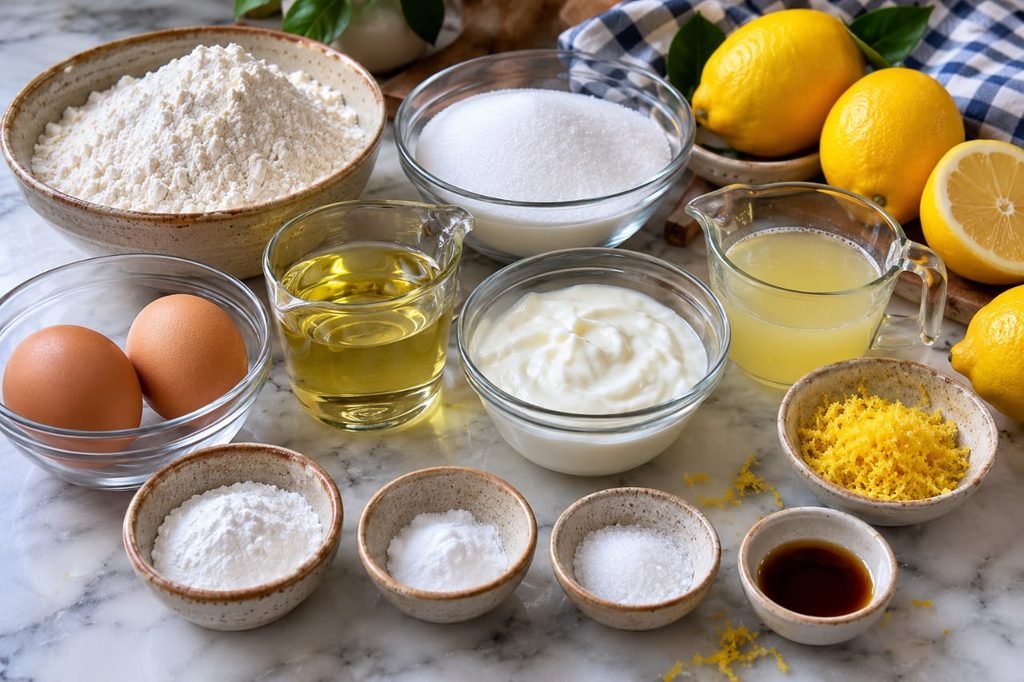
Lemon Cake Ingredients
Fresh lemons are the key to the best flavor. Use both the juice and zest, and measure the dry ingredients carefully for a soft, evenly baked cake.
For the Lemon Cake
- 1 1/2 cups (190 g) all-purpose flour
- 1 cup (200 g) granulated sugar
- 1/2 teaspoon baking powder
- 1/4 teaspoon baking soda
- 1/2 teaspoon salt
- 2 large eggs, at room temperature
- 1/2 cup (120 ml) neutral oil, such as vegetable, canola, or grapeseed oil
- 1/2 cup (120 ml) plain yogurt or sour cream
- 1/4 cup (60 ml) freshly squeezed lemon juice
- Zest of 2 lemons
- 1 teaspoon vanilla extract
For the Lemon Soaking Syrup
- 2 tablespoons freshly squeezed lemon juice
- 2 tablespoons granulated sugar
For the Lemon Glaze (Optional)
- 1 cup (120 g) powdered sugar, sifted
- 1–2 tablespoons freshly squeezed lemon juice
- 1 teaspoon lemon zest, for garnish
Essential Equipment
- One 8-inch (20 cm) round cake pan or a 9 × 5-inch loaf pan
- Medium and large mixing bowls
- Whisk and spatula
- Zester or fine grater
- Lemon juicer or fork
- Kitchen measuring cups and spoons or a kitchen scale
- Wire rack for cooling
- Parchment paper
How to Make Lemon Cake
Follow these simple steps to prepare a moist homemade lemon cake with fresh citrus flavor and a delicate crumb.
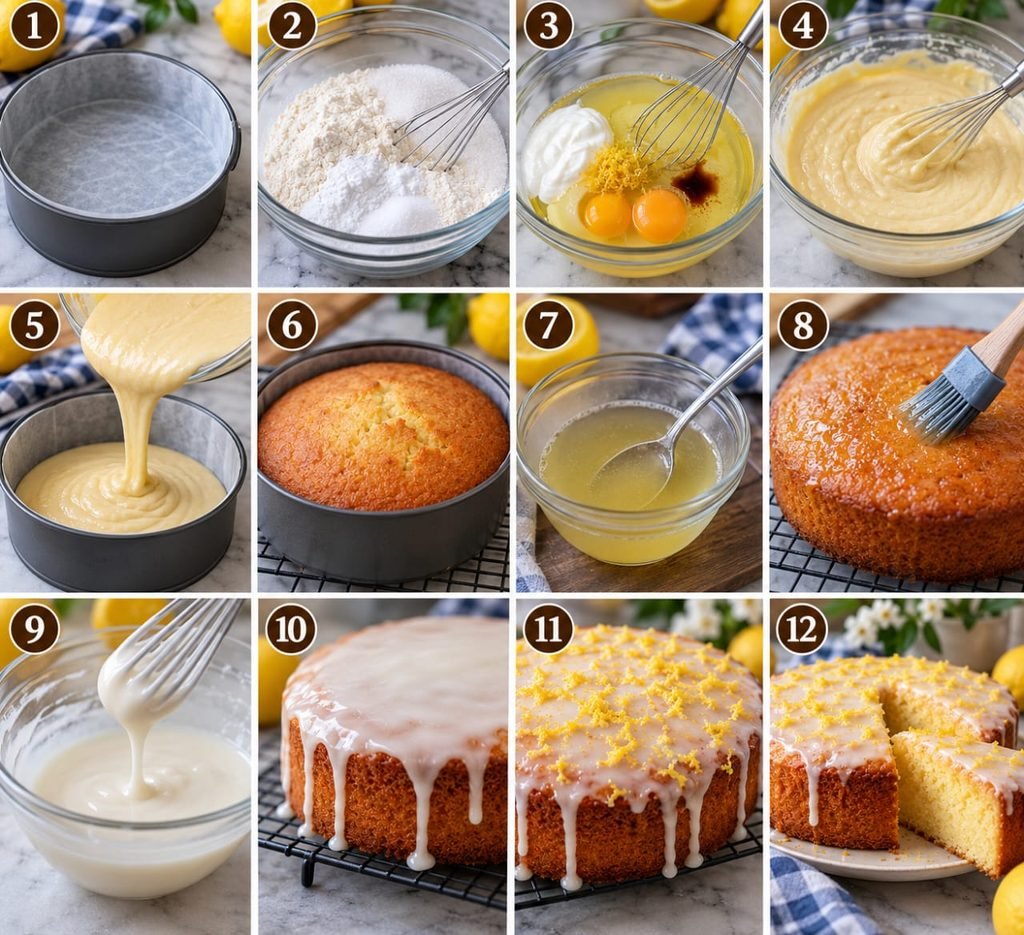
Step 1: Prepare the Pan and Preheat the Oven
Preheat your oven to 350°F (180°C). Lightly grease an 8-inch round cake pan or a 9 × 5-inch loaf pan. Line the bottom with parchment paper to make removing the cake easier after baking.
Step 2: Combine the Dry Ingredients
In a large mixing bowl, whisk together the flour, granulated sugar, baking powder, baking soda, and salt. Mixing these ingredients first helps distribute the leavening agents evenly throughout the batter.
Step 3: Mix the Wet Ingredients
In a separate bowl, whisk the eggs until combined. Add the neutral oil, plain yogurt or sour cream, freshly squeezed lemon juice, lemon zest, and vanilla extract. Whisk until the mixture is smooth.
Step 4: Make the Cake Batter
Pour the wet ingredients into the bowl of dry ingredients. Stir gently with a whisk or spatula until the flour is incorporated and no large dry patches remain.
Avoid overmixing the batter. A few small lumps are preferable to excessive mixing, which can make the finished cake dense.
Step 5: Bake the Lemon Cake
Pour the batter into the prepared pan and smooth the surface. Bake in the preheated oven until the top is lightly golden and a toothpick inserted into the center comes out clean or with a few moist crumbs.
Start checking an 8-inch round cake at around 25–30 minutes. A loaf pan may require longer, depending on its shape and your oven. Continue baking as needed, checking frequently toward the end.
Step 6: Prepare the Lemon Soaking Syrup
While the cake bakes, combine the lemon juice and granulated sugar in a small bowl. Stir until the sugar dissolves as much as possible.
If needed, warm the mixture gently to help dissolve the sugar, then let it cool slightly before using.
Step 7: Add the Lemon Syrup
Remove the cake from the oven and let it rest in the pan for about 10 minutes. While the cake is still warm, gently brush or spoon the lemon syrup over the surface.
Allow the syrup to soak into the cake. This adds another layer of citrus flavor and helps keep the crumb moist.
Step 8: Cool the Cake Completely
Let the cake cool before adding the glaze. If using a round cake pan, carefully remove the cake once it is firm enough to handle and transfer it to a wire rack.
Step 9: Make the Lemon Glaze
Place the sifted powdered sugar in a small bowl. Add 1 tablespoon of lemon juice and whisk until smooth. Add more lemon juice a little at a time until the glaze reaches a thick but pourable consistency.
Step 10: Glaze and Serve
Drizzle the glaze over the completely cooled cake. Sprinkle with a little lemon zest, if desired, and allow the glaze to set before slicing.
Cut into slices and serve with coffee, tea, or fresh berries.
Tips for the Best Lemon Cake
- Use fresh lemons: Freshly squeezed juice and finely grated zest provide a brighter flavor than bottled juice.
- Avoid the white pith: When zesting lemons, grate only the yellow outer skin to prevent bitterness.
- Use room-temperature eggs: They mix more evenly into the batter.
- Measure flour correctly: Too much flour can make the cake dry. A kitchen scale provides the most consistent results.
- Do not overmix: Mix only until the ingredients are combined.
- Check for doneness: Baking times vary between round and loaf pans, so use a toothpick to check the center.
- Add syrup while warm: The warm cake absorbs the lemon syrup more easily.
- Cool before glazing: Glazing a warm cake can cause the icing to melt and run off.
Common Lemon Cake Mistakes
Why Is My Lemon Cake Dry?
A dry cake may result from too much flour or overbaking. Measure ingredients accurately and begin checking for doneness before the expected baking time ends.
Why Is My Cake Dense?
Overmixing after adding the flour can develop too much gluten. Stir gently and stop as soon as the ingredients are incorporated.
Why Does My Lemon Cake Taste Bitter?
Too much lemon pith can create bitterness. Use a fine zester and grate only the yellow outer peel. Also, measure the lemon juice accurately.
Why Is My Lemon Glaze Too Thin?
Add more sifted powdered sugar, a little at a time, until the glaze thickens. If it is too thick, add a few drops of lemon juice.
Easy Lemon Cake Variations
Lemon Yogurt Cake
Use plain yogurt for a tender crumb with a subtle tang. This is an excellent option when you want a simple cake with a soft texture.
Lemon Sour Cream Cake
Replace the yogurt with sour cream for a rich, tender texture and a slightly tangy flavor.
Lemon Blueberry Cake
Fold a small amount of fresh or frozen blueberries into the finished batter. If using frozen berries, add them directly from the freezer and fold gently to reduce color streaking.
Extra Lemon Glaze
For a stronger citrus finish, add a little extra lemon zest to the glaze. Keep the consistency thick enough to coat the cake without running off completely.
What to Serve with Lemon Cake
This fresh lemon cake pairs well with a variety of drinks and simple accompaniments.
- Hot coffee or espresso
- Black tea or herbal tea
- Fresh strawberries or raspberries
- A spoonful of lightly sweetened whipped cream
- Vanilla ice cream for a more indulgent dessert
How to Store Lemon Cake
At Room Temperature
If the cake has no perishable topping, store it in an airtight container in a cool place for up to 2 days. In a warm kitchen, refrigeration may help preserve its quality.
In the Refrigerator
Store the cake in an airtight container in the refrigerator for up to 5 days. Let individual slices sit at room temperature briefly before serving for a softer texture.
Can You Freeze Lemon Cake?
Yes. For best results, freeze the cake without the glaze. Let it cool completely, wrap it tightly, and place it in a freezer-safe container for up to 2 months for best quality.
Thaw the cake in the refrigerator or at room temperature while still wrapped. Add the lemon glaze after thawing if you want a fresh, attractive finish.
Frequently Asked Questions
Can I use bottled lemon juice instead of fresh lemon juice?
Fresh lemon juice is recommended because it gives the cake a brighter citrus flavor. Bottled juice can work in a pinch, but the result may taste less fresh.
Can I make this lemon cake without the glaze?
Yes. The glaze is optional. The cake will still have lemon flavor from the juice, zest, and soaking syrup.
Can I use butter instead of oil?
The recipe is designed with neutral oil, which helps keep the cake moist. Replacing it with butter may change the texture, so the result may not be exactly the same.
Can I make this recipe in a loaf pan?
Yes. Use a 9 × 5-inch loaf pan as listed in the equipment section. A loaf cake may need more baking time than an 8-inch round cake, so check the center with a toothpick before removing it from the oven.
How do I know when the lemon cake is done?
The surface should be lightly golden, and a toothpick inserted into the center should come out clean or with a few moist crumbs. Wet batter on the toothpick means the cake needs more baking time.
Can I prepare lemon cake ahead of time?
Yes. Bake the cake a day ahead and store it covered. Add the glaze after the cake has cooled, or prepare the glaze shortly before serving for the freshest appearance.
Final Thoughts
This easy lemon cake is a wonderful way to enjoy the fresh, bright flavor of lemons in a soft and moist homemade dessert. With simple ingredients, a quick lemon syrup, and an optional sweet glaze, it is easy to adapt for afternoon treats, family gatherings, and special occasions.
Serve each slice with your favorite hot drink or a handful of fresh berries, and enjoy a simple homemade cake that lets the flavor of fresh lemons shine.