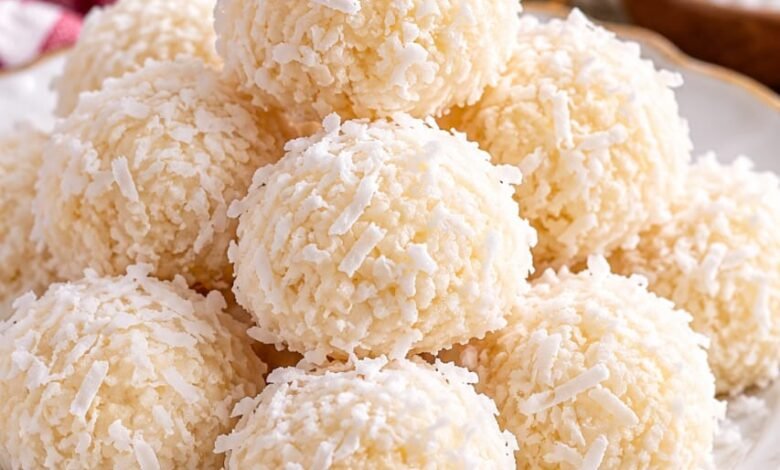
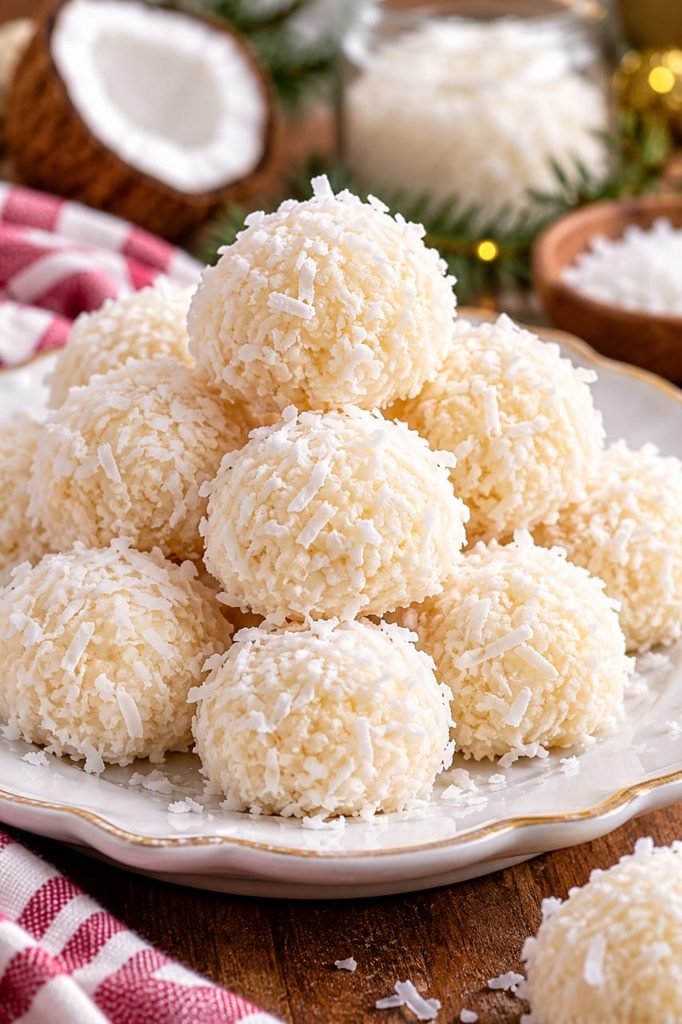
These easy no-bake coconut cookies are sweet, chewy, and full of coconut flavor. Made with shredded coconut, butter, milk, sugar, and vanilla, they are a simple homemade treat for holiday cookie trays, parties, afternoon snacks, or whenever you want something sweet without turning on the oven.
Unlike refrigerator cookies made with condensed milk, this version uses a simple stovetop syrup to bind the coconut together. The key is bringing the mixture to a full rolling boil for the right amount of time, then quickly mixing in the coconut before the syrup begins to set.
With a little preparation and attention to the cooking time, you can make a batch of these coconut cookies using everyday pantry ingredients.
Why You’ll Love These No-Bake Coconut Cookies
- No oven required: The mixture is prepared on the stovetop and shaped by hand.
- Simple ingredients: You only need a few everyday ingredients to make this coconut dessert.
- Great for sharing: Serve these little cookies on a holiday dessert tray, at a family gathering, or alongside coffee or tea.
- Easy to customize: Add orange zest, chopped nuts, or a little melted chocolate for a different flavor.
- Make-ahead friendly: Prepare the cookies in advance and refrigerate them until you are ready to serve.
Ingredients for No-Bake Coconut Cookies
This recipe makes approximately 24 small cookies, depending on the size of each portion.
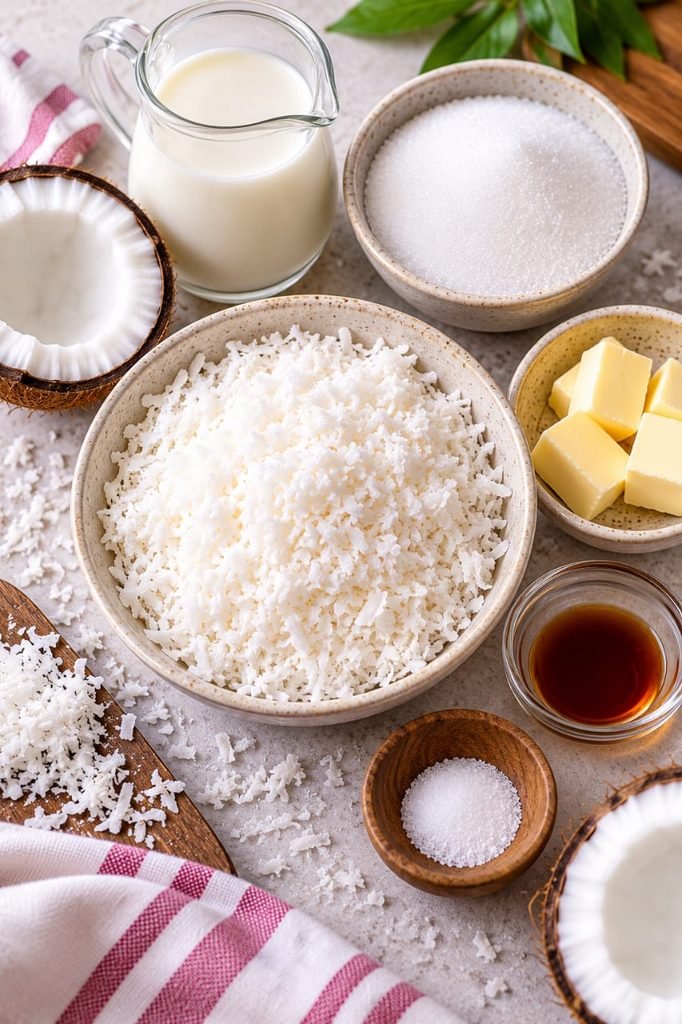
- 3 cups sweetened shredded coconut: Provides the main flavor, sweetness, and chewy texture.
- 1 cup granulated white sugar: Forms the syrup that helps the cookies hold their shape.
- 1/2 cup unsalted butter: Adds richness and a smooth, buttery flavor.
- 1/2 cup whole milk: Helps dissolve the sugar and creates the syrup base.
- 1 teaspoon pure vanilla extract: Adds warmth and enhances the coconut flavor.
- 1/8 teaspoon salt: Balances the sweetness.
Optional additions: Add up to 1/2 cup chopped toasted almonds or pecans, 2 tablespoons toasted sesame seeds, a little orange zest, or 1/4 cup mini chocolate chips or dried cranberries. These additions change the texture and sweetness, so add them gradually.
Which Coconut Should You Use?
Sweetened shredded coconut is the best match for this version because it provides the familiar sweet flavor and texture of classic coconut cookies.
Unsweetened desiccated coconut is usually finer and drier. Substituting it without adjusting the recipe can produce a different texture and may affect how well the cookies hold together. If you use a different type of coconut, expect to test the consistency before shaping the entire batch.
For a stronger coconut aroma, you can lightly toast some or all of the shredded coconut in a dry skillet over medium-low heat, stirring frequently. Transfer it to a bowl as soon as it develops a light golden color, and let it cool before using. Toasting is optional.
How to Make No-Bake Coconut Cookies
Step 1: Prepare the baking sheets
Line two baking sheets or large trays with parchment paper. Keep a tablespoon-sized cookie scoop or two spoons nearby so you can portion the mixture quickly once it is ready.
Step 2: Prepare the coconut
If you want a deeper, nuttier flavor, toast the shredded coconut in a dry skillet for about 3–5 minutes, stirring constantly. Do not let it become dark brown, as burnt coconut can taste bitter.
Transfer the coconut to a bowl and set it aside. You can also use it untoasted for a softer, more traditional coconut flavor.
Step 3: Combine the syrup ingredients
Place the sugar, butter, milk, and salt in a medium, heavy-bottomed saucepan. Heat over medium heat, stirring until the butter melts and the sugar dissolves.
Scrape the sides of the pan as needed, but avoid leaving sugar crystals around the edges. Keep the mixture at a controlled heat so it does not scorch.
Step 4: Bring the mixture to a rolling boil
Once the sugar has dissolved and the mixture reaches a full rolling boil across the surface, stop stirring and start a timer for 2 minutes. Maintain a steady boil while watching the saucepan closely.
This step matters because the syrup helps determine whether the cookies will set. A mixture that is not cooked sufficiently may leave the cookies sticky, while excessive cooking can make them hard or crumbly.
Use the timing as a starting point rather than a guarantee: saucepan size, burner strength, and ingredient measurements can affect the result.
Step 5: Stir in the vanilla and coconut
Remove the saucepan from the heat when the timed boil is complete. Stir in the vanilla extract, then immediately add the shredded coconut.
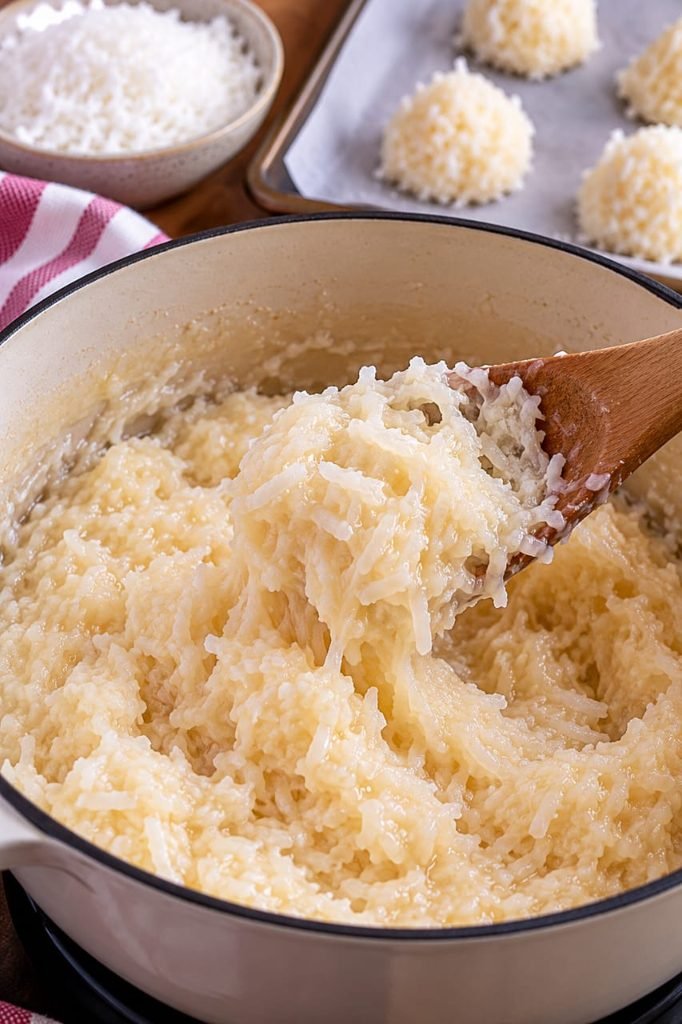
Mix thoroughly until the coconut is evenly coated. The mixture will be hot and sticky, so use a sturdy spoon or heat-resistant spatula. If you are adding nuts, seeds, or dried fruit, fold them in at this stage.
Step 6: Shape the cookies
Working while the mixture is still warm and pliable, drop tablespoon-sized portions onto the prepared trays. Shape each portion into a small mound with two spoons.
If the mixture sticks to your fingers, lightly dampen your hands with water before shaping. Avoid adding too much water, which can affect the texture.
Step 7: Let the cookies cool and set
Leave the cookies undisturbed at room temperature for about 30–45 minutes, or until they have cooled and become firm enough to handle. If necessary, refrigerate them briefly to help them firm up.
Once set, transfer the cookies to an airtight container and refrigerate them. Let them sit at room temperature for a few minutes before serving if you prefer a softer bite.
Tips for the Best Coconut Cookies
- Measure carefully: Too much coconut can make the mixture dry, while too little can leave it loose and sticky.
- Start timing at a full boil: Begin the 2-minute timer only when the mixture is bubbling vigorously across the surface.
- Use a heavy-bottomed pan: It distributes heat more evenly and reduces the risk of scorching.
- Work quickly after adding the coconut: The syrup begins to thicken as it cools, making the mixture harder to portion.
- Keep cookie sizes consistent: Similar portions cool and set at a more uniform rate.
- Let them cool completely: The cookies need time to firm up before being moved into a storage container.
Why Are My No-Bake Coconut Cookies Sticky?
Sticky cookies may indicate that the syrup did not cook long enough, the mixture contained too much liquid, or the cookies have not cooled fully. Let them cool completely before judging their final texture.
If the mixture is still warm and loose before shaping, allow it to stand briefly and thicken. If it remains unusually wet, adding a small amount of extra shredded coconut may help, although the final texture will change.
Why Are My Coconut Cookies Crumbly?
Cookies that break apart easily may have been cooked too long, contain too much coconut, or have been made with coconut that is drier than the recipe requires.
Measure the ingredients accurately and avoid extending the boiling time unnecessarily. Let the cookies cool before handling them, since warm syrup-bound cookies can be delicate.
Easy Variations
Chocolate Coconut Cookies
Once the cookies have cooled, drizzle them with melted dark or semi-sweet chocolate. Let the chocolate set before serving. You can also fold a small amount of mini chocolate chips into the mixture after it has cooled slightly.
Orange Coconut Cookies
Add a little finely grated orange zest with the vanilla. The citrus aroma complements the sweetness of the coconut.
Coconut Almond Cookies
Fold in chopped toasted almonds or pecans for extra crunch. Keep the pieces small so the cookies are easy to shape and hold together.
Festive Coconut Snowballs
Shape the mixture into small mounds and, once cooled, roll or sprinkle them with a little extra shredded coconut. Arrange them in paper candy cups for a holiday dessert tray.
How to Store No-Bake Coconut Cookies
Because this recipe contains milk and butter, store the cooled cookies in an airtight container in the refrigerator rather than leaving them at room temperature for several days. Separate layers with parchment paper to prevent sticking.
For the best quality, enjoy them within 3–5 days. Discard any cookies that have been left out too long or show signs of spoilage.
For longer storage, freeze the cookies in a freezer-safe container with parchment between the layers. Thaw them in the refrigerator before serving. Their texture may change slightly after freezing.
Frequently Asked Questions
Do no-bake coconut cookies need an oven?
No. The mixture is cooked on the stovetop to prepare the syrup, then shaped and allowed to cool. There is no oven-baking step.
Can I use unsweetened coconut?
You can experiment with unsweetened coconut, but it is drier and less sweet than sweetened shredded coconut. The finished cookies may have a different texture, so the recipe may need adjustment.
How long do no-bake coconut cookies take to set?
Allow approximately 30–45 minutes at room temperature for the cookies to cool and set. The exact time depends on their size and the temperature of your kitchen.
Can I make these cookies ahead of time?
Yes. Make them ahead, let them cool completely, and refrigerate them in an airtight container until serving.
Can I add chocolate or nuts?
Yes. Small amounts of chopped nuts, mini chocolate chips, or a chocolate drizzle can add flavor and texture. Add mix-ins gradually so the mixture can still hold together.
Are these cookies gluten-free?
The listed ingredients do not ordinarily contain wheat flour, but check the labels on the coconut, vanilla, and any optional additions for possible gluten-containing ingredients or cross-contact. Do not label the recipe gluten-free unless the ingredients used support that claim.
Final Thoughts
These easy no-bake coconut cookies are a simple way to enjoy a sweet, chewy coconut treat without turning on the oven. With a handful of ingredients and a little care during the stovetop step, they can become a welcome addition to a dessert tray or family gathering.
Measure carefully, watch the boiling time, and allow the cookies to set fully before serving. Try a little orange zest or a chocolate drizzle to give your next batch a personal touch.