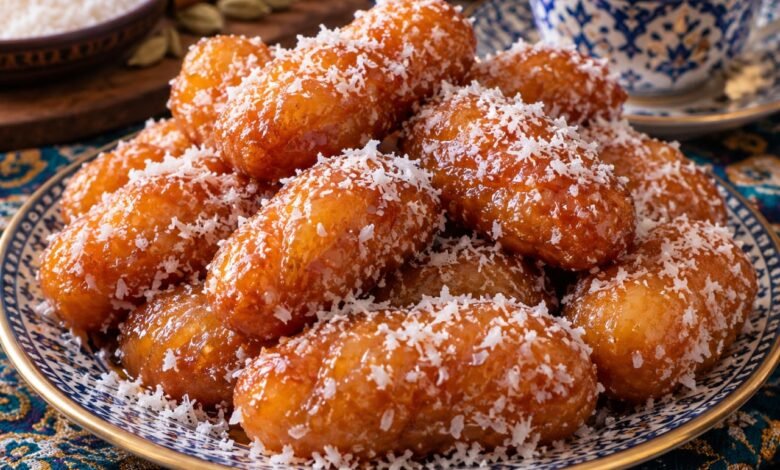
Cape Malay koesisters are a beloved South African treat known for their soft, lightly chewy texture, fragrant spices, sweet syrup, and delicate coating of coconut. These oval-shaped dough treats are deep-fried until golden, soaked in a flavorful syrup, and finished with desiccated coconut.
Unlike the braided and crunchy Afrikaner koeksisters, Cape Malay koesisters are soft, spiced, and wonderfully aromatic. They are often enjoyed with a cup of tea or coffee, making them a comforting treat for a relaxed weekend breakfast or an afternoon gathering.
If you enjoy homemade doughnuts and traditional desserts, this Cape Malay koesisters recipe introduces you to a distinctive part of South African food culture.
What Are Cape Malay Koesisters?
Cape Malay koesisters are traditional spiced dough treats associated with Cape Malay food culture in South Africa. The dough is flavored with spices such as cinnamon, cardamom, ginger, and aniseed. Some recipes also include citrus peel for a fresh, fragrant note.
After the dough rises, it is shaped into small oval pieces and deep-fried. The warm koesisters are then dipped into sweet syrup and coated with desiccated coconut.
The result is a soft, sweet treat with a gently chewy center, warming spices, and a coconut-covered exterior.
Cape Malay Koesisters vs. Koeksisters
Although the names sound similar, these two South African treats have different textures and preparation methods.
- Cape Malay koesisters: Soft, oval-shaped, yeast-raised, warmly spiced, syrup-soaked, and coated with coconut.
- Afrikaner koeksisters: Usually braided, crisp on the outside, and dipped in cold syrup after frying to create their characteristic sticky crunch.
This recipe focuses on the Cape Malay version, with its fragrant spices, tender interior, and coconut coating.
Why You’ll Love This Cape Malay Koesisters Recipe
- Full of warm spices: Cinnamon, ginger, cardamom, and aniseed create a distinctive flavor.
- Soft and tender: Yeast helps the dough develop a light texture.
- Sweet and syrupy: The cooked syrup adds moisture and sweetness.
- A coconut finish: Desiccated coconut provides texture and a delicate nutty flavor.
- Perfect with tea or coffee: Enjoy these treats for breakfast, dessert, or an afternoon snack.
Ingredients You’ll Need
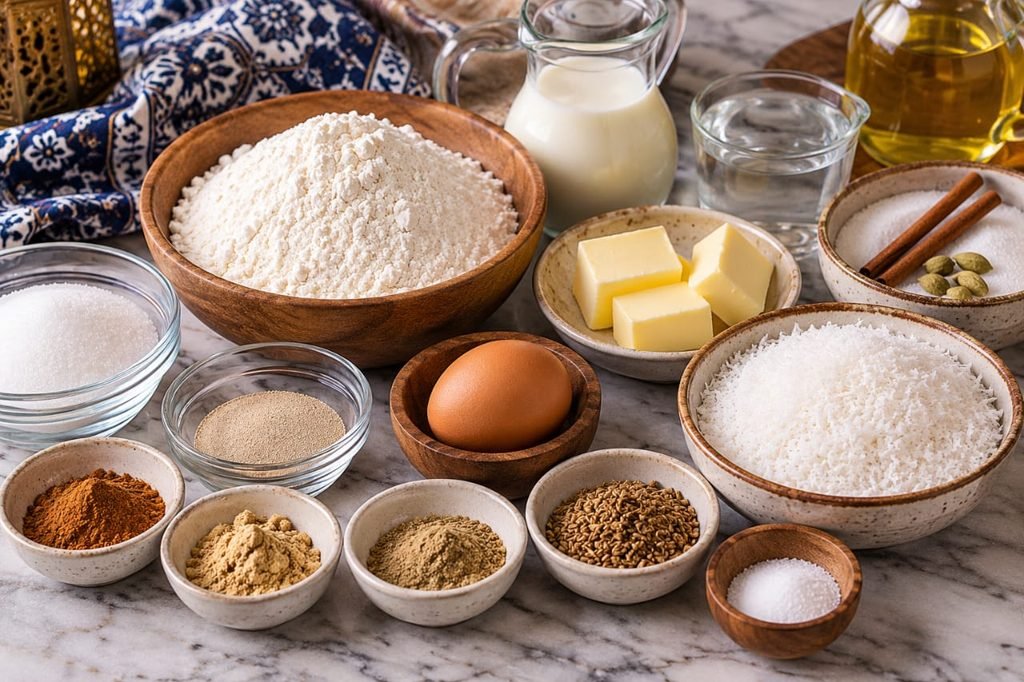
For the Dough
- All-purpose flour: Forms the structure of the dough.
- Instant yeast: Helps the dough rise and become lighter.
- Sugar: Adds sweetness to the dough.
- Ground cinnamon: Provides warm, familiar spice.
- Ground ginger: Adds gentle warmth.
- Ground cardamom: Contributes a fragrant, slightly floral flavor.
- Aniseed: Gives the dough its characteristic aromatic note.
- Salt: Balances the sweetness and enhances the other flavors.
- Milk and lukewarm water: Bring the dough together and help activate the yeast.
- Butter: Adds richness and tenderness.
- Egg: Helps enrich the dough and contributes to its texture.
For the Syrup
- Granulated sugar: Creates the sweet syrup.
- Water: Dissolves the sugar and forms the syrup.
- Cinnamon stick: Adds a gentle spice aroma.
- Cardamom pods: Give the syrup a fragrant finish.
For Frying and Coating
- Neutral vegetable oil, for deep-frying
- Desiccated coconut, for coating
Cape Malay Koesisters Recipe
Dough Ingredients
- 4 cups all-purpose flour, approximately 500 g
- 2 teaspoons instant yeast, approximately 7 g
- 1/4 cup granulated sugar, approximately 50 g
- 1 teaspoon ground cinnamon
- 1 teaspoon ground ginger
- 1 teaspoon ground cardamom
- 2 teaspoons aniseed
- 1/2 teaspoon salt
- 1 cup lukewarm milk, approximately 240 ml
- 1/2 cup lukewarm water, approximately 120 ml
- 3 tablespoons melted butter, cooled slightly
- 1 large egg
Syrup Ingredients
- 1 cup granulated sugar
- 1 cup water
- 1 cinnamon stick
- 2 cardamom pods, lightly crushed
For Finishing
- Vegetable oil for deep-frying
- 1 to 2 cups desiccated coconut, as needed
How to Make Cape Malay Koesisters
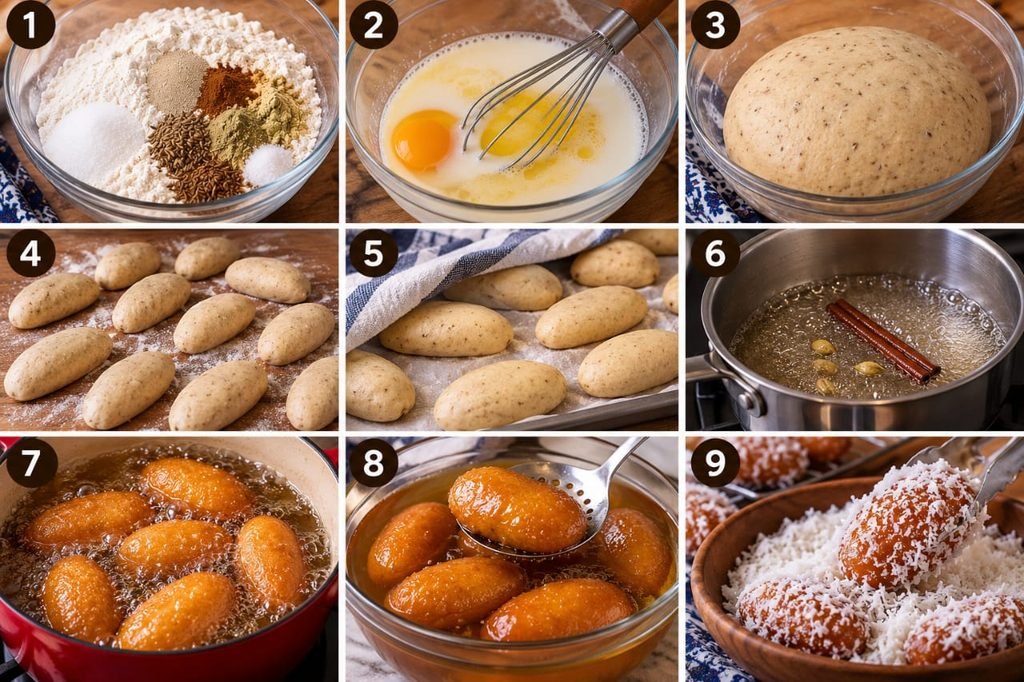
Step 1: Combine the Dry Ingredients
In a large mixing bowl, combine the flour, instant yeast, sugar, cinnamon, ginger, cardamom, aniseed, and salt. Mix thoroughly so the spices are distributed evenly throughout the flour.
Step 2: Mix the Wet Ingredients
In a separate bowl, combine the lukewarm milk, lukewarm water, melted butter, and egg. Whisk until the mixture is well combined.
Make sure the liquid is lukewarm rather than hot. Excessive heat can damage the yeast and prevent the dough from rising properly.
Step 3: Make the Dough
Pour the wet ingredients into the dry ingredients. Mix until a soft dough forms, then knead for several minutes until the dough becomes more uniform and elastic.
The dough should feel soft and slightly tacky rather than dry and stiff. If it is excessively sticky, add a small amount of flour at a time, taking care not to make the dough too firm.
Step 4: Let the Dough Rise
Place the dough in a lightly greased bowl and cover it. Leave it in a warm place for approximately 1 to 2 hours, or until it has visibly increased in size and is close to doubled.
Rising time depends on the room temperature and the activity of the yeast, so use the dough’s appearance rather than the clock alone.
Step 5: Shape the Koesisters
Gently press the dough to release some of the air. Divide it into approximately 20 to 24 equal portions, depending on the size you prefer.
Shape each portion into a small oval. Arrange the pieces on a lightly floured tray, leaving space between them. Cover loosely and let them rest for another 15 to 25 minutes.
Step 6: Prepare the Syrup
While the shaped dough rests, place the sugar, water, cinnamon stick, and cardamom pods in a saucepan. Stir over medium heat until the sugar dissolves.
Bring the mixture to a gentle boil, then simmer for several minutes until it becomes a light syrup. Remove it from the heat and keep it warm. Avoid reducing it so much that it becomes thick and sticky like caramel.
Step 7: Fry the Dough
Heat vegetable oil in a deep, heavy-bottomed pot. Carefully fry a few pieces at a time, turning them as needed until they are golden brown and cooked through.
Keep the oil at a steady medium temperature. If the oil is too hot, the outside may brown before the center cooks. If it is too cool, the dough may absorb excess oil.
Transfer the fried koesisters to a rack or paper towels briefly before dipping them into the syrup.
Step 8: Soak in the Syrup
Place the warm koesisters into the warm syrup in small batches. Turn them gently so the surfaces become coated. Allow them to absorb the syrup without leaving them in so long that they become overly soft.
Lift each piece out with a slotted spoon and allow the excess syrup to drain briefly.
Step 9: Coat with Coconut and Serve
Place the desiccated coconut in a shallow dish. Roll each syrup-coated koesister in the coconut until covered on all sides.
Arrange the finished koesisters on a serving plate. Enjoy them warm or at room temperature with tea or coffee.
Tips for Soft, Flavorful Koesisters
- Use lukewarm liquids: Hot milk or water can damage the yeast.
- Keep the dough soft: Adding too much flour may make the finished koesisters dense.
- Allow enough rising time: The dough should visibly expand before shaping and frying.
- Fry in small batches: Crowding the pot lowers the oil temperature.
- Monitor the oil: Aim for a steady medium frying temperature and adjust the heat as necessary.
- Keep the syrup fluid: A syrup that becomes too thick may coat the surface without soaking in evenly.
- Coat while the syrup is still receptive: Applying coconut after dipping helps it adhere to the surface.
Common Mistakes to Avoid
Making the Dough Too Firm
A stiff dough can produce heavy koesisters. Add the liquid gradually and avoid adding large amounts of extra flour during mixing.
Frying at the Wrong Temperature
Oil that is too hot can darken the outside before the center cooks. Oil that is too cool can leave the dough greasy. Fry a test piece first and adjust the heat before cooking the entire batch.
Using Overly Thick Syrup
If the syrup is reduced too much, it may become difficult for the fried dough to absorb it. Keep the syrup fluid enough to coat the koesisters evenly.
Skipping the Second Rest
A short rest after shaping gives the dough time to relax and rise slightly, helping the finished treats develop a lighter texture.
How to Store Cape Malay Koesisters
Allow leftover koesisters to cool completely before placing them in an airtight container. Store them in a cool place for short-term use, or refrigerate them if needed, especially in warm conditions.
Because the syrup and coconut affect the texture, the coating may become softer during storage. For the best texture, enjoy them soon after preparation.
To freeze, place the cooled koesisters in a suitable freezer-safe container, separating layers with parchment paper. Thaw them safely before serving. If desired, warm them gently and add a little fresh coconut before serving.
Frequently Asked Questions
Are Cape Malay koesisters the same as koeksisters?
No. Cape Malay koesisters are generally soft, oval, spiced, syrup-soaked, and coated with coconut. Traditional Afrikaner koeksisters are commonly braided and have a crisp, sticky exterior.
Why didn’t my koesister dough rise?
The yeast may be old, the liquid may have been too hot, or the dough may have been kept in a cold place. Check the yeast’s expiration date and allow the dough to rise in a comfortably warm environment.
Can I prepare the dough in advance?
You can prepare yeast dough ahead of time, but refrigeration changes the rising time. Keep it covered and refrigerated, then allow it to warm and rise appropriately before shaping and frying.
Can I make koesisters without coconut?
Coconut is a traditional finishing touch for Cape Malay koesisters. You can leave it off if necessary, but the flavor and appearance will be different from the classic version.
What should I serve with koesisters?
Serve them with tea or coffee. Their sweet syrup and aromatic spices make them a satisfying accompaniment to a warm drink.
Final Thoughts
Cape Malay koesisters bring together soft yeast dough, fragrant spices, sweet syrup, and coconut in a distinctive South African treat. Although the process takes time because the dough must rise, each step contributes to their characteristic texture and flavor.
Take care with the dough consistency, frying temperature, and syrup thickness for the best results. Once you become familiar with the process, these homemade koesisters can become a special addition to your dessert table or weekend routine.
Have you tried Cape Malay koesisters before? Share your experience or your family’s favorite variation in the comments.