Golden, crispy, and filled with savory sausage meat, homemade sausage rolls are a delicious snack for parties, family gatherings, lunchboxes, or a cozy afternoon at home. The best sausage rolls combine flaky pastry with a juicy, well-seasoned filling that stays tender without making the pastry soggy.
This homemade sausage rolls recipe walks you through preparing a flavorful herb filling, working with puff pastry, and baking each roll until beautifully golden. You can make the pastry from scratch if you enjoy baking, or use good-quality store-bought puff pastry for a quicker version. Both options can produce delicious results when you keep the pastry cold and bake the rolls in a properly heated oven.
Follow the tips below to make sausage rolls that are crisp on the outside, savory in the middle, and easy to prepare ahead of time.
Why You’ll Love These Homemade Sausage Rolls
- Flaky and golden: Cold puff pastry expands in the oven to create crisp, delicate layers.
- Full of flavor: Onion, garlic, herbs, and mustard add depth to the sausage filling.
- Easy to customize: Adjust the herbs and seasonings to suit your taste.
- Perfect for sharing: Cut the rolls into large portions for lunch or smaller bites for parties.
- Freezer-friendly: Prepare a batch ahead of time and freeze it for convenient future meals.
Ingredients You’ll Need
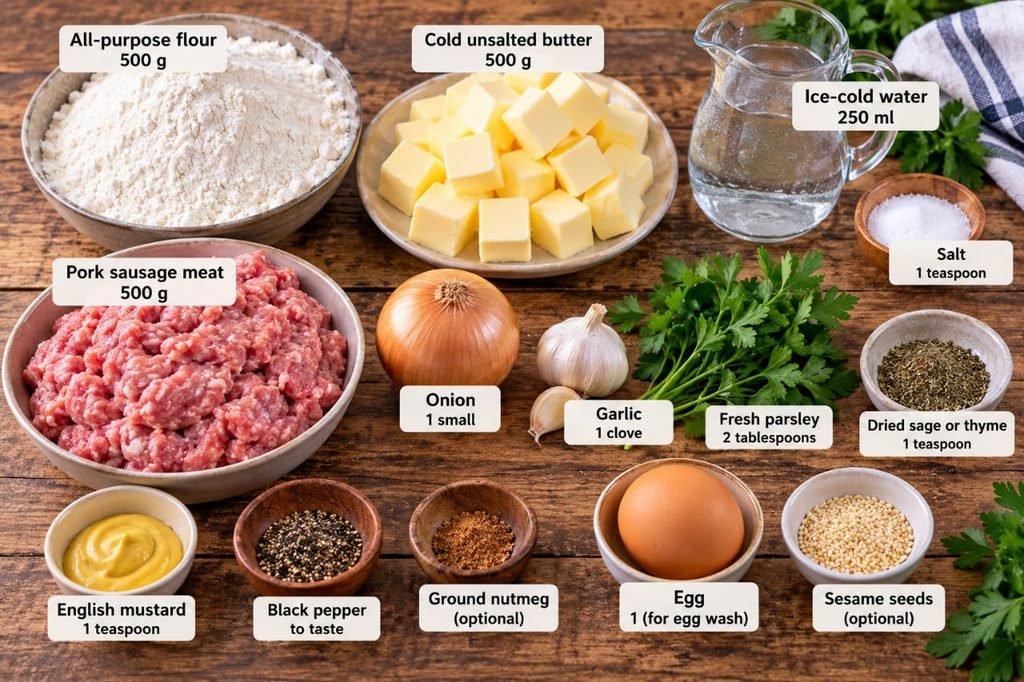
These ingredients make approximately 16 medium sausage rolls, depending on how you cut them. The homemade pastry option requires chilling time, while ready-made puff pastry makes the recipe much faster.
For the Homemade Rough Puff Pastry
- 500 g all-purpose flour
- 500 g very cold unsalted butter, cut into small cubes
- 1 teaspoon salt
- 250 ml ice-cold water, added gradually as needed
Shortcut: Replace the homemade pastry with approximately 750–1,000 g of ready-made puff pastry, depending on its thickness and the size of your rolls. Follow the package instructions for thawing and handling.
For the Sausage Filling
- 500 g good-quality pork sausage meat
- 1 small onion, finely grated or minced
- 1 garlic clove, minced
- 2 tablespoons finely chopped fresh parsley
- 1 teaspoon dried sage or thyme
- 1 teaspoon English mustard
- Freshly ground black pepper, to taste
- A small pinch of ground nutmeg, optional
For the Egg Wash and Topping
- 1 egg, beaten
- 1–2 teaspoons sesame seeds or poppy seeds, optional
- A little flour for dusting the work surface
How to Make Homemade Sausage Rolls
Step 1: Prepare the Rough Puff Pastry
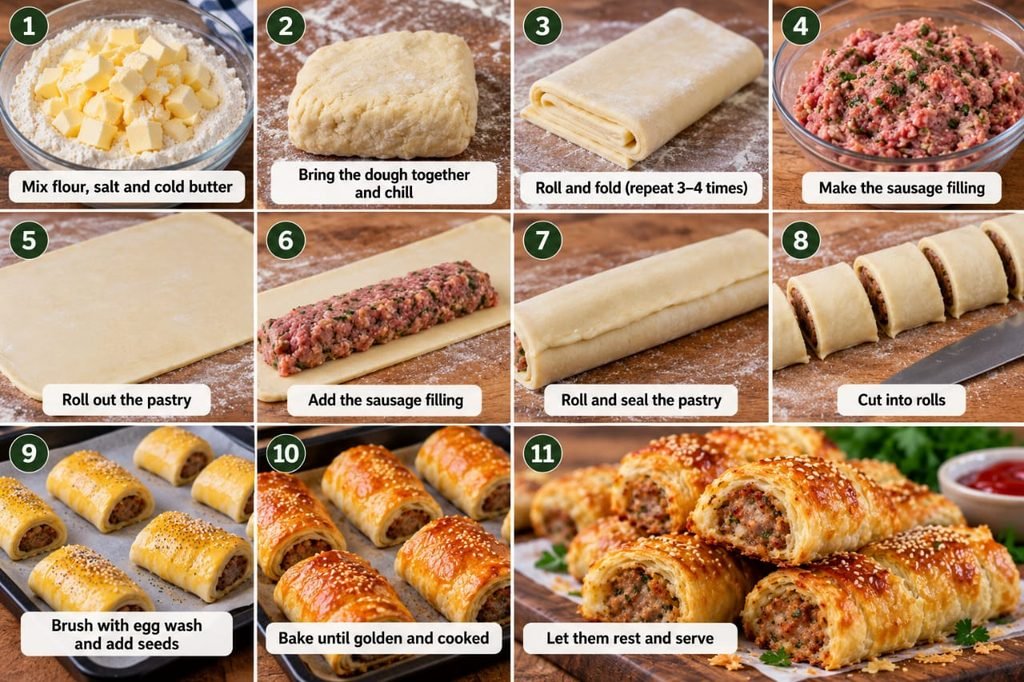
If you are making your own pastry, combine the flour and salt in a large mixing bowl. Add the cold butter cubes and toss them through the flour until coated. Keep the butter pieces visible rather than rubbing them into fine crumbs. Those pieces help create flaky layers during baking.
Gradually add the ice-cold water, mixing gently with a knife or spatula until the dough begins to come together. You may not need all the water, so stop when the dough holds together without becoming sticky.
Shape the dough into a rough rectangle, wrap it, and refrigerate for 30 minutes. On a lightly floured surface, roll it into a long rectangle. Fold the bottom third upward and the top third downward, like folding a letter.
Turn the dough a quarter turn, roll it out again, and repeat the fold. Wrap and chill for another 30 minutes. Repeat the rolling and folding process twice more, chilling the dough whenever the butter begins to soften.
After the final fold, refrigerate the pastry for at least 30 minutes before rolling it out for assembly. If the pastry becomes warm or greasy at any stage, stop and chill it before continuing.
Step 2: Make the Savory Sausage Filling
Place the sausage meat in a large bowl. Add the onion, garlic, parsley, dried sage or thyme, mustard, black pepper, and optional nutmeg.
Mix until the ingredients are evenly distributed, but avoid excessive handling. Overworking the meat can make the filling dense rather than tender.
If the onion releases a lot of liquid, drain off the excess before assembling the rolls. Too much moisture can prevent the bottom of the pastry from becoming crisp.
Step 3: Roll Out the Pastry
Preheat your oven to 200°C (400°F), or 180°C (350°F) for a fan-assisted oven. Line two baking sheets with parchment paper.
Divide the chilled pastry into two portions. On a lightly floured surface, roll each portion into a long rectangle approximately 3–4 mm thick. Trim uneven edges if necessary.
If using ready-made puff pastry, let it thaw according to the package instructions, keeping it cold and pliable. Cut each sheet into long strips wide enough to wrap around the sausage filling.
Step 4: Add the Sausage Filling
Divide the sausage mixture into two equal portions. Shape each portion into a long log and place it along the center of a pastry rectangle, leaving enough pastry on both sides to wrap around the filling.
Brush one long edge of the pastry with a little beaten egg. Fold the opposite edge over the sausage meat, then bring the egg-washed edge over it to create a seam.
Press gently to seal the seam without squeezing the filling too tightly. Turn the long roll seam-side down so it stays closed during baking.
Step 5: Cut and Glaze the Rolls
Cut each long roll into approximately eight medium pieces, or smaller portions if you are preparing party snacks. Use a sharp knife to make clean cuts without crushing the pastry.
Arrange the pieces on the prepared baking sheets, leaving space between them so the pastry can expand. Brush the tops with beaten egg for a golden finish.
If desired, sprinkle sesame seeds or poppy seeds over the tops. Make two small, shallow diagonal slashes in each roll to allow steam to escape. Avoid cutting deeply into the sausage filling.
For a particularly flaky result, refrigerate the assembled rolls for 15–20 minutes before baking. This helps the pastry stay firm as it enters the hot oven.
Step 6: Bake Until Golden and Cooked Through
Bake the medium sausage rolls for approximately 25–35 minutes, checking them toward the end of the cooking time. Larger rolls may need longer, while smaller pieces may cook more quickly.
The pastry should be well risen and deep golden brown, with crisp edges and a firm base. The sausage filling must be fully cooked in the center. For ground pork, use a food thermometer and check that the center reaches at least 71°C (160°F).
If the pastry browns too quickly before the filling is cooked, reduce the oven temperature slightly and continue baking until the center reaches a safe temperature.
Transfer the finished sausage rolls to a wire rack and allow them to rest for about 10 minutes before serving. The filling will be very hot straight from the oven.
Tips for Extra-Flaky Sausage Rolls
Keep the Pastry Cold
Cold butter is essential when making rough puff pastry. If the butter melts before the dough enters the oven, the pastry may become greasy and lose some of its flaky texture. Chill the dough whenever it feels soft.
Avoid Overfilling
Use an even layer of sausage meat rather than a thick mound. Too much filling can make the rolls difficult to seal and may leave the center undercooked before the pastry is ready.
Seal the Pastry Properly
Use a small amount of beaten egg along the joining edge and press the seam closed. Place the seam underneath each roll to help prevent it from opening during baking.
Use a Fully Preheated Oven
A hot oven helps the moisture in the pastry turn to steam, lifting the layers and producing a crisp exterior. Always preheat the oven before placing the rolls inside.
Do Not Crowd the Baking Sheet
Leave space between the rolls so hot air can circulate around them. Crowding the tray can trap steam and make the pastry less crisp.
Common Sausage Roll Mistakes to Avoid
- Soggy pastry: Drain excess liquid from the onion and avoid adding wet ingredients directly to the filling.
- Flat pastry: Keep the dough cold and make sure the oven is fully preheated.
- Filling that is too dry: Choose sausage meat with some fat rather than very lean meat.
- Open seams: Seal the pastry edge with beaten egg and position the seam underneath.
- Undercooked filling: Check the center with a food thermometer, especially when making large rolls.
- Burnt tops: If necessary, lower the oven temperature slightly and continue cooking until the filling is done.
Easy Variations and Substitutions
Cheese and Sausage Rolls
Add a small amount of grated mature cheddar to the sausage mixture for a richer flavor. Avoid adding too much cheese, which can leak out during baking.
Apple and Sage Sausage Rolls
Finely grate a small amount of apple and squeeze out excess juice before mixing it into the filling. Apple pairs well with pork and sage, but too much moisture can make the pastry soggy.
Spicy Sausage Rolls
Add a pinch of chili flakes or a little smoked paprika to the filling. Start with a small quantity and adjust the seasoning to your preference.
Beef or Turkey Sausage Rolls
You can substitute beef or turkey sausage meat if preferred. The flavor and texture will differ, and leaner meat may produce a drier filling. Always check the safe cooking temperature for the type of meat used.
Vegetarian Alternative
Use a suitable plant-based sausage filling and check the product instructions for cooking times. Keep the filling relatively dry and ensure it is heated through according to the manufacturer’s guidance.
How to Store Homemade Sausage Rolls
Refrigerating Leftovers
Allow cooked sausage rolls to cool briefly, then refrigerate them in a covered container within two hours of cooking. Keep the refrigerator at 4°C (40°F) or below and use the leftovers within three to four days.
Freezing Unbaked Sausage Rolls
Arrange the assembled, unbaked rolls on a lined tray and freeze them until firm. Transfer them to a freezer-safe container or bag, label the package, and store them at -18°C (0°F) or below.
Bake the rolls from frozen when needed, allowing extra time in the oven. The exact time depends on their size, the pastry, and your oven. Check the filling temperature before serving rather than relying on time alone.
Freezing Cooked Sausage Rolls
Cool the baked rolls completely, package them in a freezer-safe container, and freeze. For the best texture, reheat them in an oven until hot throughout and the pastry is crisp again.
How to Reheat Sausage Rolls
Place refrigerated sausage rolls in a preheated oven at approximately 180°C (350°F) until heated through. An oven or air fryer usually gives a crisper finish than a microwave. If using a microwave, the pastry may become softer.
Reheat leftovers until the center reaches 74°C (165°F). Avoid repeatedly cooling and reheating the same batch.
What to Serve with Sausage Rolls
Homemade sausage rolls are delicious on their own, but a few simple sides can turn them into a more complete meal.
- Dipping sauces: Serve with mustard, tomato sauce, or a chutney you enjoy.
- Fresh salad: A green salad with cucumber and tomatoes adds freshness.
- Roasted vegetables: Serve with carrots, potatoes, or seasonal vegetables for a heartier meal.
- Party snacks: Pair mini sausage rolls with vegetable sticks, olives, and other finger foods.
- Lunchboxes: Pack them with fresh fruit and suitable sides, keeping food at a safe temperature.
Frequently Asked Questions
Why are my sausage rolls not flaky?
The pastry may have become too warm, the oven may not have been hot enough, or the dough may have been overworked. Keep the pastry cold, preheat the oven thoroughly, and avoid pressing down on the layers when rolling.
Can I use store-bought puff pastry?
Yes. Ready-made puff pastry is a convenient option and can produce excellent sausage rolls. Follow the package instructions for thawing, keep the pastry cold, and avoid stretching it too much during assembly.
Can I prepare sausage rolls ahead of time?
Yes. Assemble the rolls, cover them, and refrigerate them until you are ready to bake, ideally within a day. You can also freeze the unbaked rolls for longer storage.
Should I bake sausage rolls from frozen?
Yes, if they were prepared and frozen correctly. Place the frozen rolls on a lined baking sheet and allow additional baking time. Check that the filling is fully cooked in the center before serving.
How do I prevent the bottom from becoming soggy?
Keep the filling free from excess liquid, use a fully preheated oven, leave space between the rolls, and bake until the pastry base is golden. A wire rack also helps prevent condensation from collecting underneath after baking.
Can I make smaller sausage rolls for parties?
Absolutely. Cut the assembled rolls into bite-sized pieces before baking. Smaller pieces generally cook faster, so begin checking them early and confirm that the sausage filling is fully cooked.
How do I know when sausage rolls are cooked?
The pastry should be puffed and golden, and the filling should be fully cooked in the center. For ground pork, verify a minimum internal temperature of 71°C (160°F) with a food thermometer.
Final Thoughts
Homemade sausage rolls are a satisfying combination of crisp puff pastry and savory, well-seasoned filling. With cold pastry, a balanced filling, and careful baking, you can prepare a batch that works just as well for a family snack as it does for a party spread.
Try the homemade pastry when you have extra time, or use ready-made puff pastry for a simpler approach. Once you have mastered the basic method, experiment with herbs, cheese, or a little apple to create your own favorite variation.
If you make these homemade sausage rolls, serve them warm with your favorite dipping sauce and enjoy the flaky, golden results.