This traditional potato and bread stuffing is a comforting, flavorful side dish made with toasted bread cubes, creamy mashed potatoes, sautéed onions, celery, garlic, and fragrant herbs. The combination creates a delicious stuffing with a tender center and a golden, lightly crispy top.
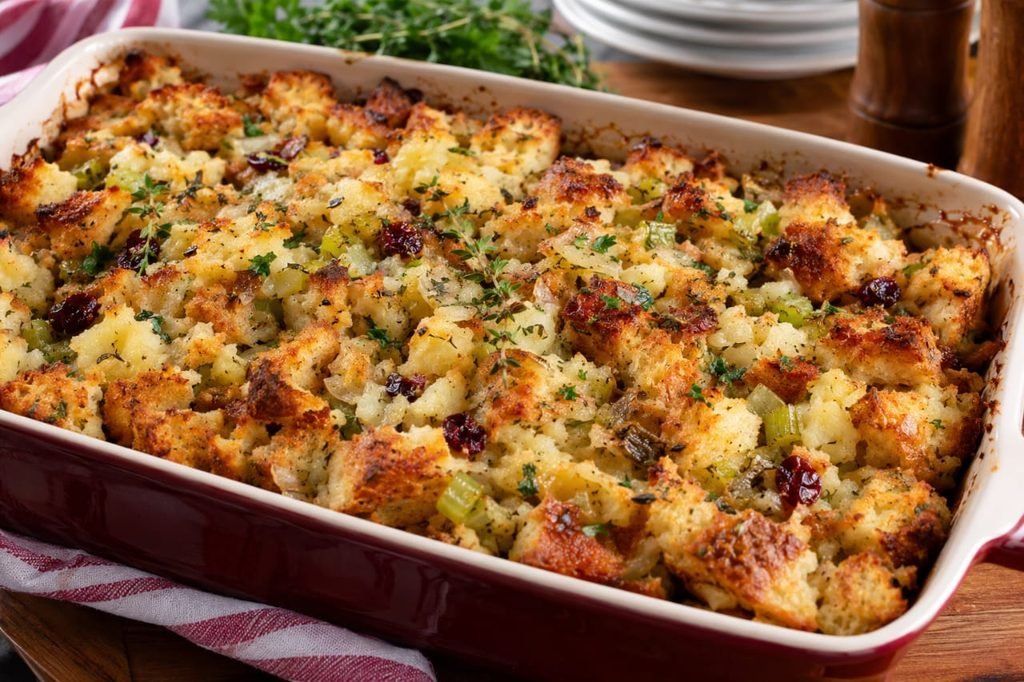
Perfect for Thanksgiving, Christmas, Sunday dinners, and family gatherings, this homemade stuffing pairs beautifully with roasted turkey, chicken, or your favorite holiday dishes. Fresh thyme, sage, rosemary, and parsley add classic savory flavor, while vegetable or chicken broth brings all the ingredients together.
For a delicious twist, you can replace the regular mashed potatoes with mashed sweet potatoes. This variation adds a subtle sweetness that complements the savory herbs and toasted bread. Whether you prefer the traditional version or the sweet potato alternative, this easy baked stuffing is a wonderful addition to your dinner table.
Why You’ll Love This Potato and Bread Stuffing
- Comforting and flavorful: Toasted bread, mashed potatoes, and aromatic herbs create a satisfying homemade side dish.
- Perfect for holidays: Serve it with roasted turkey, chicken, or other festive main dishes.
- Easy to customize: Choose regular potatoes or sweet potatoes and add your favorite optional ingredients.
- A delicious texture: The inside stays moist and tender while the top becomes golden and crispy.
- Make-ahead friendly: Prepare the mixture in advance and bake it when you’re ready to serve.
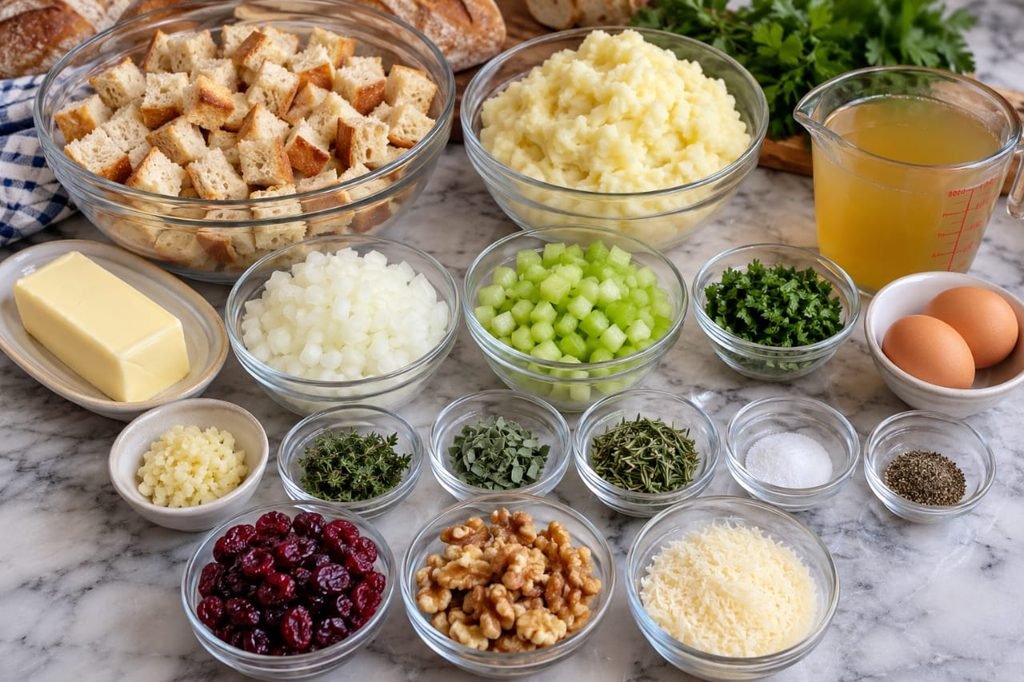
Ingredients for Traditional Potato and Bread Stuffing
This recipe serves 8–10 people. Use slightly stale bread for the best texture, and add the broth gradually to keep the stuffing moist without making it soggy.
Main Ingredients
- 4 cups day-old French or sourdough bread, cut into cubes
- 2 cups mashed potatoes, or about 2 large boiled and mashed russet potatoes
- 1/2 cup unsalted butter, or olive oil for a lighter variation
- 1 large onion, finely chopped
- 2 celery stalks, diced
- 3 garlic cloves, minced
- 2 teaspoons fresh thyme, or 1 teaspoon dried thyme
- 1 tablespoon chopped fresh sage, or 1 teaspoon dried sage
- 1 teaspoon chopped rosemary
- 1/2 cup chopped fresh parsley
- 1 1/2 cups vegetable or chicken broth, added as needed
- 2 eggs, beaten (optional, for binding)
- 1/2 teaspoon salt, or to taste
- 1/4 teaspoon black pepper
Optional Add-Ins
- 1/2 cup dried cranberries for a touch of sweetness
- 1/2 cup toasted walnuts or pecans for extra crunch
- 1/2 cup grated Parmesan cheese for additional savory flavor
Essential Equipment
- A large baking sheet for toasting the bread
- A large skillet or frying pan
- A large mixing bowl
- A potato masher or fork
- A sharp knife and cutting board
- A 9 × 13-inch baking dish, or a similar oven-safe dish
- Aluminum foil
- A wooden spoon or spatula
How to Make Traditional Potato and Bread Stuffing
Follow these simple steps to prepare a flavorful stuffing with tender potatoes, toasted bread, and classic herbs.
Step 1: Prepare the Bread and Potatoes
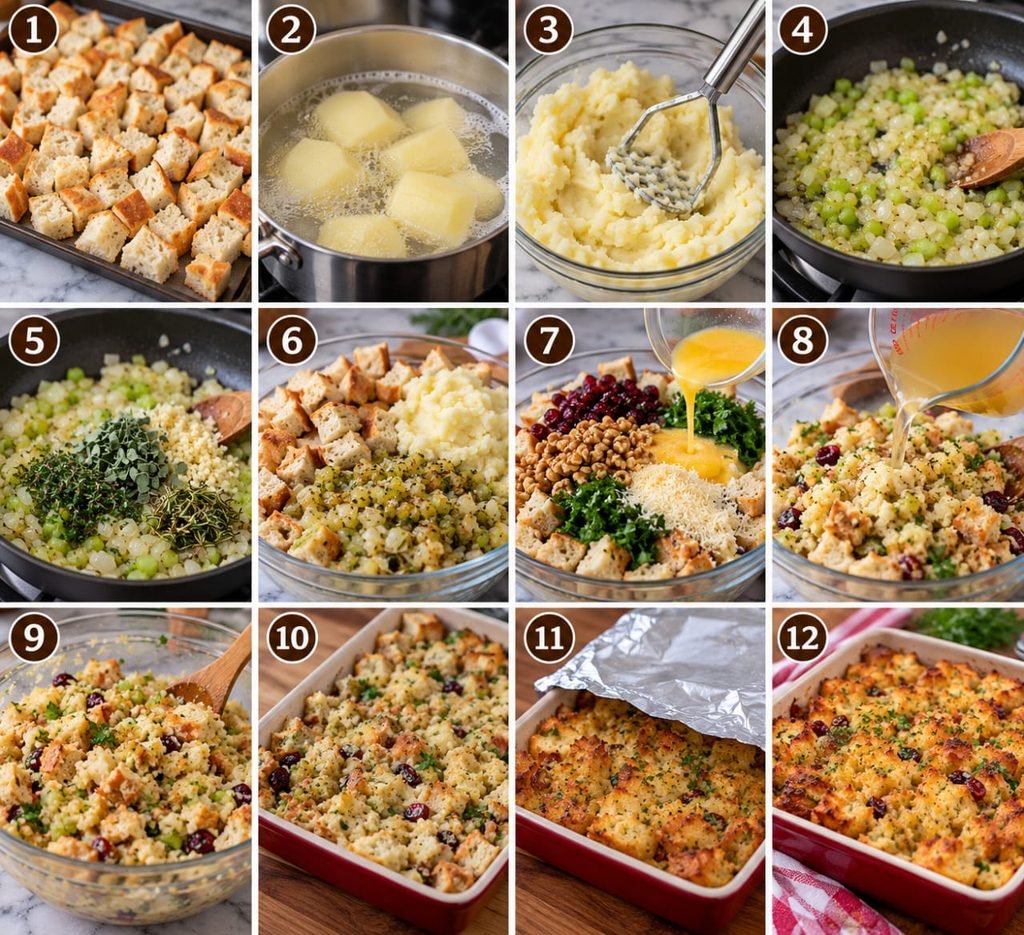
Preheat your oven to 300°F (150°C). Spread the bread cubes in a single layer on a baking sheet and toast for about 10 minutes, or until they feel dry. Allow them to cool slightly.
If you are preparing the mashed potatoes from scratch, peel and boil the potatoes in salted water until fork-tender. Drain well, mash until smooth, and let them cool slightly before combining them with the other ingredients.
If you already have leftover mashed potatoes, you can use them directly. Avoid adding too much extra butter or milk to the potatoes, as the stuffing will receive additional moisture from the broth.
Step 2: Sauté the Onion, Celery, and Herbs
Melt the butter in a large skillet over medium heat. Add the chopped onion and diced celery, then cook for about 5 minutes, stirring occasionally, until softened.
Add the minced garlic, thyme, sage, and rosemary. Cook for another minute, stirring frequently, until the garlic and herbs become fragrant. Remove the skillet from the heat.
Step 3: Combine the Bread, Potatoes, and Vegetables
Place the toasted bread cubes and mashed potatoes in a large mixing bowl. Add the sautéed onion, celery, garlic, and herb mixture. Sprinkle in the chopped parsley, salt, and black pepper.
Gently toss everything together until the ingredients are evenly distributed. The mixture should contain a good balance of bread, potatoes, vegetables, and herbs.
Step 4: Add the Broth and Optional Ingredients
Pour the vegetable or chicken broth into the mixture gradually, stirring gently after each addition. Start with a smaller amount and add more as needed until the bread is moist but not swimming in liquid.
If you want the stuffing to hold together more firmly, stir in the beaten eggs. You can also fold in dried cranberries, toasted walnuts or pecans, or grated Parmesan cheese.
Taste the mixture and adjust the salt and black pepper if necessary. If your broth is already salty, you may need less additional salt.
Step 5: Transfer to the Baking Dish
Preheat the oven to 375°F (190°C). Lightly grease a 9 × 13-inch baking dish or another appropriately sized oven-safe dish.
Spoon the stuffing mixture into the prepared dish and spread it evenly. Do not pack it too tightly, as a slightly loose mixture allows the stuffing to bake more evenly.
Step 6: Bake Until Hot and Tender
Cover the baking dish with aluminum foil and bake for 25 minutes. The foil helps retain moisture while the flavors blend together.
Remove the foil and continue baking for another 15–20 minutes, or until the top is golden brown and lightly crispy. If the stuffing looks dry before it is fully heated, drizzle a little additional broth over the surface.
If you use eggs, make sure the center reaches 160°F (71°C) for food safety.
Step 7: Rest and Serve
Remove the stuffing from the oven and let it rest for about 5 minutes before serving. This short resting period helps the mixture settle and makes it easier to spoon onto plates.
Serve warm alongside roasted turkey, baked chicken, gravy, roasted vegetables, or your favorite holiday main dish.
Sweet Potato and Bread Stuffing Variation
For a slightly sweeter and more colorful variation, replace the 2 cups of mashed regular potatoes with 2 cups of mashed sweet potatoes.
Cook the sweet potatoes until tender, mash them, and allow them to cool slightly before adding them to the bread mixture. Sweet potatoes pair particularly well with sage, rosemary, dried cranberries, and toasted pecans.
Because sweet potatoes can have a softer texture and a naturally sweet flavor, add the broth gradually and taste the mixture before adjusting the seasonings.
Tips for the Best Homemade Stuffing
- Use day-old bread: Slightly stale bread absorbs broth more evenly than very fresh bread.
- Toast the bread first: Drying the bread helps prevent a mushy texture.
- Drain potatoes well: Excess water in the mashed potatoes can make the stuffing too wet.
- Add broth gradually: Different types of bread absorb different amounts of liquid.
- Use fresh herbs when possible: Fresh thyme, sage, rosemary, and parsley provide a fragrant, savory flavor.
- Do not skip the sautéing step: Cooking the onion and celery first softens them and develops their flavor.
- Keep some texture: Mix gently instead of crushing all the bread cubes.
- Uncover for the final bake: Removing the foil allows the top to become golden and crispy.
Common Stuffing Mistakes to Avoid
Why Is My Stuffing Too Soggy?
Too much broth, freshly baked bread, or watery mashed potatoes can make stuffing soggy. Toast the bread cubes first and add the broth gradually until the mixture is moist but still holds its shape.
Why Is My Stuffing Too Dry?
Dry stuffing may need more broth or a shorter uncovered baking time. Add a little broth before baking if the mixture seems dry, and cover the dish during the first part of baking to retain moisture.
Why Is the Center Still Cold?
A deep or tightly packed baking dish may heat more slowly. Spread the mixture evenly, avoid packing it too tightly, and check the center before serving.
How Do I Get a Crispy Top?
Bake the stuffing uncovered during the final 15–20 minutes. If necessary, leave it in the oven a little longer while checking frequently to prevent the top from becoming too dark.
What to Serve with Potato and Bread Stuffing
This savory stuffing is a versatile side dish that pairs well with many main courses and vegetables.
- Roasted turkey with homemade gravy
- Roasted or baked chicken
- Roasted carrots, green beans, or Brussels sprouts
- Mashed potatoes and gravy
- Roasted sweet potatoes
- A fresh green salad for a lighter contrast
How to Store Leftover Stuffing
In the Refrigerator
Transfer leftover stuffing to a shallow, airtight container and refrigerate within 2 hours of cooking. Store it in the refrigerator for up to 3–4 days.
How to Reheat Stuffing
Place the stuffing in an oven-safe dish, add a small splash of broth if it seems dry, and cover with foil. Reheat in a 350°F (175°C) oven until the center reaches 165°F (74°C).
For a crispier top, remove the foil during the final few minutes of reheating.
Can You Freeze Potato and Bread Stuffing?
Yes. For best quality, freeze the stuffing in an airtight, freezer-safe container. For easier reheating, divide it into individual portions before freezing and use within 2–3 months for best quality.
Thaw frozen stuffing in the refrigerator before reheating, and heat it until the center reaches 165°F (74°C).
Frequently Asked Questions
What is the best bread for stuffing?
French bread and sourdough both work well. Day-old bread is especially useful because it absorbs the broth while retaining some texture.
Can I make stuffing without eggs?
Yes. The eggs are optional and help bind the mixture together. You can omit them for a less firmly set stuffing. If you want a fully plant-based version, use vegetable broth and olive oil instead of butter, and omit the eggs and Parmesan.
Can I make this stuffing ahead of time?
Yes. Prepare the bread, potatoes, and sautéed vegetables in advance, then combine them with the broth shortly before baking. If assembling the entire dish ahead of time, cover and refrigerate it promptly. Bake until thoroughly heated, allowing extra time if the dish is cold.
Can I use leftover mashed potatoes?
Absolutely. Leftover mashed potatoes are a convenient option. If they already contain butter, milk, or salt, adjust the other ingredients to balance the flavor and texture.
Can I make this recipe vegetarian?
Yes. Use vegetable broth instead of chicken broth. Also check that the bread and any optional cheese are suitable for your dietary needs.
What is the difference between stuffing and dressing?
The terms are often used interchangeably, although stuffing traditionally refers to a mixture cooked inside poultry, while dressing is usually baked separately in a casserole dish. This recipe is baked separately in a baking dish.
Final Thoughts
This traditional potato and bread stuffing combines toasted bread, creamy mashed potatoes, aromatic vegetables, and classic herbs in one comforting side dish. Its tender center and golden top make it a delicious addition to holiday dinners and family meals.
Keep the classic version for a savory, familiar flavor, or try the sweet potato variation with cranberries and pecans for a slightly sweeter twist. Serve it warm with roasted turkey or chicken, and enjoy a homemade side dish that everyone can share.