This creamy vegan mushroom stroganoff is rich, savory, and comforting without using any dairy or meat. Instead of relying on a meat substitute, the recipe builds its flavor from deeply browned cremini mushrooms, dried porcini mushrooms, and a smooth homemade cashew cream.
The secret is the porcini soaking liquid. It carries an intense mushroom flavor that goes directly into the sauce, while the cashew cream gives the stroganoff its silky texture without using traditional sour cream.
Serve it over wide egg-free noodles for an easy plant-based dinner that feels hearty enough for a special meal but is simple enough for a weeknight.
Why This Vegan Mushroom Stroganoff Works
- Deep mushroom flavor: Dried porcini mushrooms add concentrated savory flavor, while cremini mushrooms provide texture.
- Rich without dairy: Blended cashews create a creamy sauce without heavy cream or sour cream.
- Better mushroom texture: Cooking the mushrooms in a single layer allows them to brown instead of simply steaming.
- Balanced flavor: Dijon mustard, soy sauce, lemon juice, garlic, and mushrooms give the sauce a savory, slightly tangy finish.
- Easy to make: Most of the preparation happens in one skillet, making cleanup easier.
The Secret to Better Mushroom Stroganoff
The biggest difference between a good mushroom stroganoff and a watery one is how the mushrooms are cooked.
Mushrooms naturally release a lot of water as they cook. If you crowd them into a small skillet, they can steam instead of brown. That leaves you with soft, pale mushrooms and less concentrated flavor.
For the best result, spread the cremini mushrooms into a single layer and leave them undisturbed for several minutes. Let their moisture cook away and allow the edges to become golden before stirring.
The second important ingredient is dried porcini. After soaking, the mushrooms become tender enough to chop and the soaking liquid becomes a concentrated mushroom broth. Don’t throw it away.
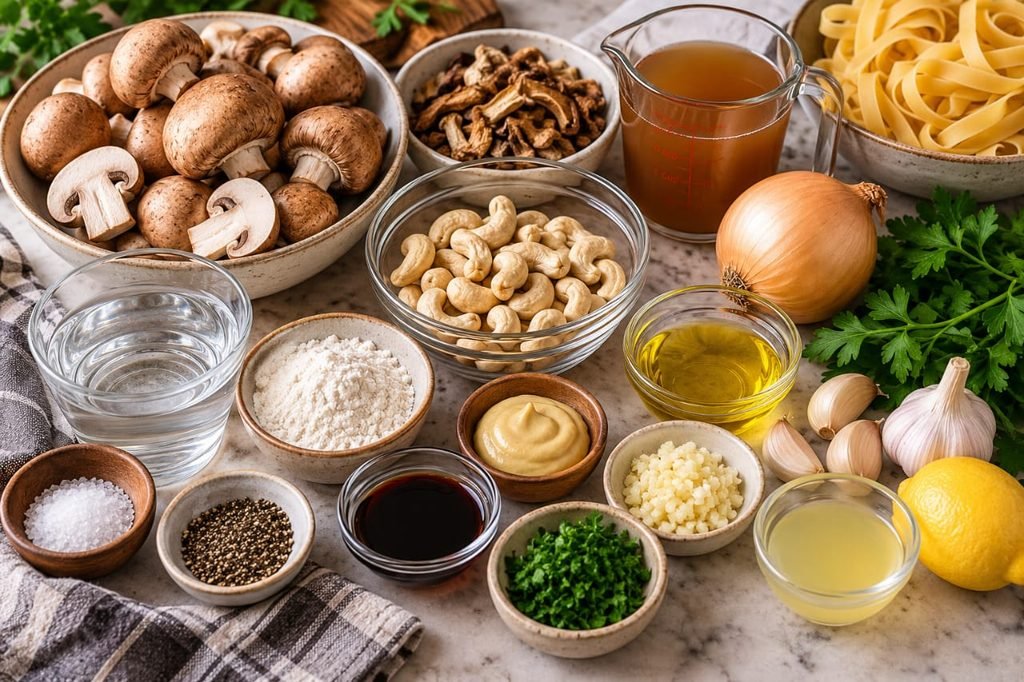
Ingredients
For the Mushroom Stroganoff
- 1 oz dried porcini mushrooms
- 1 cup hot water
- 12 oz cremini mushrooms, sliced
- 1 medium yellow onion, diced
- 3 garlic cloves, minced
- 2 tablespoons olive oil
- 2 tablespoons all-purpose flour
- 1 cup vegetable broth
- 1 tablespoon Dijon mustard
- 1 tablespoon soy sauce
- 1 tablespoon lemon juice
- Salt and black pepper, to taste
- Fresh parsley, chopped, for serving
For the Cashew Cream
- 3/4 cup raw cashews, soaked in hot water for 15 minutes
- 1/2 cup water
For Serving
- 12 oz egg-free pasta, such as fettuccine or wide noodles
Ingredient Notes
Dried Porcini Mushrooms
Dried porcini mushrooms are one of the most useful ingredients in this recipe. They have a concentrated earthy flavor that makes the sauce taste much more developed than it would with fresh mushrooms alone.
After soaking them, lift the porcini out of the water rather than pouring everything through the pan. Fine grit can settle at the bottom of the soaking water, so leave the last little bit behind when transferring the liquid to the sauce.
Cremini Mushrooms
Cremini mushrooms give the stroganoff its main texture. Slice them evenly so they cook at roughly the same rate.
If your skillet is small, cook them in two batches instead of overcrowding the pan.
Cashews
Raw cashews create the creamy base for the sauce. Soaking them in hot water for about 15 minutes softens them and makes blending easier.
The smoother the cashew cream, the smoother the finished stroganoff will be.
Dijon Mustard
Dijon mustard adds a small amount of acidity and sharpness that keeps the creamy sauce from tasting flat or overly rich.
Soy Sauce
Soy sauce adds savory depth and helps replace some of the umami that would normally come from the beef in traditional stroganoff.
How to Make Vegan Mushroom Stroganoff
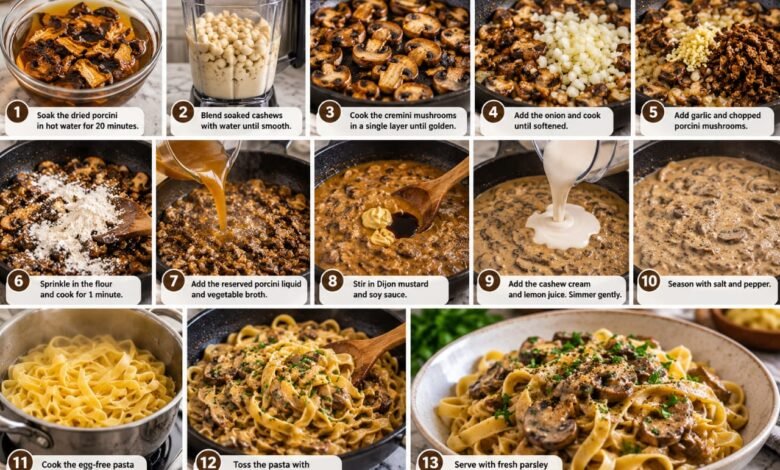
1. Soak the Porcini Mushrooms
Place the dried porcini mushrooms in a bowl and cover them with 1 cup of hot water.
Let them soak for about 20 minutes, or until they are soft.
Lift the mushrooms out of the water and roughly chop them. Keep the soaking liquid, but leave any grit that has settled at the bottom of the bowl behind.
This mushroom-infused liquid will become part of the sauce.
2. Make the Cashew Cream
Drain the soaked cashews.
Add them to a blender with 1/2 cup water and blend until completely smooth.
A high-speed blender may take about a minute, while a regular blender can take longer. Stop and scrape down the sides if necessary.
Don’t rush this step. Any remaining graininess will be noticeable in the finished sauce.
3. Brown the Cremini Mushrooms
Heat the olive oil in a large skillet over medium-high heat.
Add the sliced cremini mushrooms in a single layer.
Let them cook undisturbed for about 3–4 minutes before stirring. This gives the mushrooms time to release moisture and develop golden-brown edges.
Once the mushrooms are browned, continue cooking until most of their excess moisture has cooked away.
4. Add the Onion, Garlic, and Porcini
Add the diced onion to the skillet and cook for about 5 minutes, or until softened.
Add the minced garlic and chopped porcini mushrooms.
Cook for another minute, stirring frequently so the garlic doesn’t burn.
5. Add the Flour
Sprinkle the flour evenly over the mushroom mixture.
Stir continuously for about one minute.
This helps cook the raw flour flavor before the liquids are added and gives the sauce something to thicken with.
6. Build the Sauce
Slowly pour in the reserved porcini soaking liquid and vegetable broth.
As you pour, scrape the bottom of the skillet with a wooden spoon to loosen the browned bits left behind by the mushrooms.
Stir in the Dijon mustard and soy sauce.
Bring the sauce to a gentle simmer and cook for about 5 minutes, or until it begins to thicken.
7. Add the Cashew Cream
Reduce the heat to low.
Stir in the blended cashew cream and lemon juice.
At this point, avoid bringing the sauce to a hard boil. Gentle heat will help keep the sauce smooth and creamy.
Taste and adjust the seasoning with salt and freshly ground black pepper.
8. Cook the Pasta
While the sauce is cooking, bring a large pot of salted water to a boil.
Cook the egg-free pasta according to the package directions until tender.
Drain the pasta well.
9. Combine and Serve
Add the cooked pasta directly to the skillet with the mushroom sauce.
Toss gently until the noodles are completely coated.
Serve immediately with chopped fresh parsley and a little freshly ground black pepper.
How to Prevent Watery Mushroom Stroganoff
If your mushroom stroganoff turns out watery, the problem usually starts before the sauce is even made.
Don’t Overcrowd the Pan
Too many mushrooms in a small skillet trap steam. Instead of browning, the mushrooms slowly cook in their own moisture.
If necessary, brown the mushrooms in two batches.
Give the Mushrooms Time to Brown
Don’t stir constantly. Let the mushrooms sit against the hot skillet long enough to develop color.
Let Excess Moisture Cook Away
Before adding the flour and liquid, the mushrooms should have reduced considerably and developed browned edges.
Don’t Add Too Much Liquid
Use the measured vegetable broth and reserved porcini liquid. The sauce will continue to thicken as it simmers.
How to Get Smooth Cashew Cream
The texture of your cashew cream can make a noticeable difference in the final dish.
- Use raw cashews rather than heavily roasted or salted cashews.
- Soak them in hot water before blending.
- Blend with enough water to keep the blades moving.
- Blend longer than you think you need to.
- Scrape down the blender sides if necessary.
If the finished sauce is thicker than you like, add a small splash of vegetable broth or water and stir gently over low heat.
Best Pasta for Vegan Stroganoff
Wide pasta shapes work particularly well because they provide plenty of surface area for the creamy mushroom sauce.
Fettuccine and other wide egg-free noodles are excellent choices.
If you are buying noodles specifically for a vegan meal, check the package ingredients carefully because some traditional egg noodles contain eggs.
Avoid very thin pasta shapes because the hearty mushroom sauce can overwhelm them.
Easy Variations
Smoky Mushroom Stroganoff
Add 1/2 teaspoon smoked paprika with the garlic for a subtle smoky flavor.
White Wine Version
After cooking the onions, add 1/4 cup dry white wine. Let it reduce by about half before adding the flour.
Vegan Mushroom Stroganoff with Spinach
Add a couple of handfuls of baby spinach during the final few minutes of cooking. The spinach will wilt into the warm sauce and add extra color.
Gluten-Free Stroganoff
Use a gluten-free 1:1 flour blend and gluten-free pasta. Replace regular soy sauce with certified gluten-free tamari.
Mixed Mushroom Stroganoff
Replace some of the cremini mushrooms with shiitake or oyster mushrooms for a different combination of textures.
Nut-Free Option
If you need a nut-free version, replace the cashew cream with a suitable dairy-free cooking cream or vegan sour cream. Add it gradually and keep the heat low.
Can I Make Vegan Mushroom Stroganoff Without Porcini?
Yes, but the flavor will be less intense.
The dried porcini and their soaking liquid provide a concentrated mushroom flavor that is difficult to reproduce with fresh cremini mushrooms alone.
If you don’t have porcini, you can still make the recipe with fresh mushrooms. Season gradually and taste the sauce before serving.
What to Serve With Mushroom Stroganoff
This stroganoff is filling enough to serve as a complete meal, but a simple side can make the plate more balanced.
- Green salad with a sharp vinaigrette
- Steamed green beans
- Roasted broccoli
- Simple roasted vegetables
- Crusty bread
A crisp, acidic salad is especially good because it cuts through the richness of the creamy sauce.
Make-Ahead Instructions
You can prepare the mushroom sauce up to 2 days ahead.
For the best texture, store the sauce separately from the cooked pasta.
When you’re ready to eat, gently reheat the sauce in a skillet over low heat. Cook fresh pasta and toss it with the warmed sauce just before serving.
This prevents the noodles from absorbing too much sauce and becoming soft.
How to Store Vegan Mushroom Stroganoff
Store leftovers in an airtight container in the refrigerator for up to 3 days.
The pasta will continue absorbing the sauce as it sits, so the leftovers may be noticeably thicker the next day.
How to Reheat Mushroom Stroganoff
Reheat the stroganoff gently in a skillet over low heat.
Add a small splash of vegetable broth or water and stir until the sauce loosens and becomes creamy again.
Avoid reheating over very high heat because the sauce can become thick and less smooth.
Can You Freeze Vegan Mushroom Stroganoff?
This recipe is best enjoyed fresh or refrigerated for a few days.
The cashew cream sauce can change texture slightly after freezing and thawing, while the pasta can become soft.
If you need to prepare it ahead, making the sauce separately and cooking fresh pasta when serving will give you a better result.
Frequently Asked Questions
Is mushroom stroganoff vegan?
This version is vegan because it uses mushrooms and cashew cream instead of beef and dairy-based sour cream. Make sure the pasta you choose is egg-free.
Can I use coconut milk instead of cashew cream?
Yes. Full-fat coconut milk can be used, although it will give the sauce a mild coconut flavor. Vegan sour cream is another alternative.
Why are my mushrooms watery?
The skillet may have been overcrowded or the mushrooms may have been stirred too frequently. Cook them in a single layer and allow their moisture to evaporate before building the sauce.
Why is my cashew sauce grainy?
The cashews may not have been softened enough or blended long enough. Soak them in hot water and blend until completely smooth.
Can I use different mushrooms?
Yes. Shiitake and oyster mushrooms can replace some or all of the cremini mushrooms. Combining varieties can give the finished dish more texture and flavor.
Can I make the sauce ahead?
Yes. Prepare the sauce up to 2 days ahead and refrigerate it separately from the pasta. Reheat gently and combine with freshly cooked noodles when ready to serve.
What pasta is best for vegan mushroom stroganoff?
Wide egg-free noodles such as fettuccine work particularly well because they hold plenty of the creamy mushroom sauce.
Final Tips for the Best Vegan Mushroom Stroganoff
- Don’t rush the mushrooms. Browning them is where much of the flavor develops.
- Don’t throw away the porcini soaking liquid. It becomes part of the sauce.
- Keep the mushrooms uncrowded. Use two batches if your skillet is small.
- Blend the cashew cream until completely smooth.
- Reduce the heat before adding the cashew cream.
- Season gradually. Soy sauce, broth, and Dijon already contribute salt.
- Cook the pasta separately. This makes it easier to control the final texture.
- Serve immediately. The sauce is at its creamiest when freshly made.
Recipe Card
Creamy Vegan Mushroom Stroganoff with Cashew Cream & Porcini
A rich and creamy plant-based stroganoff made with browned cremini mushrooms, dried porcini, homemade cashew cream, Dijon mustard, and egg-free pasta.
Prep Time: 20 minutes
Cook Time: 25 minutes
Total Time: About 45 minutes
Servings: 4
Course: Main Course
Cuisine: Vegan / Comfort Food
Ingredients
- 1 oz dried porcini mushrooms
- 1 cup hot water
- 12 oz cremini mushrooms, sliced
- 1 medium yellow onion, diced
- 3 garlic cloves, minced
- 2 tablespoons olive oil
- 2 tablespoons all-purpose flour
- 1 cup vegetable broth
- 1 tablespoon Dijon mustard
- 1 tablespoon soy sauce
- 3/4 cup raw cashews, soaked in hot water for 15 minutes
- 1/2 cup water
- 1 tablespoon lemon juice
- 12 oz egg-free pasta
- Salt and black pepper, to taste
- Fresh parsley, for serving
Instructions
- Soak the dried porcini in 1 cup hot water for about 20 minutes. Remove and chop the mushrooms, reserving the soaking liquid and leaving any grit behind.
- Drain the soaked cashews and blend them with 1/2 cup water until completely smooth.
- Heat olive oil in a large skillet over medium-high heat. Add the cremini mushrooms in a single layer and cook undisturbed for 3–4 minutes before stirring.
- Add the diced onion and cook for about 5 minutes until softened.
- Add the garlic and chopped porcini and cook for another minute.
- Sprinkle in the flour and stir for about 1 minute.
- Add the reserved porcini liquid and vegetable broth. Stir in Dijon mustard and soy sauce.
- Simmer for about 5 minutes until slightly thickened.
- Reduce the heat to low and stir in the cashew cream and lemon juice. Season with salt and pepper.
- Cook the egg-free pasta according to the package directions and drain.
- Toss the pasta with the mushroom sauce and serve immediately with fresh parsley and black pepper.
Final Word
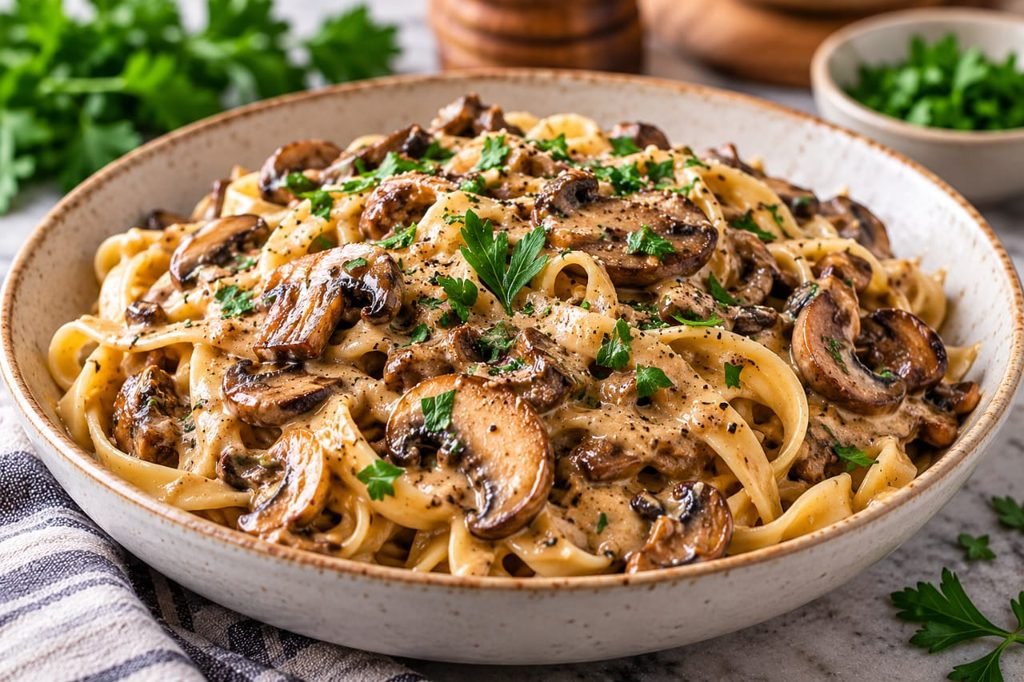
This vegan mushroom stroganoff shows that you don’t need meat or dairy to create a rich, satisfying comfort-food dinner. The combination of browned cremini mushrooms, dried porcini, and silky cashew cream gives the sauce plenty of depth and body.
For the best result, focus on the two most important steps: brown the mushrooms properly and blend the cashew cream until completely smooth. Those small details make a noticeable difference in the finished dish.