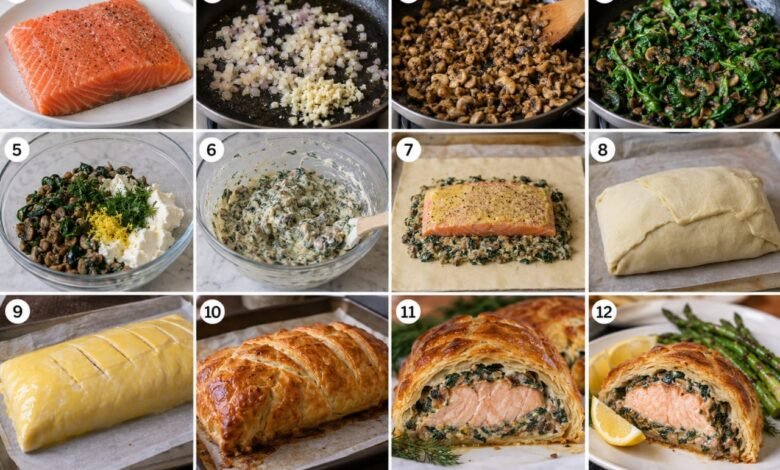
This Salmon Wellington combines tender center-cut salmon with a creamy spinach and mushroom filling, all wrapped in flaky puff pastry and baked until beautifully golden.
It looks like a special-occasion dinner, but the technique is much simpler than the finished dish suggests. The most important part is not complicated pastry work it’s controlling moisture. Mushrooms, spinach, and salmon all contain moisture, and too much liquid trapped inside the pastry can leave you with a soft bottom instead of a crisp, flaky crust.
Follow the steps below to make a Salmon Wellington with a golden pastry crust, creamy filling, and perfectly cooked salmon.
Why You’ll Love This Salmon Wellington
- Crispy puff pastry: Cold pastry and proper chilling help create a flaky, golden crust.
- Creamy savory filling: Mushrooms, spinach, cream cheese, dill, and lemon add layers of flavor without overpowering the salmon.
- Restaurant-style presentation: Once sliced, the salmon and colorful filling create beautiful layers.
- Simple ingredients: Most of the ingredients are easy to find at a regular grocery store.
- Great for special dinners: You can prepare parts of the recipe ahead of time to make dinner easier.
Ingredients

For the Salmon and Filling
- 1 center-cut salmon fillet (about 1.5 lb / 680 g), skin removed — choose a piece with relatively even thickness for more consistent cooking.
- 8 oz (225 g) cremini or button mushrooms, finely chopped
- 5 oz (140 g) fresh spinach
- 1 medium shallot, finely diced
- 2 garlic cloves, minced
- 4 oz (115 g) cream cheese, softened
- 2 tablespoons Dijon mustard
- 2 tablespoons fresh dill, chopped, plus more for garnish
- Zest of 1 lemon
- 2 tablespoons olive oil
- Salt and black pepper, to taste
For the Pastry
- 1 sheet puff pastry, about 8–10 oz (225–285 g), thawed according to package directions
- 1 large egg, beaten, for the egg wash
Optional for Serving
- Lemon wedges
- Fresh dill
- Steamed asparagus
- Roasted baby potatoes
- A light dill cream sauce or beurre blanc
Ingredient Notes
What Kind of Salmon Is Best?
A thick, center-cut salmon fillet works best because it has a more even shape and thickness.
A very thin tail section can cook faster than the thicker center, making it harder to get the pastry and fish done at the same time.
Remove the skin before wrapping the salmon.
Fresh or Frozen Spinach?
Fresh spinach works well for this recipe.
If you prefer frozen spinach, thaw it completely and squeeze out excess water before using it. The goal is simple: keep unnecessary moisture out of the pastry.
Why Use Dijon Mustard?
Dijon adds a mild sharpness that balances the richness of the salmon, cream cheese, and puff pastry.
Why Use Cream Cheese?
Cream cheese creates a smooth, rich filling that brings the spinach, mushrooms, herbs, and lemon together.
How to Make Salmon Wellington
1. Prepare the Salmon
Pat the salmon completely dry with paper towels.
Season it with salt and black pepper.
Spread the Dijon mustard over the salmon.
Set the salmon aside while you prepare the filling.
2. Cook the Mushrooms
Heat the olive oil in a large skillet over medium heat.
Add the diced shallot and cook for about 3 minutes, or until softened.
Add the minced garlic and cook for about 30 seconds, just until fragrant.
Add the chopped mushrooms and a pinch of salt.
Cook for approximately 8–10 minutes, stirring occasionally.
The mushrooms will release liquid as they cook. Continue cooking until that moisture has evaporated and the mixture looks relatively dry.
Don’t rush this step. Wet mushrooms are one of the easiest ways to introduce excess moisture into the pastry.
3. Add the Spinach
Add the fresh spinach by the handful, allowing each addition to wilt before adding more.
Continue cooking until the spinach has wilted and any visible excess liquid has cooked away.
Transfer the mixture to a bowl and let it cool completely.
4. Make the Creamy Filling
Once the mushroom and spinach mixture has cooled, add the softened cream cheese, chopped fresh dill, and lemon zest.
Mix until everything is evenly combined.
Taste and adjust the salt and pepper if needed.
Important: Do not spread a hot filling onto the puff pastry. Warm filling can soften the pastry before it even reaches the oven.
5. Prepare the Puff Pastry
Lightly flour your work surface if needed.
Roll the thawed puff pastry into a rectangle large enough to completely enclose the salmon, leaving enough pastry around the edges to fold and seal the parcel.
Keep the pastry as cold as possible while you work.
If it becomes soft, sticky, or difficult to handle, place it back in the refrigerator for a few minutes.
6. Assemble the Salmon Wellington
Spread the cooled mushroom and spinach filling down the center of the puff pastry.
Keep the filling roughly the same size as the salmon fillet.
Place the salmon on top of the filling.
Fold the longer sides of the pastry over the salmon. Fold the ends over and seal the parcel securely.
Avoid stretching the pastry too thin.
Place the Wellington seam-side down on a parchment-lined baking sheet.
7. Chill the Wellington
Refrigerate the assembled Wellington for at least 30 minutes.
This step is especially useful if the pastry became warm during assembly.
Cold puff pastry helps the layers remain distinct as the Wellington enters the hot oven, which supports better puffing and flakiness.
8. Add the Egg Wash and Score the Pastry
Preheat the oven to 400°F (200°C).
Remove the chilled Wellington from the refrigerator.
Using a sharp knife, make shallow decorative cuts across the top. Don’t cut deeply into the pastry.
Brush the entire surface with the beaten egg.
9. Bake
Bake the Salmon Wellington at 400°F (200°C) for approximately 25–30 minutes.
Look for pastry that is deeply golden, puffed, and crisp.
Because salmon fillets vary in thickness, cooking time can vary slightly.
For food safety, check the thickest part of the salmon with an instant-read thermometer. Fish should reach 145°F (63°C).
If the pastry becomes deeply browned before the salmon reaches the desired temperature, loosely cover the top with foil and continue cooking.
10. Let It Rest Before Slicing
Remove the Wellington from the oven and let it rest for about 10 minutes before slicing.
Use a sharp serrated knife and cut gently through the pastry.
How to Prevent Soggy Salmon Wellington
This is one of the most important parts of making Salmon Wellington.
If your Wellington has a beautiful golden top but a soft bottom, excess moisture is often the reason.
1. Cook the Mushrooms Until the Liquid Disappears
Don’t stop when the mushrooms simply become soft. Keep cooking until the visible moisture has evaporated.
2. Remove Excess Moisture From the Spinach
Whether you use fresh or frozen spinach, make sure there isn’t excess liquid going into the pastry.
3. Cool the Filling Completely
Hot filling creates steam inside the pastry and can soften the dough before it has a chance to become crisp.
4. Pat the Salmon Dry
Use paper towels to remove surface moisture from the salmon before assembling the Wellington.
5. Don’t Overfill the Wellington
More filling isn’t necessarily better. Too much filling can make sealing difficult and trap additional moisture.
6. Keep the Puff Pastry Cold
If the pastry becomes warm while you’re assembling the Wellington, put it back in the refrigerator.
How Do You Know When Salmon Wellington Is Done?
There are two things to check: the pastry and the salmon.
The puff pastry should be deeply golden, puffed, and crisp rather than pale.
For the salmon itself, the most reliable method is to use an instant-read thermometer inserted into the thickest part of the fish.
For food safety, salmon should reach 145°F (63°C) internally.
Common Salmon Wellington Mistakes
Using Wet Mushrooms
If the mushrooms still have liquid in the pan, keep cooking them before moving on.
Adding Hot Filling to the Pastry
Always allow the filling to cool before assembling the Wellington.
Letting the Pastry Get Too Warm
Warm puff pastry can become sticky and difficult to seal. Chill it whenever necessary.
Overfilling the Pastry
Too much filling makes the Wellington harder to close and increases the amount of moisture inside.
Leaving Gaps in the Seal
Press the pastry edges together firmly so the filling stays enclosed.
Skipping the Chill
Chilling the assembled Wellington helps firm the pastry before baking, especially if it became soft during preparation.
Cutting It Immediately
Give the Wellington a short rest before slicing to make cleaner portions.
Can I Make Salmon Wellington Ahead of Time?
Yes, but timing matters.
The mushroom and spinach filling can be prepared ahead of time and refrigerated in an airtight container.
When you’re ready to cook, assemble the Wellington with the chilled filling and cold puff pastry.
If the assembled Wellington becomes soft during preparation, refrigerate it before baking.
Can I Use Frozen Spinach?
Yes. Thaw the spinach completely, then squeeze or drain away as much excess water as possible.
This is especially important because excess water can make the puff pastry soft.
Can I Use a Different Fish?
Salmon is ideal for this recipe because of its rich flavor and firm texture.
If substituting another fish, choose a thick, firm fillet and remember that cooking time may change depending on its thickness.
What to Serve With Salmon Wellington
Salmon Wellington is rich, so fresh and simple sides work particularly well.
- Roasted asparagus — a simple vegetable side that pairs naturally with salmon and lemon.
- Green beans — fresh and light without making the meal too heavy.
- Arugula salad — a crisp salad with a light lemon dressing balances the richness of the pastry.
- Roasted baby potatoes — a hearty option for a complete dinner.
- Lemon wedges — a squeeze of fresh lemon brightens the finished dish.
Storage
Allow leftover Salmon Wellington to cool, then store it in an airtight container in the refrigerator.
For the best texture, eat leftovers while the pastry is still reasonably crisp.
How to Reheat Salmon Wellington
For the best pastry texture, use an oven rather than a microwave.
Reheat at a moderate temperature until the center is hot.
An air fryer can also work well for individual portions.
Avoid overheating the salmon, because it can become dry.
Frequently Asked Questions
What Is Salmon Wellington?
Salmon Wellington is salmon wrapped in puff pastry with a savory filling and baked until the pastry becomes golden and flaky. It is also commonly associated with the French term salmon en croûte.
Why Is My Salmon Wellington Soggy?
The most common issue is excess moisture. Cook the mushrooms until their liquid has evaporated, remove excess water from the spinach, cool the filling, and keep the puff pastry cold.
Should I Chill Salmon Wellington Before Baking?
Yes. Chilling the assembled Wellington for at least 30 minutes helps the pastry firm up before it enters the hot oven.
Can I Prepare the Filling Ahead of Time?
Yes. Prepare the mushroom and spinach filling ahead, cool it completely, and refrigerate it until you’re ready to assemble the Wellington.
Can I Use Frozen Spinach?
Yes. Thaw it completely and remove as much excess moisture as possible before mixing it with the other filling ingredients.
What Temperature Should Salmon Reach?
For food safety, salmon should reach 145°F (63°C) internally.
How Do I Keep Puff Pastry Crispy?
The most important steps are reducing moisture in the filling, cooling the filling before assembly, keeping the pastry cold, and baking until it is properly golden and crisp.
Final Tips for the Best Salmon Wellington
- Dry the salmon.
- Cook the mushrooms until their liquid has evaporated.
- Remove excess moisture from the spinach.
- Cool the filling completely.
- Keep the puff pastry cold.
- Don’t overfill the pastry.
- Chill the assembled Wellington before baking.
- Use an instant-read thermometer to check the salmon.
Those small details make a bigger difference than complicated pastry techniques.
Salmon Wellington Recipe Card
Ingredients
- 1 center-cut salmon fillet, about 1.5 lb (680 g), skin removed
- 8 oz (225 g) cremini or button mushrooms, finely chopped
- 5 oz (140 g) fresh spinach
- 1 medium shallot, finely diced
- 2 garlic cloves, minced
- 4 oz (115 g) cream cheese, softened
- 2 tablespoons Dijon mustard
- 2 tablespoons fresh dill, chopped
- Zest of 1 lemon
- 2 tablespoons olive oil
- Salt and black pepper, to taste
- 1 sheet puff pastry, about 8–10 oz (225–285 g), thawed
- 1 large egg, beaten
Instructions
- Pat the salmon dry and season with salt and pepper. Spread Dijon mustard over the salmon.
- Heat olive oil in a skillet over medium heat. Add shallot and cook for about 3 minutes.
- Add garlic and cook for about 30 seconds.
- Add mushrooms and cook for 8–10 minutes, until their liquid has evaporated.
- Add spinach and cook until wilted and excess moisture has cooked away.
- Transfer the mixture to a bowl and allow it to cool completely.
- Stir in cream cheese, dill, and lemon zest.
- Roll the puff pastry into a rectangle large enough to enclose the salmon.
- Place the cooled filling in the center and place the salmon on top.
- Fold the pastry around the salmon and seal the edges.
- Place seam-side down on a parchment-lined baking sheet.
- Refrigerate for at least 30 minutes.
- Preheat oven to 400°F (200°C).
- Score the top of the pastry and brush with beaten egg.
- Bake for 25–30 minutes, until deeply golden and crisp.
- Check the thickest part of the salmon with an instant-read thermometer; fish should reach 145°F (63°C).
- Rest for about 10 minutes before slicing.
- Serve with lemon wedges and your favorite light side dishes.
Recipe Notes
Moisture is the key: Cook the mushrooms and spinach until excess moisture is reduced, and cool the filling before assembling.
Keep the pastry cold: If the puff pastry becomes soft while assembling, refrigerate the Wellington before baking.
Check the salmon: Salmon should reach 145°F (63°C) internally for food safety.
Final Word
Salmon Wellington may look like an elaborate restaurant dish, but the process becomes much easier once you understand the most important technique: controlling moisture.
Keep the filling relatively dry, cool it before assembly, keep the puff pastry cold, and give the Wellington enough time in the oven to become deeply golden and crisp.
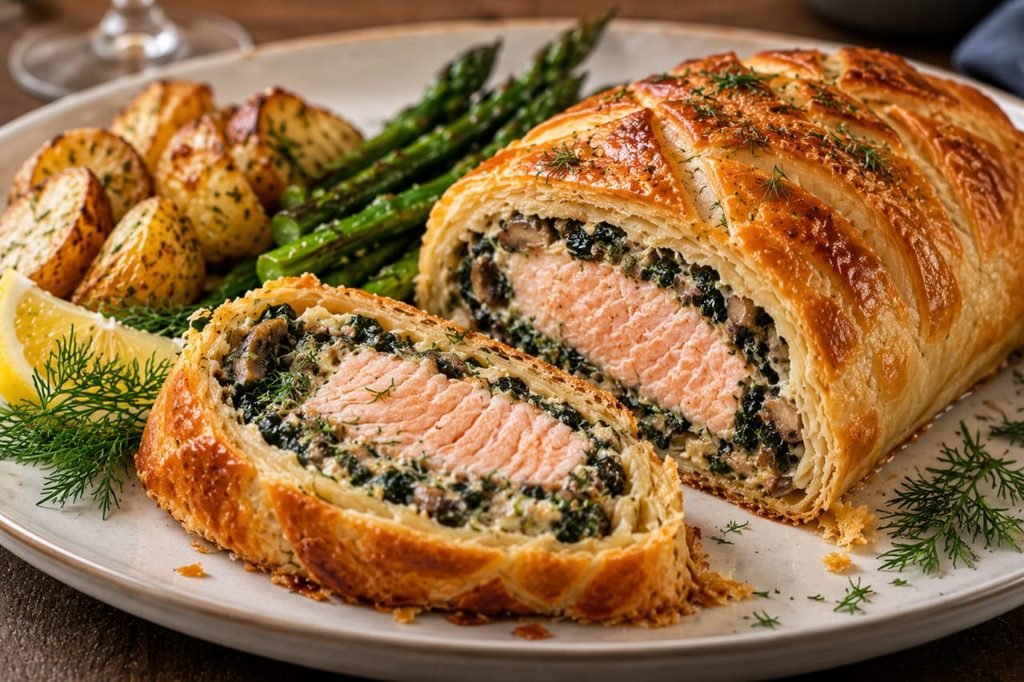
The result is tender salmon, creamy spinach and mushroom filling, and flaky pastry in every slice.
For more general food safety and nutrition guidance, see the FDA's seafood safety guidelines.
You Might Also Like
- Delicious Ham & Cheese Brioche Sliders Recipe
- Balsamic Thyme Potato Torte: Crispy Layers and Rich Flavor
- Onion Boil Recipe – Easy Southern Style Boiled Onions