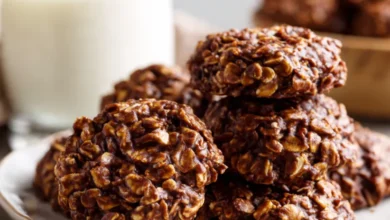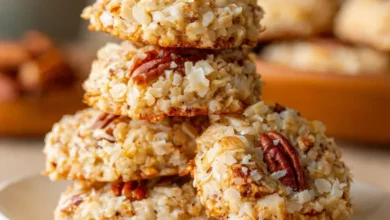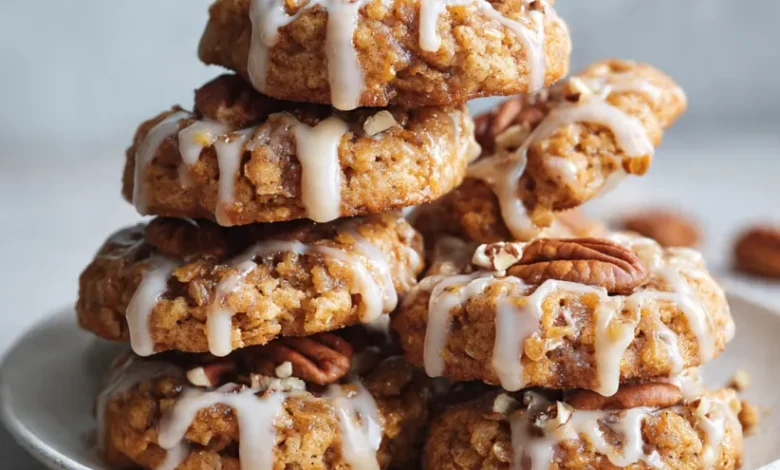
There’s a certain magic in recipes that require no oven. They promise the joy of homemade sweets with simplicity and speed. Today, we’re diving into the heart of Southern charm with these Old-Fashioned Praline Cookies Without Baking. These delightful, nutty confections are a cross between a cookie and a candy, boasting a rich, buttery, caramel-like flavor and a delightfully crumbly texture. They’re the perfect treat for a last-minute guest, a holiday gift box, or when the summer heat makes turning on the oven unbearable. In just minutes, you can create a batch of these nostalgic sweets that taste like they came straight from a grandmother’s kitchen.

Gather Your Ingredients for No-Bake Praline Cookies
The beauty of this recipe lies in its short, pantry-friendly ingredient list. Each component plays a crucial role in creating that classic praline flavor and texture.
Main Ingredients List
- 2 cups of granulated sugar: Forms the base of our “caramel.”
- 1/2 cup of whole milk: Creates a creamy sauce that combines with the sugar.
- 1/2 cup (1 stick) of unsalted butter: Adds incredible richness and flavor. Using unsalted allows you to control the saltiness.
- 1 teaspoon of pure vanilla extract: Provides a warm, essential depth of flavor. Do not skip!
- 1/4 teaspoon of salt: A critical element that balances the sweetness and enhances all other flavors.
- 2 1/2 cups of quick-cooking oats: The star that gives the mixture its cookie-like body and wonderful texture. Do not use old-fashioned rolled oats, as they won’t soften properly.
- 1 cup of chopped pecans: The signature nut of pralines. Toasting them first is highly recommended for maximum flavor.

Step-by-Step Preparation Guide
Follow these simple, numbered steps for perfect no-bake praline cookies every time. The entire process happens on the stovetop in one pot!
The Cooking Process
- Prep Your Station: Before you start cooking, line two baking sheets with parchment paper or silicone baking mats. This is a vital step, as the mixture sets very quickly. Also, have all your ingredients measured and ready to go (this is called mise en place). The process moves fast once the sugar boils.
- Combine and Cook the Base: In a medium to large heavy-bottomed saucepan (this prevents burning), combine the granulated sugar, milk, and butter. Place the pan over medium heat. Stir constantly with a wooden spoon or heatproof spatula until the butter melts and the sugar dissolves completely.
- Bring to a Boil: Once the mixture is smooth and combined, stop stirring and allow it to come to a full, rolling boil. Let it boil undisturbed for exactly 1 minute and 30 seconds. Use a timer! This step is crucial for cooking the sugar to the right stage so your cookies will set properly.

- Remove from Heat and Add Flavors: After the boil time is up, immediately remove the saucepan from the heat. Carefully stir in the vanilla extract and salt. The mixture will bubble up slightly this is normal.
- Incorporate Oats and Pecans: Quickly add the quick-cooking oats and chopped pecans to the hot syrup. Stir vigorously and continuously until all the oats and nuts are thoroughly coated and the mixture begins to thicken and lose its gloss, about 1-2 minutes.
- Scoop and Set: Working quickly while the mixture is still warm and pliable, drop heaping tablespoonfuls onto your prepared parchment-lined sheets. You can use a cookie scoop for uniform size. If desired, you can gently flatten the tops slightly. Allow the cookies to cool completely at room temperature until they are firm and set. This usually takes about 30-45 minutes.
Useful Tips for Perfect No-Bake Cookies
- Nut Knowledge: For the best flavor, toast your pecans in a dry skillet over medium heat for 3-5 minutes until fragrant before chopping. You can also substitute with walnuts if preferred.
- The One-Minute Rule: Do not exceed the boiling time. Over-boiling will make the cookies hard and grainy; under-boiling will result in cookies that don’t set.
- Hurry While Hot: The mixture sets as it cools in the pot. If it becomes too stiff to scoop, you can gently re-warm it over the lowest possible heat for a few seconds to make it pliable again.
- Storage Secrets: Store completely cooled cookies in an airtight container at room temperature for up to 1 week. Place parchment paper between layers to prevent sticking. They can also be frozen for up to 2 months.
- Customize It: Feel free to add 1/2 cup of shredded coconut or a handful of chocolate chips to the mix along with the oats. A drizzle of melted chocolate on top makes them extra special.
Conclusion: Your Easy, No-Fuss Treat Awaits
These Old-Fashioned Praline Cookies Without Baking are more than just a simple recipe; they’re a ticket to creating instant, comforting joy. They prove that you don’t need fancy equipment or hours in the kitchen to make something truly delicious and impressive. The combination of caramelized sugar, butter, and toasted pecans is timeless. So, the next time a sweet craving hits or you need a guaranteed crowd-pleaser, remember this no-bake wonder. Gather your ingredients, set your timer, and in less than 30 minutes, you’ll be enjoying a taste of Southern tradition. Don’t just take our word for it try the recipe yourself and share the sweetness!
For more general food safety and nutrition guidance, see the Harvard T.H. Chan School of Public Health Nutrition Source.