

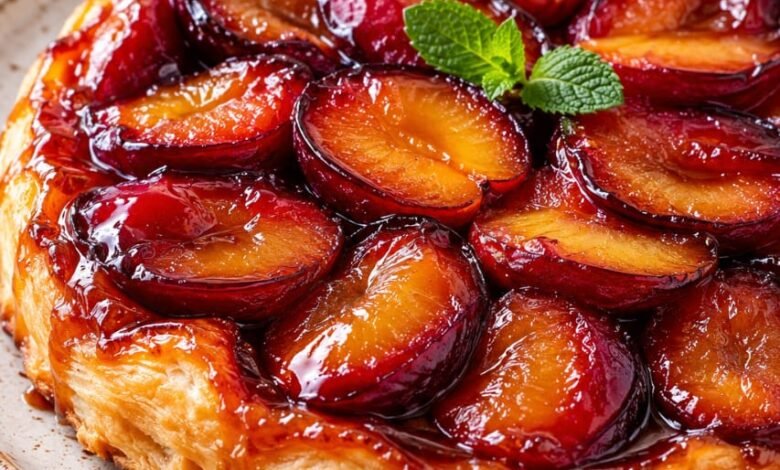
This plum tarte tatin is a beautiful upside-down French-inspired dessert made with juicy plums, buttery caramel, and golden puff pastry. As the tart bakes, the fruit softens and releases its natural juices, creating a glossy topping that looks impressive without requiring complicated pastry skills.
Unlike a traditional plum pie, this recipe places the fruit and caramel at the bottom of the pan before the pastry goes on top. Once baked and carefully inverted, the caramelized plums become the centerpiece. Serve a slice after dinner, alongside afternoon coffee, or as a seasonal dessert for a family gathering.
The best part? Store-bought puff pastry keeps the preparation manageable, while a few practical techniques help you avoid burnt caramel, soggy pastry, and fruit that falls apart.
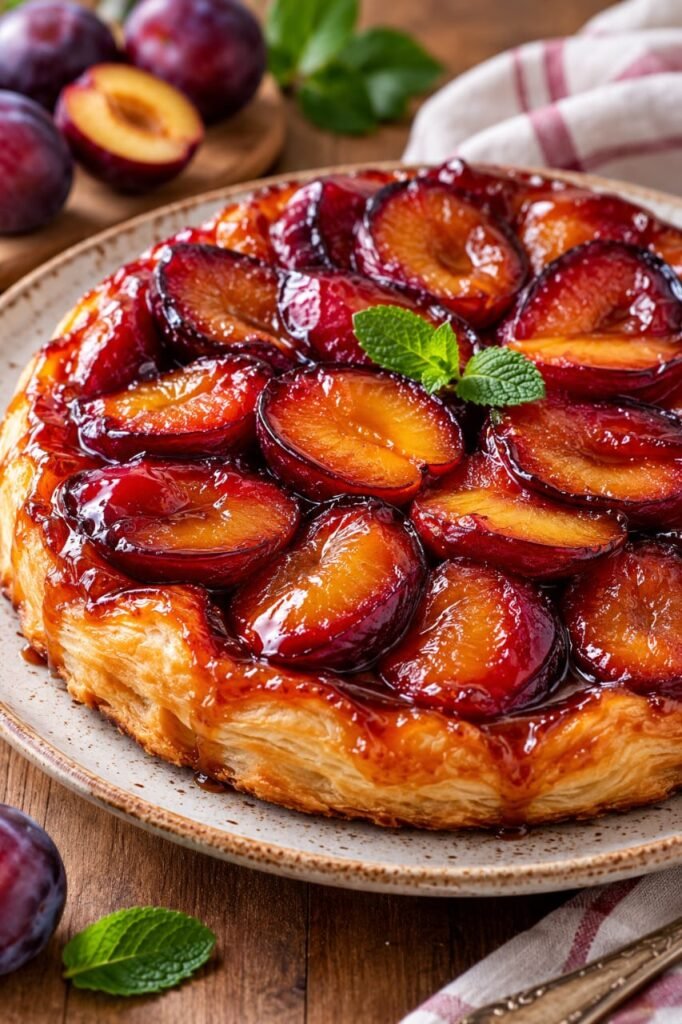
Why You’ll Love This Plum Tarte Tatin
- Simple ingredients: Fresh plums, sugar, butter, and ready-made puff pastry create a dessert with plenty of flavor.
- Beautiful presentation: The fruit becomes a shiny, colorful topping when the tart is turned out of the pan.
- Beginner-friendly technique: You do not need to make pastry from scratch or arrange a traditional pie crust.
- A seasonal favorite: The sweet-tart flavor of plums pairs especially well with autumn meals, although the dessert can be enjoyed whenever fresh plums are available.
- Easy to customize: A little vanilla, cinnamon, or orange zest can add another layer of flavor.
What Is Plum Tarte Tatin?
Tarte Tatin is a French-style upside-down tart traditionally associated with caramelized apples. In a plum version, ripe but firm plums replace the apples. The fruit cooks in a buttery sugar mixture beneath a layer of pastry, and the tart is inverted before serving.
Plums have a sweet, slightly tart flavor and release plenty of juice during cooking. That juice combines with the caramel to create a rich fruit topping. Because plums can soften quickly, choosing the right fruit and controlling the cooking time are important.
This recipe uses refrigerated or thawed puff pastry for convenience. It is an approachable way to enjoy the character of a classic upside-down tart without spending time preparing homemade pastry.
Ingredients for Plum Tarte Tatin
These quantities are designed for one 9-inch round tart, using an oven-safe skillet or suitable baking pan.
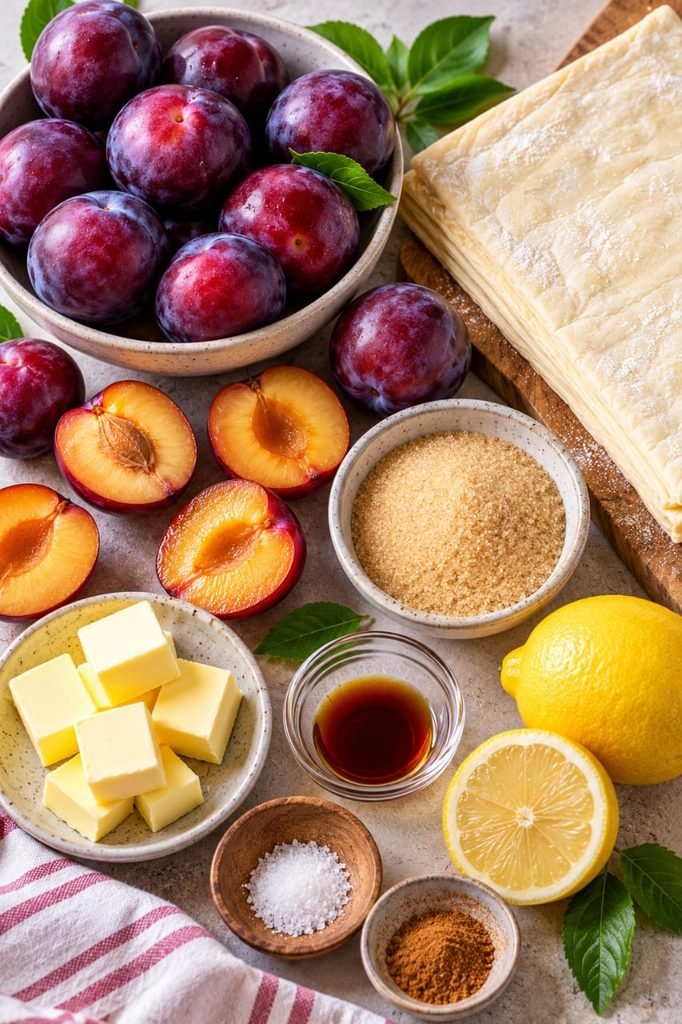
- About 1 1/2 pounds (700 g) plums: Choose ripe but firm fruit that holds its shape when cut. Red, purple, or black plums can all work.
- 3/4 cup (150 g) granulated sugar: This forms the caramel and balances the tartness of the fruit.
- 3 1/2 tablespoons (50 g) unsalted butter: Adds richness and helps create a smooth, buttery caramel.
- 1 sheet puff pastry, about 10 to 11 ounces (280–320 g): Use an all-butter pastry if available for a richer flavor.
- 1 teaspoon vanilla extract: Adds warmth to the fruit and caramel.
- 1 teaspoon fresh lemon juice: Brightens the flavor of the plums.
- 1 small pinch of fine salt: Helps balance the sweetness.
- Optional: 1/4 teaspoon ground cinnamon or a little finely grated orange zest.
Equipment: A 9-inch oven-safe skillet or a suitable baking dish, a sharp knife, a cutting board, oven mitts, and a heatproof serving plate larger than the pan.
How to Choose the Best Plums
Fruit selection makes a noticeable difference in an upside-down plum tart. Look for plums that feel slightly firm and yield just a little when gently pressed. Very soft plums may collapse during cooking and release more liquid than the pastry can handle.
Choose fruit of a similar size so the halves cook at roughly the same rate. Wash and dry the plums, cut them in half along the natural seam, and remove the pits.
If your plums are especially juicy, avoid adding extra water to the caramel. The fruit will release its own juices as it cooks.
How to Make Plum Tarte Tatin
Step 1: Prepare the plums and pastry
Preheat the oven to 400°F (200°C). If using a fan-assisted oven, check your appliance guidance and reduce the temperature if necessary.
Wash, dry, halve, and pit the plums. Keep the pastry cold in the refrigerator until you are ready to use it. Cut the pastry into a circle slightly larger than the skillet or pan, if needed, and set it aside.
Step 2: Make the caramel
Place the sugar in a dry, heavy-bottomed oven-safe skillet over medium heat. Allow it to melt gradually, gently swirling the pan when needed. Avoid stirring aggressively, as sugar crystals around the edges can encourage crystallization.
Watch the color closely. Once the sugar becomes amber, remove the pan from the heat. Carefully add the butter in small pieces, keeping your hands and face away from the pan because the mixture can bubble and splatter.
Stir carefully until the butter is incorporated. Add the vanilla and salt. If the caramel becomes too dark or smells burnt, it is better to start again than to use bitter caramel in the finished tart.
Step 3: Arrange the plums
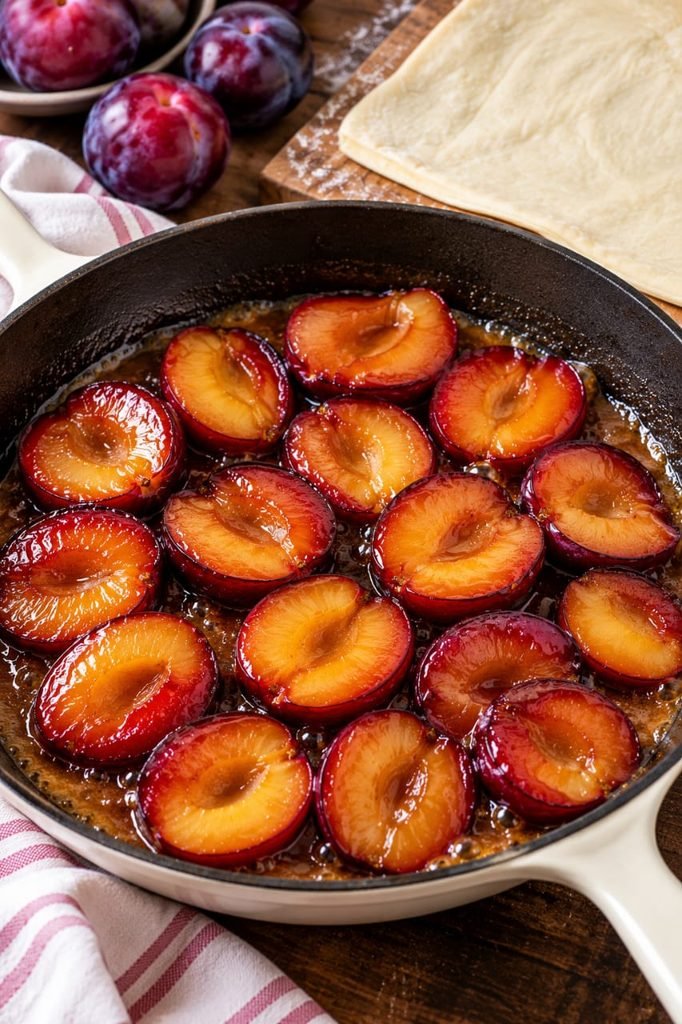
Arrange the plum halves over the caramel, cut side facing up or down depending on the arrangement you prefer. Pack them closely together because the fruit will shrink as it cooks.
Return the skillet to low or medium-low heat for approximately 5–8 minutes, allowing the plums to begin softening and release some juice. Watch the mixture carefully and avoid prolonged cooking that makes the fruit fall apart.
Step 4: Cover with puff pastry
Remove the skillet from the heat. Carefully place the cold pastry over the plums. Tuck the edges down around the fruit using a spoon, taking care not to touch the hot caramel with your fingers.
Make two or three small slits in the pastry to allow steam to escape. Keep the pastry as cold as possible before baking; soft pastry is more likely to shrink and may not puff as well.
Step 5: Bake until golden
Transfer the skillet to the preheated oven and bake for approximately 25–35 minutes, or until the pastry is deeply golden, puffed, and crisp. Baking time can vary according to the pastry brand, pan, and amount of moisture released by the fruit.
Do not rely on the timer alone. Pale pastry can remain doughy underneath, so give it additional time if necessary. The juices around the edges should look glossy and bubbling rather than watery.
Step 6: Rest and invert the tart
Remove the skillet from the oven and allow it to rest for about 5–10 minutes. This gives the bubbling caramel a chance to settle, but do not leave the tart until the caramel has completely hardened.
Place a heatproof serving plate larger than the skillet over the top. Wearing oven mitts and keeping your face and hands away from the edges, firmly hold the plate and skillet together and invert them in one controlled movement. Lift the pan carefully.
If a plum half sticks to the pan, gently lift it with a spatula and return it to its place on the tart. Spoon any remaining caramel over the fruit. Let the tart settle briefly before slicing.
Tips for a Perfect Plum Tarte Tatin
- Use firm plums: Fruit that is too soft can turn mushy before the pastry finishes baking.
- Keep the pastry cold: Cold puff pastry generally produces a better rise and a crisper finish.
- Watch the caramel: Amber caramel has a deeper flavor than pale sugar, but it can burn quickly. Remove it from the heat as soon as it reaches the right color.
- Do not add unnecessary water: Plums release moisture naturally, and excess liquid can make the tart soggy.
- Choose the right pan: If your skillet is not oven-safe, transfer the caramel and plums to a suitable baking dish before adding the pastry. Avoid transferring hot caramel unnecessarily.
- Invert while the caramel is still warm: If it cools completely in the pan, the fruit may stick and become difficult to release.
Common Problems and How to Fix Them
Why is my plum tarte tatin soggy?
Excess fruit juice, underbaked pastry, or a pastry sheet that became warm before baking can all contribute to a soggy result. Use firm plums, keep the pastry cold, and bake until the top is fully golden and crisp.
Why did my caramel become bitter?
The sugar was probably heated for too long. Caramel continues to darken quickly, even near the end of cooking. Remove it from the heat when it reaches an amber color rather than waiting for it to become very dark brown.
Why did the plums stick to the pan?
The caramel may have cooled and hardened before the tart was inverted. Let the tart rest briefly after baking, then invert it while the caramel is still warm. If needed, carefully warm the bottom of the pan over low heat for a short time to loosen the caramel.
Why did my pastry shrink?
Pastry that becomes warm or is stretched while being fitted into the pan may shrink during baking. Keep it cold, handle it gently, and allow the edges to rest naturally around the fruit.
Easy Variations
Plum and Cinnamon Tarte Tatin
Add a small pinch of ground cinnamon to the caramel or sprinkle it lightly over the fruit before covering it with pastry. Cinnamon complements the plums without overpowering their natural tartness.
Plum and Orange Tarte Tatin
Add a little finely grated orange zest to the caramel after removing it from the heat. The citrus aroma pairs well with the sweet fruit and buttery pastry.
Plum and Almond Tart
Serve the finished tart with a small scattering of toasted sliced almonds. Add them just before serving so they remain crisp.
What to Serve with Plum Tarte Tatin
This tart is rich and fruity, so simple accompaniments work best.
- Vanilla ice cream: The cold, creamy texture contrasts with the warm caramelized fruit.
- Whipped cream: Lightly sweetened whipped cream adds a soft, airy finish.
- Crème fraîche: Its gentle tang balances the sweetness of the caramel.
- Hot coffee or tea: A warm drink makes this tart a lovely choice for an afternoon dessert.
How to Store and Reheat Leftovers
Allow leftover tart to cool, then cover and refrigerate it promptly. For the best texture, enjoy it within 2–3 days.
To reheat, place individual slices on a baking tray in a 325°F (165°C) oven until warmed through. The pastry may regain some crispness, although it will not be exactly the same as when freshly baked.
Avoid using the microwave if you want to preserve the pastry’s crisp texture. Microwaving warms the fruit but tends to soften the pastry.
Freezing is not ideal because the plums may become softer after thawing and the caramel can release additional moisture.
Frequently Asked Questions
Can I use frozen plums?
Fresh, firm plums are preferable because frozen fruit often releases more liquid as it thaws and cooks. If using frozen plums, thaw and drain them thoroughly first, and expect some variation in the final texture.
Can I make plum tarte tatin ahead of time?
You can prepare it a few hours before serving, but the pastry is usually crispest on the day it is baked. For the best presentation, invert the tart while the caramel is still warm and serve it after a short rest.
Can I make this recipe without an oven-safe skillet?
Yes. Prepare the caramel in a saucepan, arrange the plums in a suitable baking dish, and carefully pour the caramel over them. Cover with cold pastry and bake. Because baking dishes vary in size and material, check the pastry and fruit for doneness rather than following the time alone.
Which plums work best for tarte tatin?
Choose ripe but firm plums that hold their shape during cooking. Fruit that is very soft or overripe may collapse and release too much juice.
How do I know when the tart is ready?
The pastry should be well risen, deeply golden, and crisp. The fruit should be tender but not completely broken down, and the juices at the edge should look glossy and bubbling.
Can I use a different pastry?
Puff pastry is a convenient choice for its crisp, flaky texture. Other pastry types may work, but the result will have a different texture and may require adjustments to the baking time.
Final Thoughts
This easy plum tarte tatin turns a handful of everyday ingredients into a dessert with beautiful color, buttery pastry, and rich caramelized fruit. Choose firm plums, keep the pastry cold, and pay close attention to the caramel for the best results.
Serve it with vanilla ice cream or a spoonful of crème fraîche, and enjoy a seasonal dessert that looks special without requiring advanced baking skills.





10 Comments